A Complete B2B Comparison Guide for Textile Manufacturers
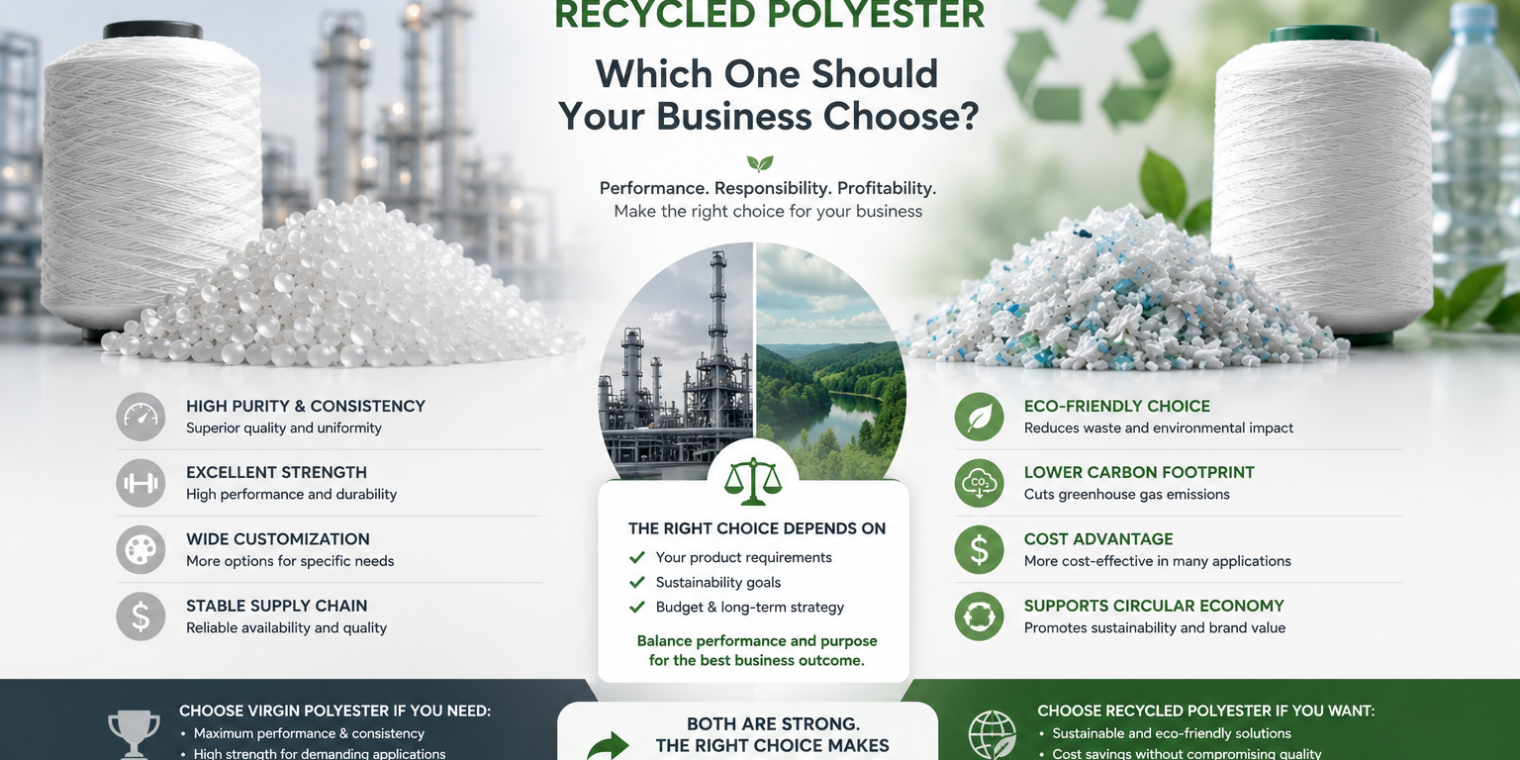
As sustainability becomes a key purchasing criterion across the textile industry, manufacturers are increasingly asking the same question:
Should we continue using virgin polyester, or is it time to switch to recycled polyester?
For decades, virgin polyester has been the standard raw material for producing yarns, nonwoven fabrics, automotive interiors, home textiles, and cleaning products. However, the rapid growth of environmental regulations, global brand commitments, and customer demand for sustainable products has accelerated the adoption of recycled polyester fiber.
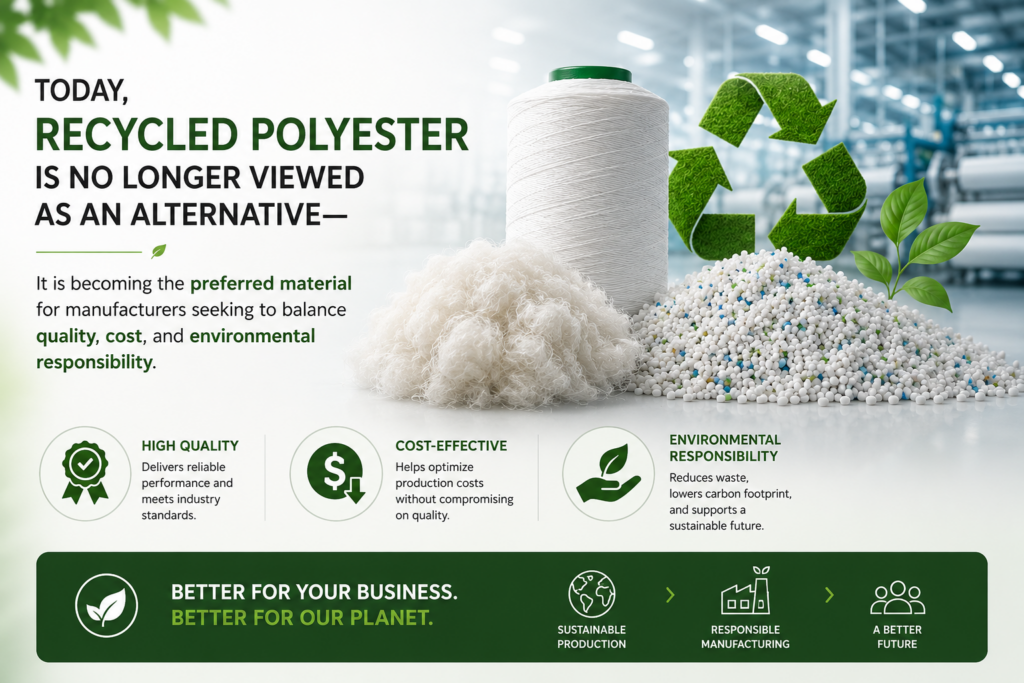
Today, recycled polyester is no longer viewed as an alternative—it is becoming the preferred material for manufacturers seeking to balance quality, cost, and environmental responsibility.
This guide compares virgin polyester vs recycled polyester from a B2B perspective, helping buyers understand the differences in performance, production, sustainability, and long-term business value.
What is Virgin Polyester?
Virgin polyester is produced from petroleum-based raw materials through a chemical polymerization process.
For many years, it has been the dominant synthetic fiber because it offers:
- High tensile strength
- Good dimensional stability
- Excellent durability
- Competitive pricing
- Wide availability
Virgin polyester is commonly used in:
- Yarn spinning
- Woven fabrics
- Knitted fabrics
- Nonwoven production
- Automotive textiles
- Home furnishings
Although it provides reliable performance, its production depends heavily on non-renewable fossil resources.
What is Recycled Polyester?
Recycled polyester (rPET) is manufactured from recycled PET materials, including:
- Used plastic bottles
- Post-industrial polyester waste
- Textile scraps
- Post-consumer polyester products
These materials are cleaned, processed into polyester chips, melted, and spun into new fibers.
Modern recycling technology allows manufacturers to produce recycled polyester with performance characteristics comparable to virgin polyester for many industrial applications.
Virgin Polyester vs Recycled Polyester: Key Differences
| Feature | Virgin Polyester | Recycled Polyester |
|---|---|---|
| Raw Material | Petroleum | Recycled PET |
| Sustainability | Lower | Higher |
| Carbon Footprint | Higher | Lower |
| Plastic Waste Reduction | No | Yes |
| Mechanical Performance | Excellent | Excellent (high-quality grades) |
| Market Demand | Stable | Rapidly Growing |
| Buyer Preference | Traditional | Increasingly Preferred |
For most textile and industrial applications, high-quality recycled polyester can achieve similar processing performance while offering significant environmental advantages.
Performance Comparison
Strength
Modern recycled polyester provides excellent tensile strength suitable for:
- Spinning yarn
- Needle-punched nonwoven
- Automotive felt
- Industrial fabrics
For reputable suppliers with strong quality control, differences in strength are often minimal.
Softness
Recycled polyester microfiber offers:
- Better hand feel
- Improved softness
- Enhanced absorption
This makes it especially suitable for:
- Towels
- Cleaning cloths
- Home textiles
Durability
Both virgin and recycled polyester provide:
- High abrasion resistance
- Long service life
- Good wash durability
For most end products, customers will not notice a difference in durability when high-quality recycled fibers are used.
Environmental Impact
This is where recycled polyester has a clear advantage.
Compared with virgin polyester, recycled polyester helps:
- Reduce dependence on fossil fuels
- Divert plastic bottles from landfills
- Lower greenhouse gas emissions
- Support a circular economy
Many international brands now require suppliers to increase recycled content as part of their sustainability strategies.
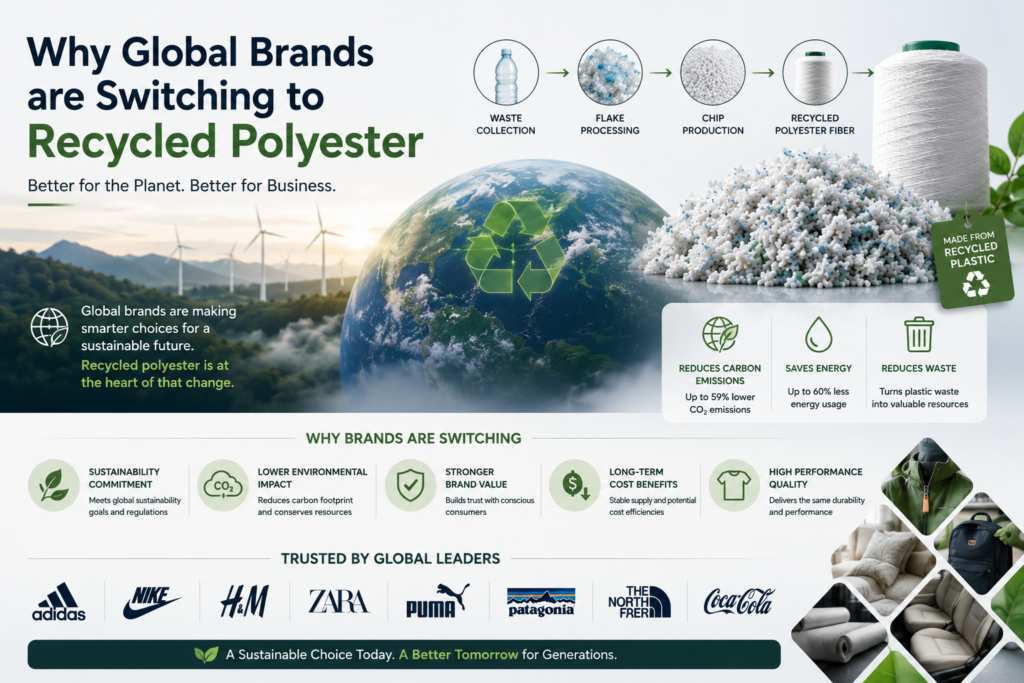
Why Global Brands are Switching to Recycled Polyester
Leading brands in apparel, automotive, and home textiles have announced long-term sustainability commitments.
Their goals often include:
- Increasing recycled material usage
- Reducing carbon emissions
- Improving supply chain transparency
- Supporting responsible sourcing
As a result, suppliers capable of offering recycled polyester gain access to more business opportunities.
Cost Considerations
Many buyers assume recycled polyester is always cheaper than virgin polyester.
In reality, pricing depends on:
- PET bottle availability
- Oil prices
- Recycling technology
- Fiber specification
- Market demand
Rather than focusing solely on price per kilogram, manufacturers should evaluate:
- Production efficiency
- Material consistency
- Product value
- Market positioning
In many cases, recycled polyester helps manufacturers achieve higher margins through sustainable product differentiation.
Applications for Recycled Polyester
Recycled polyester is widely used in:
Yarn Spinning
Suitable for:
- Blended yarns
- Microfiber yarn
- Knitting yarn
- Towel yarn
Nonwoven Manufacturing
Common applications include:
- Industrial wipes
- Cleaning wipes
- Automotive felt
- Geotextiles
- Filtration media
Cleaning Products
Recycled microfiber is ideal for:
- Microfiber cleaning cloths
- Floor mops
- Kitchen towels
- Industrial wipes
Its fine fiber structure provides excellent absorption and dust removal.
Automotive Interiors
Vehicle manufacturers increasingly use recycled polyester for:
- Carpets
- Headliners
- Acoustic insulation
- Trunk liners
This supports lightweight design while helping meet sustainability targets.
Challenges When Switching to Recycled Polyester
Although recycled polyester offers many advantages, manufacturers should consider several factors.
Quality Consistency
Not all recycled fiber suppliers maintain consistent quality.
Buyers should evaluate:
- Denier consistency
- Cut length
- Fiber strength
- Process stability
Supplier Capability
A reliable supplier should provide:
- Stable production capacity
- Technical documentation
- Consistent shipments
- Sample support
- Responsive customer service
Choosing the right partner is often more important than selecting the lowest price.
Conclusion
The comparison between virgin polyester vs recycled polyester is no longer simply about technical performance.
For today’s manufacturers, it is about balancing:
- Product quality
- Production efficiency
- Sustainability
- Customer expectations
- Long-term competitiveness
High-quality recycled polyester now delivers performance that meets the needs of most textile applications while offering significant environmental and commercial advantages.
As global demand for sustainable materials continues to grow, manufacturers that adopt recycled polyester today will be better positioned to compete in tomorrow’s market.
If you are looking for a trusted supplier of recycled polyester staple fiber or recycled microfiber, Eco Micro Fiber is ready to help your business succeed.
Contact us today to request samples, technical specifications, or a customized quotation.
How Eco Micro Fiber Supports Global Manufacturers
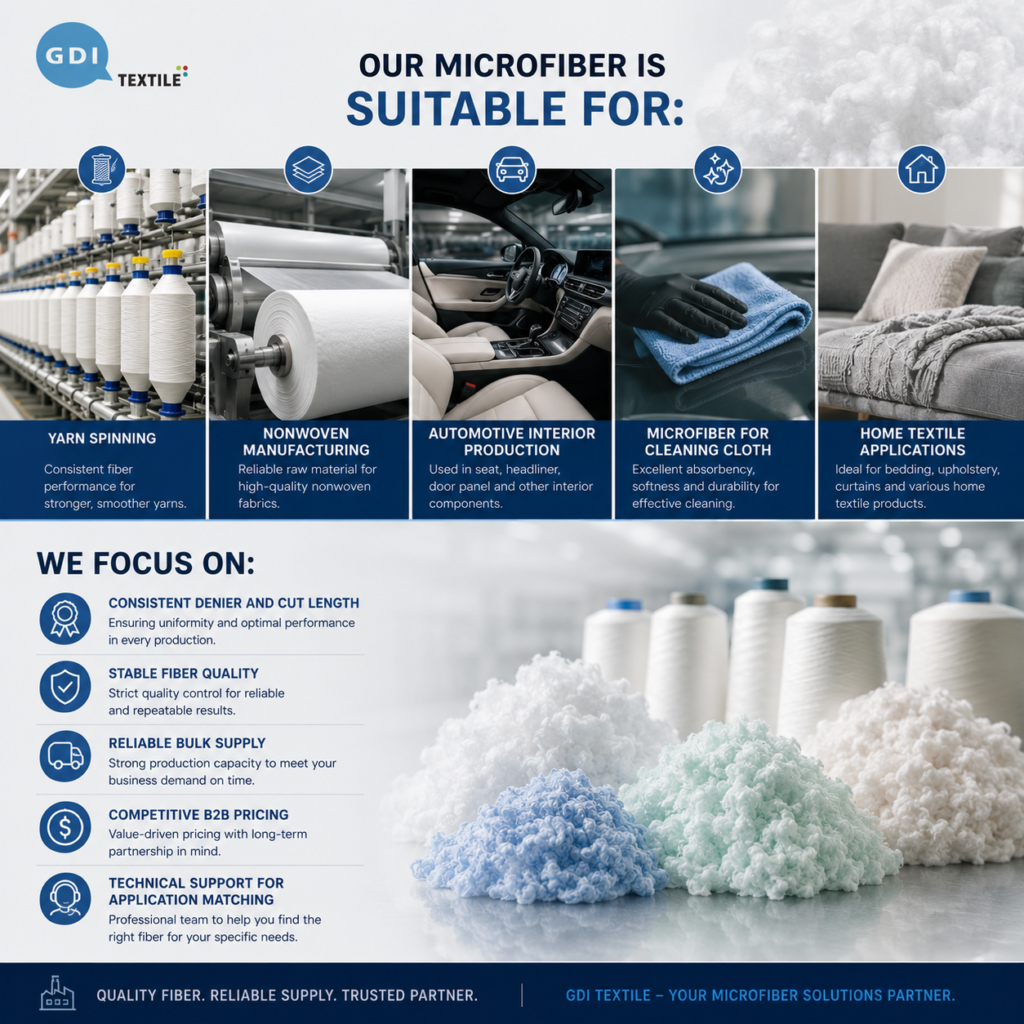
At Eco Micro Fiber, we supply premium recycled polyester staple fiber and recycled microfiber for customers worldwide.
Our products are suitable for:
- Yarn spinning
- Nonwoven manufacturing
- Cleaning textiles
- Automotive applications
- Home textile production
We are committed to:
- Consistent fiber quality
- Stable denier and cut length
- Reliable export supply
- Competitive B2B pricing
- Long-term partnerships
Whether you are transitioning from virgin polyester or expanding your recycled product range, our team is ready to support your sourcing needs.
If you are looking for a trusted recycled micro fiber supplier, our team is ready to support your production needs.
Contact Us:
Email: [email protected]
Tel/WhatsApp: +84981527216
Contact us today to request technical specifications or product samples.