A Complete B2B Guide to Sustainable Fiber Solutions for Global Manufacturers
The textile industry is undergoing one of the most significant transformations in its history. For decades, virgin polyester has been the dominant synthetic fiber due to its affordability, durability, and versatility. However, increasing environmental concerns, stricter regulations, and changing buyer expectations are accelerating the transition toward recycled polyester staple fiber.
Today, global apparel brands, home textile manufacturers, automotive suppliers, and nonwoven producers are actively increasing the use of recycled polyester fiber to reduce environmental impact while maintaining product performance.
For B2B manufacturers, this transition is more than a sustainability initiative—it is becoming a competitive necessity.
This article explains why recycled polyester staple fiber is the future of the textile industry, covering:
- what recycled polyester is
- key market drivers
- performance advantages
- environmental benefits
- industrial applications
- global demand trends
- how manufacturers can stay competitive
Whether you produce yarn, nonwoven fabrics, automotive interiors, or cleaning textiles, understanding the future of recycled polyester can help you prepare for long-term market success.
What is Recycled Polyester?
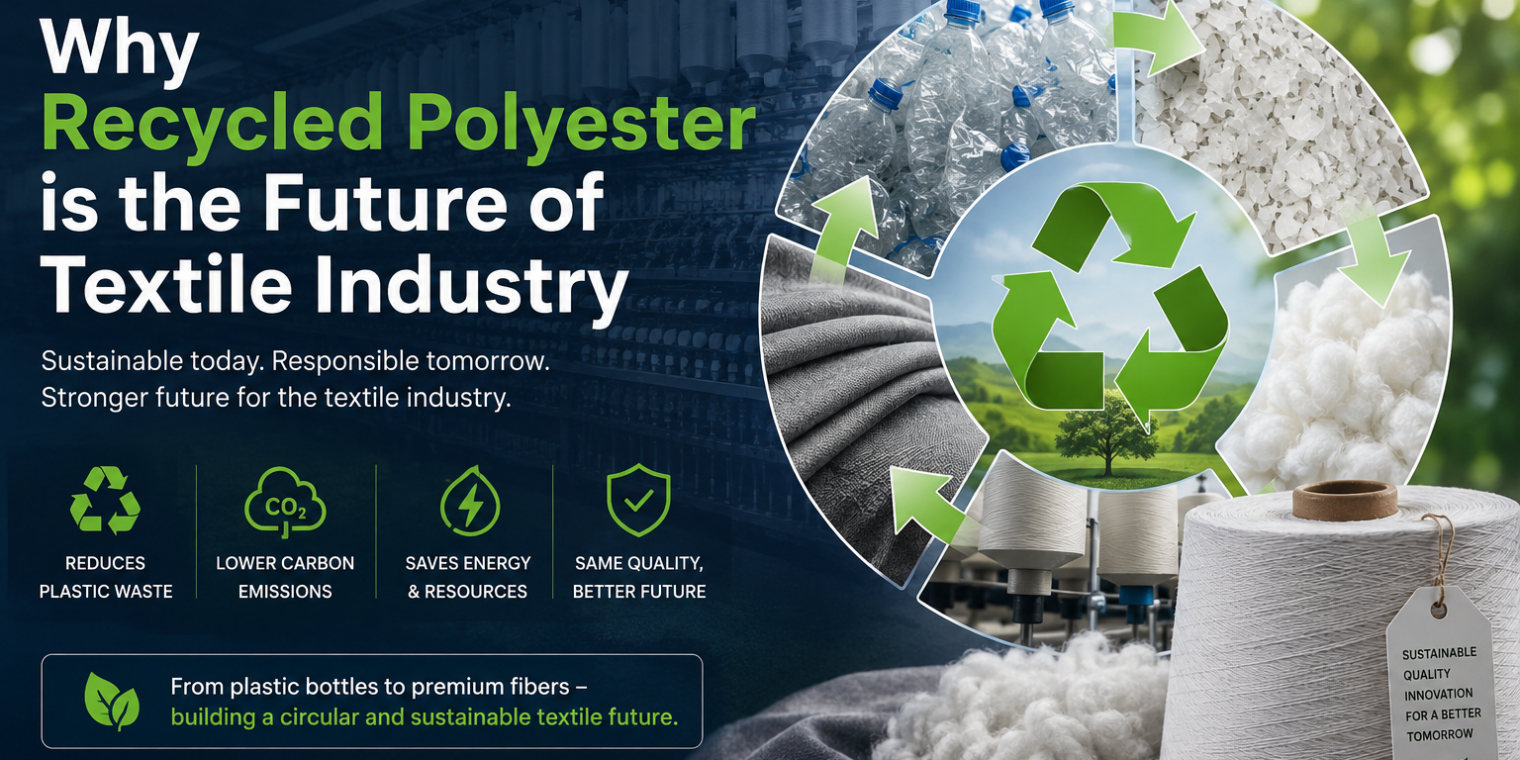
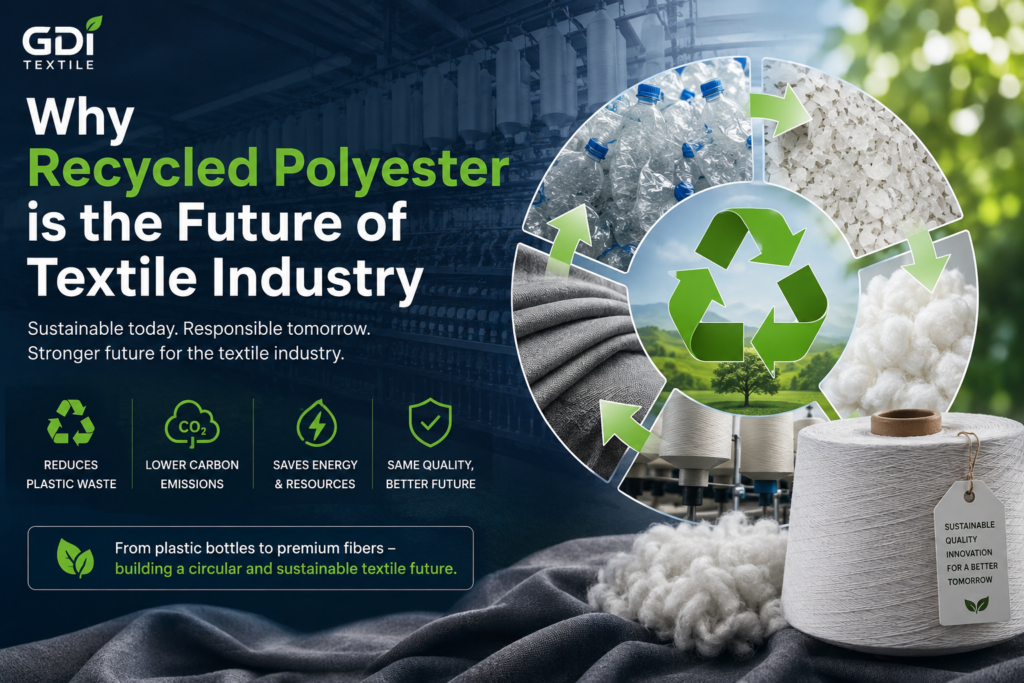
Recycled polyester, often abbreviated as rPET (recycled polyethylene terephthalate), is a synthetic fiber produced from recycled PET materials instead of virgin petroleum-based resources.
The most common raw materials include:
- used plastic bottles
- post-industrial polyester waste
- textile production scraps
- post-consumer polyester garments
After collection and processing, these materials are converted into polyester chips, melted, extruded, and spun into fibers.
The result is a high-performance polyester fiber suitable for numerous textile and industrial applications.
Why the Textile Industry is Moving Away from Virgin Polyester
Virgin polyester has long been popular because it offers:
- high strength
- excellent durability
- low moisture absorption
- cost-effective production
However, producing virgin polyester requires:
- petroleum extraction
- high energy consumption
- significant greenhouse gas emissions
- non-renewable resources
As governments, brands, and consumers place greater emphasis on sustainability, dependence on virgin polyester is becoming increasingly difficult to justify.
The Rise of Recycled Polyester Staple Fiber
The adoption of recycled polyester is driven by several major global trends.
1. Sustainability Commitments
Many international brands have publicly committed to increasing recycled content in their products.
Their sustainability goals often include:
- reducing virgin plastic usage
- lowering carbon emissions
- supporting circular economy initiatives
- increasing recycled material content
As a result, suppliers throughout the textile supply chain are expected to provide recycled fiber options.
2. Consumer Awareness
Consumers are becoming more conscious of environmental issues.
Many purchasing decisions are now influenced by factors such as:
- recycled materials
- responsible sourcing
- product sustainability
- reduced environmental impact
Manufacturers that use recycled polyester are better positioned to meet these expectations.
3. Government Regulations
Many countries are introducing regulations designed to reduce plastic waste and encourage recycled material usage.
These policies encourage manufacturers to:
- improve recycling systems
- reduce landfill waste
- increase recycled fiber production
- support sustainable manufacturing
This regulatory environment continues to strengthen the demand for recycled polyester.
Performance Advantages of Recycled Polyester
One common misconception is that recycled polyester performs worse than virgin polyester.
In reality, modern recycling technology has significantly improved fiber quality.
High-quality recycled polyester offers:
Excellent Strength
Properly manufactured recycled polyester provides tensile strength suitable for:
- yarn spinning
- nonwoven fabrics
- industrial textiles
- automotive components
Softness
Fine-denier recycled microfiber offers excellent softness for:
- towels
- knit fabrics
- cleaning cloths
- home textiles
Durability
Recycled polyester maintains excellent durability during repeated washing and industrial use.
This makes it suitable for reusable textile products.
Versatility
Recycled polyester can be manufactured into:
- staple fiber
- microfiber
- filament yarn
- hollow conjugated fiber
allowing manufacturers to serve diverse industries.
Environmental Benefits of Recycled Polyester
The strongest advantage of recycled polyester is its contribution to environmental sustainability.
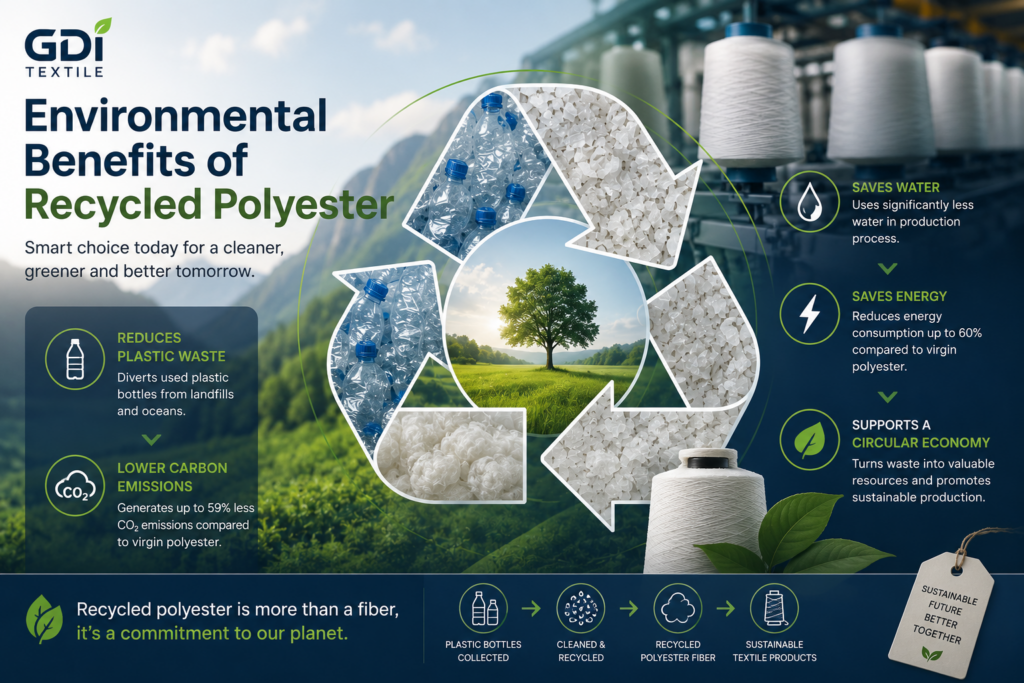
Reduces Plastic Waste
Millions of plastic bottles are discarded every day worldwide.
Recycling PET bottles into polyester fiber helps divert this waste from:
- landfills
- rivers
- oceans
This supports a more circular use of materials.
Lower Carbon Footprint
Producing recycled polyester generally requires less energy than manufacturing virgin polyester.
This contributes to:
- lower greenhouse gas emissions
- reduced fossil fuel dependence
- improved sustainability performance
Many global brands now track carbon emissions throughout their supply chains, making recycled materials increasingly attractive.
Conserves Natural Resources
Virgin polyester relies heavily on petroleum, a finite resource.
Recycled polyester reduces the need for new fossil-based raw materials, supporting more responsible resource management.
Industrial Applications of Recycled Polyester
Recycled polyester is now widely used across many sectors.
Yarn Spinning
Applications include:
- blended yarn
- microfiber yarn
- towel yarn
- knit fabric yarn
Manufacturers benefit from improved softness and growing market demand for recycled products.
Nonwoven Manufacturing
Recycled polyester is widely used in:
- industrial wipes
- cleaning wipes
- filtration materials
- geotextiles
- insulation products
Its consistent performance makes it ideal for industrial nonwoven production.
Cleaning Textiles
One of the fastest-growing applications is microfiber for cleaning cloth.
Recycled microfiber provides:
- excellent absorption
- superior dust removal
- long product lifespan
These properties make it a preferred material for modern cleaning products.
Automotive Industry
Automotive manufacturers increasingly use recycled polyester for:
- carpets
- trunk liners
- acoustic insulation
- headliners
This helps reduce vehicle weight while supporting sustainability targets.
Home Textiles
Recycled polyester is commonly used in:
- bedding
- upholstery
- cushions
- decorative fabrics
Its durability and versatility make it suitable for everyday household products.
Business Benefits for B2B Manufacturers
Switching to recycled polyester can provide several competitive advantages.
Access to More Buyers
Many international buyers now require recycled material content.
Using recycled polyester helps manufacturers qualify for more sourcing opportunities.
Stronger Brand Positioning
Sustainable manufacturing improves:
- company reputation
- customer trust
- long-term partnerships
This can be a significant advantage in competitive markets.
Product Differentiation
Products made with recycled polyester often command higher perceived value because they combine performance with sustainability.
This allows manufacturers to move beyond price-based competition.
Challenges When Sourcing Recycled Polyester
Although demand is growing, buyers should pay attention to supplier quality.
Key considerations include:
- consistent denier
- stable cut length
- reliable bulk supply
- technical support
- quality control
Working with experienced suppliers helps reduce production risks.
Conclusion
The future of the textile industry is being shaped by sustainability, innovation, and responsible sourcing.
Recycled polyester fiber has become one of the most important materials supporting this transformation.
It offers manufacturers:
- excellent performance
- reduced environmental impact
- growing market demand
- stronger business opportunities
As global brands continue increasing recycled content requirements, manufacturers that adopt recycled polyester today will be better positioned for future growth.
If you are looking for a reliable supplier of recycled polyester staple fiber, Eco Micro Fiber is ready to support your business with high-quality products and dependable service.
Contact us today to request technical specifications, samples, or a quotation.
Why Eco Micro Fiber is Your Trusted Partner
t Eco Micro Fiber, we specialize in supplying high-quality recycled polyester microfiber for global manufacturers.
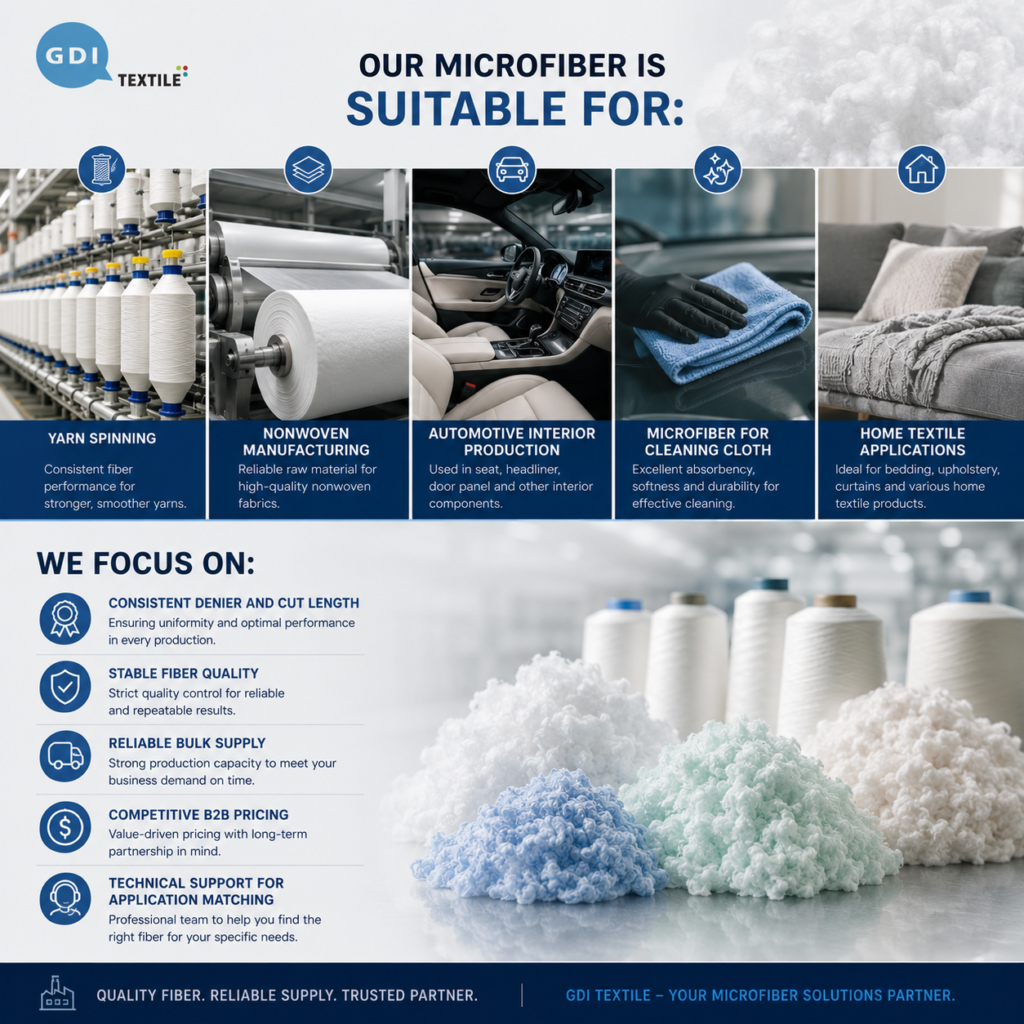
Our products are suitable for:
- yarn spinning
- nonwoven production
- microfiber for cleaning cloth
- automotive interiors
- home textiles
We provide:
- consistent fiber quality
- stable specifications
- reliable production capacity
- competitive B2B pricing
- long-term supply partnerships
Our mission is to help customers achieve both commercial success and sustainability goals.
If you are looking for a trusted recycled micro fiber supplier, our team is ready to support your production needs.
Contact Us:
Email: [email protected]
Tel/WhatsApp: +84981527216
Contact us today to request technical specifications or product samples.