Why Microfiber is the Standard Material for Modern Cleaning Products
The global cleaning textile industry has experienced rapid growth over the past decade, driven by increasing hygiene awareness, commercial cleaning demand, and the expansion of household cleaning products.
At the center of this industry is one material that has transformed cleaning performance worldwide: microfiber for cleaning cloth.
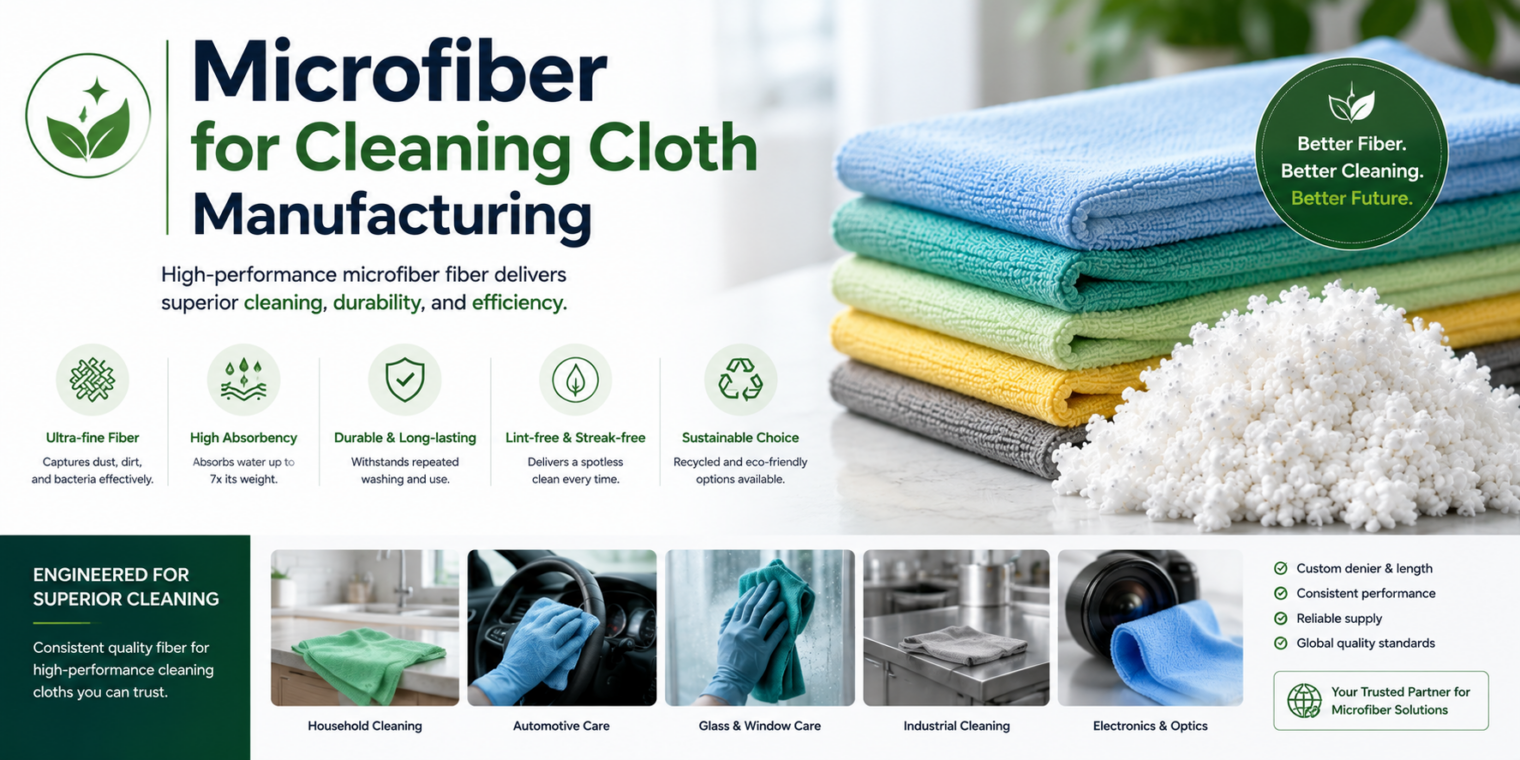
Today, microfiber cleaning products dominate both consumer and industrial markets because they offer superior:
- absorption
- dust capture
- grease removal
- durability
- cleaning efficiency
Compared to conventional cotton or standard polyester fabrics, microfiber provides significantly better cleaning performance while reducing the need for chemicals and excessive water usage.
As a result, manufacturers across the world are actively sourcing high-quality microfiber for:
- cleaning cloths
- floor mops
- industrial wipes
- kitchen towels
- automotive cleaning textiles
However, producing high-quality cleaning products requires selecting the right microfiber specification and working with a reliable supplier.
This guide explains everything B2B buyers and manufacturers need to know about microfiber for cleaning cloth manufacturing, including:
- why microfiber performs better
- key fiber specifications
- production methods
- major applications
- recycled microfiber trends
- supplier selection considerations
Understanding these factors can help manufacturers improve product quality, increase market competitiveness, and meet growing global demand.
Why Microfiber is Ideal for Cleaning Products
Microfiber has become the preferred material in the cleaning industry because of its unique fiber structure.
Microfiber fibers are extremely fine, typically below 1.5 denier, which creates a much larger surface area compared to standard fibers.
This ultra-fine structure provides several important advantages.
1. Exceptional Absorption Performance
One of the most important advantages of microfiber is its ability to absorb liquids efficiently.
Microfiber cleaning cloths can absorb multiple times their own weight in water due to:
- high surface area
- dense fiber structure
- capillary action between fibers
This makes microfiber ideal for:
- household cleaning cloths
- kitchen towels
- floor cleaning products
- industrial wipes
Compared to cotton, microfiber dries faster and maintains better performance after repeated use.
2. Superior Dust and Dirt Capture
Microfiber fibers are highly effective at trapping:
- dust
- dirt
- grease
- microscopic particles
Because the fibers are extremely fine, they can reach into small surface irregularities more effectively than traditional cleaning materials.
This improves cleaning efficiency significantly.
As a result, microfiber is widely used in:
- commercial cleaning
- automotive detailing
- industrial cleaning applications
- electronics cleaning products
3. Cleaning Without Chemicals
One of the key selling points of microfiber cleaning cloths is that they can clean effectively using only water.
This helps reduce:
- chemical usage
- environmental impact
- operating cost
The growing demand for eco-friendly cleaning products has accelerated the adoption of microfiber globally.
4. Durability and Reusability
High-quality microfiber cleaning products are highly durable and can withstand repeated washing cycles.
This is especially important for:
- industrial cleaning products
- commercial cleaning operations
- reusable household textiles
Durability improves product value and reduces replacement frequency.
5. Lightweight and Soft Texture
Microfiber materials are:
- lightweight
- soft
- flexible
This improves user comfort and makes cleaning easier across different surfaces.
Major Applications of Microfiber for Cleaning Cloth Manufacturing
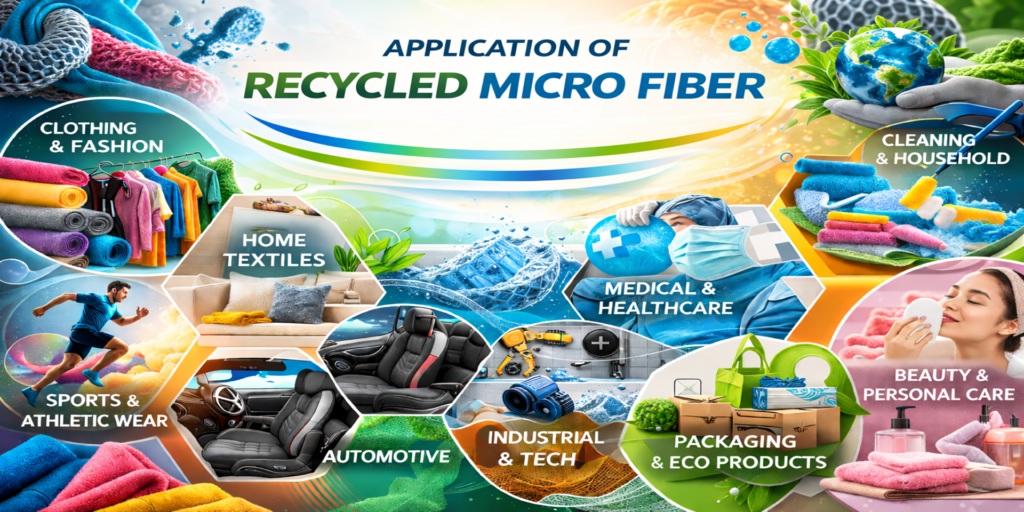
Microfiber is now used across nearly every segment of the cleaning industry.
1. Household Cleaning Cloths
This is one of the largest markets for microfiber.
Applications include:
- general cleaning cloths
- dusting cloths
- polishing cloths
- bathroom cleaning cloths
Consumers prefer microfiber because it provides:
- better cleaning efficiency
- streak-free cleaning
- reusable performance
2. Kitchen Towels
Microfiber kitchen towels are popular because they offer:
- strong water absorption
- quick drying
- grease removal capability
They are widely used in:
- households
- restaurants
- food service operations
3. Floor Mop Production
Microfiber floor mops provide:
- excellent dust collection
- strong absorption
- efficient floor cleaning
They are commonly used in:
- commercial cleaning
- hospitals
- industrial facilities
- household cleaning systems
4. Industrial Wipes
Industrial wipes require:
- durability
- strong grease removal
- lint reduction
Microfiber performs extremely well in industrial environments.
Applications include:
- machinery cleaning
- automotive workshops
- manufacturing plants
- maintenance operations
5. Automotive Cleaning Products
Automotive detailing products often use microfiber because it:
- protects surfaces
- reduces scratching
- improves polishing performance
Applications include:
- car drying towels
- polishing cloths
- interior cleaning fabrics
How Microfiber Cleaning Cloths are Manufactured
The manufacturing process depends on the final product and intended performance.
1. Yarn Spinning
Microfiber staple fiber is spun into yarn suitable for:
- knitting
- weaving
- warp knitting
The quality of the fiber directly impacts:
- softness
- durability
- absorption capability
2. Fabric Production
Cleaning cloth fabrics may be produced through:
- knitting
- weaving
- nonwoven production
Different production methods create different product characteristics.
3. Finishing Process
Finishing treatments improve:
- softness
- absorption
- durability
- anti-static performance
High-quality finishing is critical for premium cleaning products.
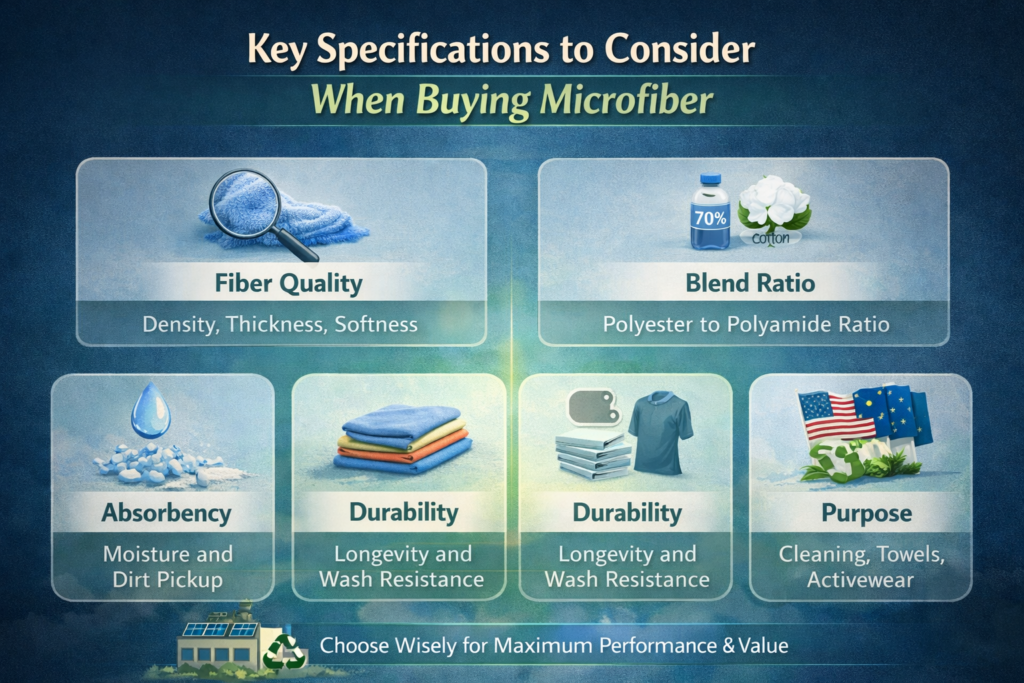
Key Specifications Buyers Should Consider
Selecting the correct microfiber specification is essential for cleaning cloth manufacturing.
1. Denier
Denier affects:
- softness
- absorption
- cleaning efficiency
Lower denier microfiber generally provides:
- softer texture
- better cleaning performance
- improved dust capture
Common microfiber deniers:
- 0.7D
- 0.9D
- 1.0D
- 1.4D
- 2.5D
- 3.0D
2. Cut Length
Cut length influences:
- spinning behavior
- fabric structure
- process efficiency
Common cut lengths include:
- 32mm
- 38mm
- 51mm
3. Fiber Strength
Strong fiber improves:
- durability
- washing resistance
- product lifespan
Weak fiber may create:
- lint problems
- product degradation
4. Oil Content and Finish
Fiber finish affects:
- processability
- static control
- cleaning performance
Proper finish is critical for stable production.
Why Recycled Microfiber is Growing Rapidly
Today, many buyers prefer recycled microfiber for cleaning cloth manufacturing.
This trend is driven by:
- sustainability goals
- environmental regulations
- consumer awareness
- global brand requirements
Recycled microfiber helps manufacturers:
- reduce plastic waste
- lower carbon footprint
- support circular economy initiatives
Many international buyers now specifically request recycled content in cleaning products.
Common Problems Caused by Poor Fiber Quality
Low-quality microfiber can create serious production and product issues.
Common problems include:
- poor absorption
- excessive lint
- inconsistent softness
- weak durability
- unstable fabric quality
These issues can damage:
- product reputation
- customer satisfaction
- manufacturing efficiency
This is why choosing a reliable supplier is essential.
How to Choose the Right Microfiber Supplier
A reliable microfiber supplier should provide:
- stable denier
- consistent cut length
- strong fiber durability
- reliable bulk supply
- technical support
For cleaning textile manufacturers, consistency matters more than low price alone.
High-quality microfiber leads to:
- better product performance
- fewer production issues
- stronger customer satisfaction
Conclusion
Microfiber has become the global standard for cleaning textile manufacturing because of its:
- superior absorption
- excellent dust capture
- strong cleaning performance
- durability
- sustainability potential
Choosing the right microfiber for cleaning cloth manufacturing is essential for achieving:
- stable production
- high product quality
- customer satisfaction
- long-term business growth
As global demand for high-performance and sustainable cleaning products continues to grow, microfiber will remain one of the most important materials in the industry.
If you are looking for a reliable supplier of microfiber for cleaning cloth applications, Eco Micro Fiber is ready to support your business.
Contact us today for specifications, samples, or quotation.
Eco Micro Fiber – Reliable Microfiber for Nonwoven Production
At Eco Micro Fiber, we supply high-quality recycled microfiber for cleaning cloth applications.
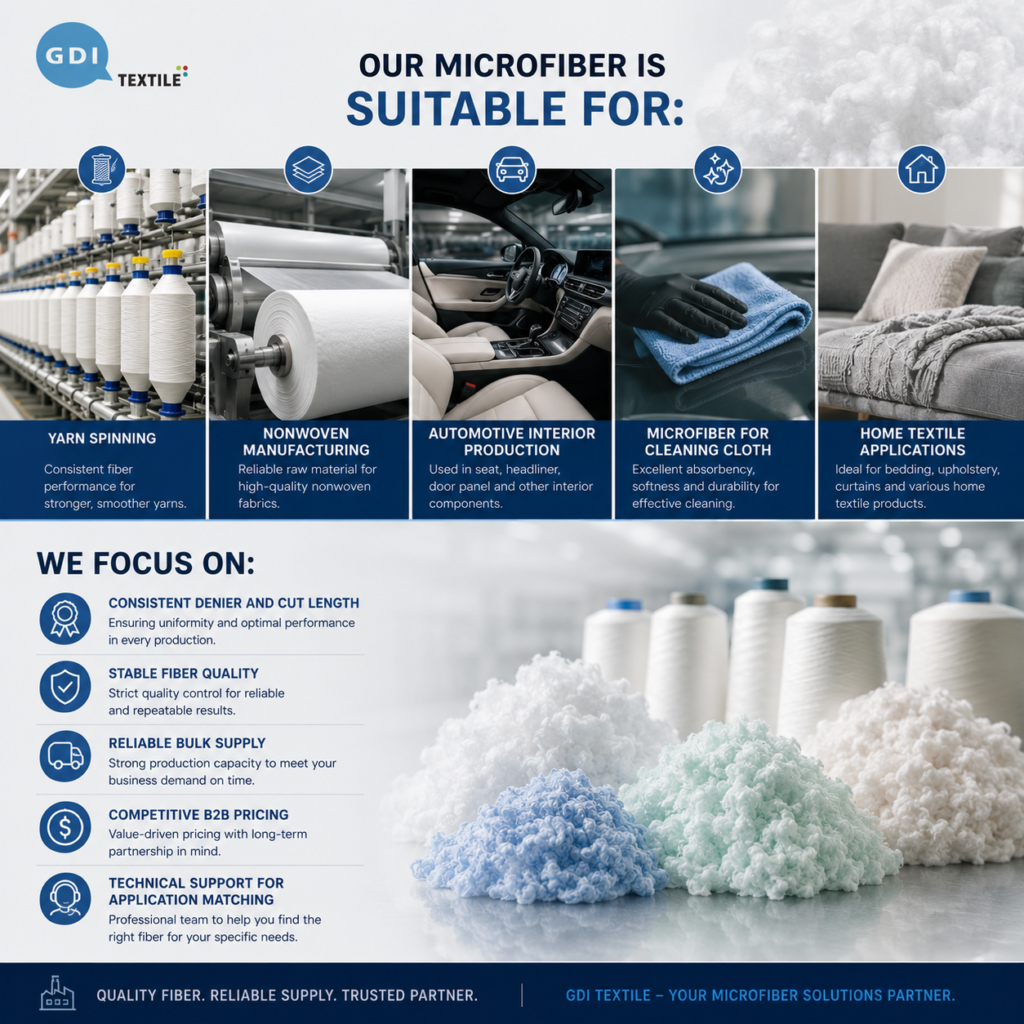
Our microfiber is suitable for:
- yarn spinning
- nonwoven manufacturing
- automotive interior production
- microfiber for cleaning cloth
- home textile applications
We focus on:
- consistent denier and cut length
- stable fiber quality
- reliable bulk supply
- competitive B2B pricing
- technical support for application matching
We understand that switching materials is a strategic decision, and we are here to support your business at every stage.
If you are looking for a trusted recycled micro fiber supplier, our team is ready to support your production needs.
Contact Us:
Email: [email protected]
Tel/WhatsApp: +84981527216
Contact us today to request technical specifications or product samples.