
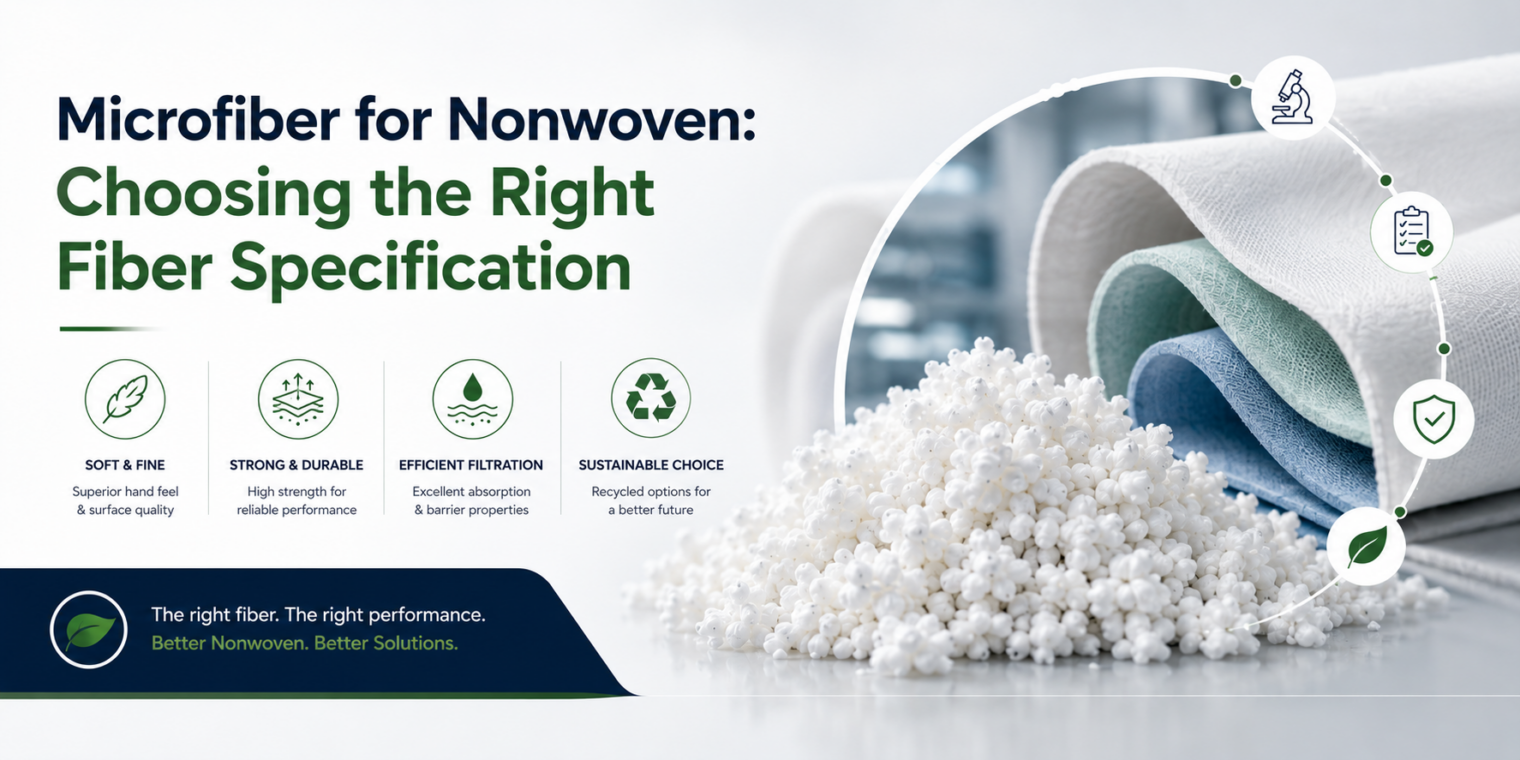
A Complete B2B Guide for Nonwoven Manufacturers and Industrial Buyers
The nonwoven industry is evolving rapidly as manufacturers seek materials that offer better performance, higher efficiency, and improved sustainability. Among the most important raw materials driving this transformation is microfiber for nonwoven production.
From cleaning wipes and filtration materials to automotive felt and industrial fabrics, microfiber has become a preferred solution because of its:
- fine fiber structure
- excellent absorption
- strong filtration performance
- lightweight properties
- soft texture
However, achieving high-quality nonwoven production depends heavily on selecting the correct microfiber specification.
Many manufacturers experience production issues such as:
- unstable web formation
- poor bonding performance
- inconsistent thickness
- excessive lint generation
- low absorption efficiency
In most cases, these problems are directly related to choosing the wrong fiber specification or inconsistent microfiber quality.
This guide explains everything B2B buyers and nonwoven manufacturers need to know about selecting the right microfiber for nonwoven applications, including:
- key fiber specifications
- performance advantages
- production considerations
- common applications
- supplier selection factors
Understanding these factors can help improve production efficiency, reduce waste, and enhance final product quality.
Why Microfiber is Widely Used in Nonwoven Manufacturing
Microfiber is increasingly used in nonwoven production because its ultra-fine structure provides several major advantages compared to conventional polyester staple fiber.
The fine diameter of microfiber creates:
- larger surface area
- improved absorption
- better particle capture
- softer fabric texture
- enhanced filtration performance
These characteristics make microfiber highly suitable for modern nonwoven products.
Today, microfiber is widely used in:
- cleaning wipes
- industrial wipes
- filtration media
- automotive felt
- acoustic insulation
- hygiene products
As sustainability becomes more important, many manufacturers are also transitioning toward recycled microfiber for nonwoven applications.
What is Microfiber for Nonwoven?
Microfiber for nonwoven refers to fine-denier polyester staple fiber specifically designed for nonwoven production processes such as:
- needle punching
- spunlace
- thermal bonding
- airlaid systems
Typical microfiber denier ranges include:
- 0.7D
- 0.9D
- 1.0D
- 1.2D
- 1.5D
- 2.5D
- 3.0D
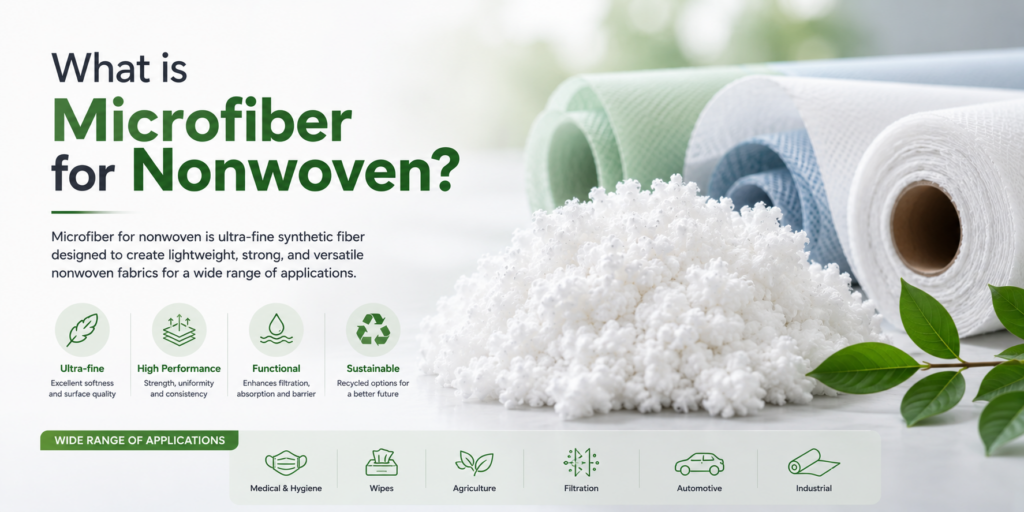
Because microfiber fibers are much finer than conventional polyester fibers, they create denser and more functional nonwoven structures.
Major Advantages of Using Microfiber in Nonwoven Production
1. Superior Absorption Performance
One of the biggest advantages of microfiber is its high absorption capability.
The fine fiber structure creates:
- larger contact surface
- improved liquid retention
- faster absorption speed
This is especially important for:
- cleaning wipes
- industrial wipes
- floor cleaning products
Microfiber-based nonwoven materials can absorb significantly more liquid compared to standard polyester nonwoven products.
2. Better Filtration Efficiency
Microfiber creates denser fiber networks, which improves filtration performance.
This allows microfiber nonwoven materials to capture:
- dust particles
- fine contaminants
- microscopic debris
As a result, microfiber is widely used in:
- air filtration
- liquid filtration
- industrial filtration materials
3. Improved Softness and Surface Feel
Microfiber nonwoven fabrics are softer and smoother than standard polyester nonwoven products.
This improves user experience in applications such as:
- cleaning cloths
- personal care products
- automotive interiors
- household textiles
Softness is particularly important in consumer-facing products.
4. Lightweight Structure
Despite strong performance, microfiber remains lightweight.
This offers important advantages:
- reduced material consumption
- easier processing
- improved product flexibility
In automotive and industrial applications, lightweight materials also help improve efficiency.
5. Enhanced Cleaning Performance
Microfiber is highly effective at trapping:
- grease
- dust
- dirt
- microscopic particles
This is why microfiber dominates the global market for:
- cleaning wipes
- microfiber for cleaning cloth
- industrial wiping products
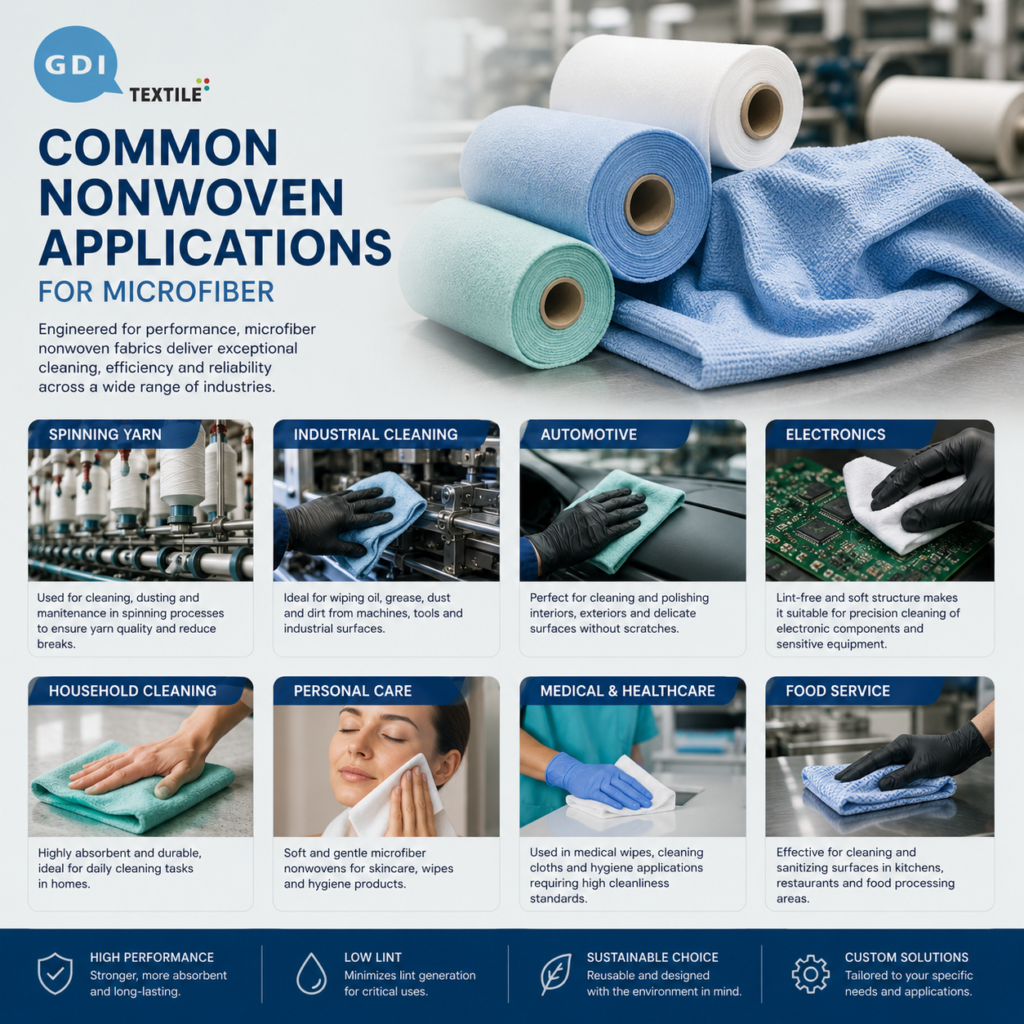
Common Nonwoven Applications for Microfiber
Microfiber is used across many nonwoven sectors.
1. Cleaning Wipes
One of the largest applications is cleaning wipes.
Microfiber nonwoven wipes provide:
- superior cleaning performance
- strong absorption
- lint reduction
- durability
Applications include:
- household wipes
- industrial wipes
- automotive cleaning wipes
2. Filtration Materials
Microfiber is highly suitable for filtration because of its fine structure.
Common applications:
- HVAC filters
- industrial filtration
- liquid filtration systems
The smaller fiber diameter improves filtration efficiency significantly.
3. Automotive Felt and Interior Materials
Automotive manufacturers increasingly use microfiber nonwoven materials for:
- car carpets
- felt materials
- acoustic insulation
- trunk liners
Microfiber provides:
- lightweight structure
- durability
- sound absorption performance
4. Hygiene and Disposable Products
Some hygiene products use microfiber nonwoven structures because of their:
- softness
- absorption capability
- lightweight properties
Key Fiber Specifications Buyers Should Consider
Selecting the correct microfiber specification is critical for successful nonwoven production.
1. Denier
Denier is one of the most important factors.
Lower Denier
- softer material
- higher absorption
- better filtration efficiency
Higher Denier
- easier process stability
- stronger structure
Typical microfiber deniers:
- 0.9D
- 1.0D
- 1.2D
- 1.5D
The correct denier depends on the application and production process.
2. Cut Length
Cut length affects:
- web formation
- processing stability
- bonding performance
Common cut lengths:
- 32mm
- 38mm
- 51mm
Incorrect cut length can cause:
- web instability
- uneven thickness
- fiber entanglement
3. Crimp
Crimp improves:
- fiber cohesion
- web formation
- processing efficiency
Proper crimp is essential for stable nonwoven production.
4. Fiber Finish
Fiber finish affects:
- static control
- lubrication
- processability
Poor finish quality can create major production problems.
5. Fiber Strength
Fiber strength impacts:
- durability
- process stability
- product lifespan
Weak fiber may lead to:
- lint generation
- material failure
- lower product quality
Common Problems Caused by Poor Fiber Quality
Many nonwoven manufacturers face problems because of inconsistent microfiber quality.
Common issues include:
- unstable denier
- excessive static
- uneven web formation
- bonding difficulties
- poor absorption performance
These problems increase:
- production waste
- machine downtime
- operating cost
This is why choosing a reliable microfiber supplier is critical.
Recycled Microfiber for Nonwoven Applications
Global demand for recycled microfiber is growing rapidly.
Many manufacturers now prefer recycled microfiber because it helps:
- reduce environmental impact
- support sustainability goals
- meet buyer requirements
- reduce dependence on virgin materials
Recycled microfiber is especially popular in:
- cleaning products
- automotive applications
- industrial wipes
- sustainable nonwoven products
As sustainability regulations become stricter, recycled microfiber will become even more important in the nonwoven industry.
How to Choose the Right Microfiber Supplier
A reliable microfiber supplier should provide:
- stable denier
- consistent cut length
- reliable bulk supply
- technical support
- stable product quality
For nonwoven production, consistency matters more than low price alone.
Even small specification variations can affect:
- web formation
- machine efficiency
- product performance
Conclusion
Choosing the right microfiber for nonwoven production is essential for producing high-quality materials and maintaining efficient manufacturing processes.
The correct microfiber specification can improve:
- absorption
- filtration efficiency
- softness
- process stability
- final product value
At the same time, poor-quality microfiber can create:
- production instability
- waste
- machine downtime
- customer complaints
As global demand for sustainable and high-performance nonwoven materials continues to grow, microfiber will remain one of the most important fibers in the industry.
If you are looking for a reliable supplier of microfiber for nonwoven applications, Eco Micro Fiber is ready to support your business.
Contact us today for specifications, samples, or quotations.
Eco Micro Fiber – Reliable Microfiber for Nonwoven Production
At Eco Micro Fiber, we supply high-quality recycled microfiber for nonwoven manufacturing designed for industrial textile applications.
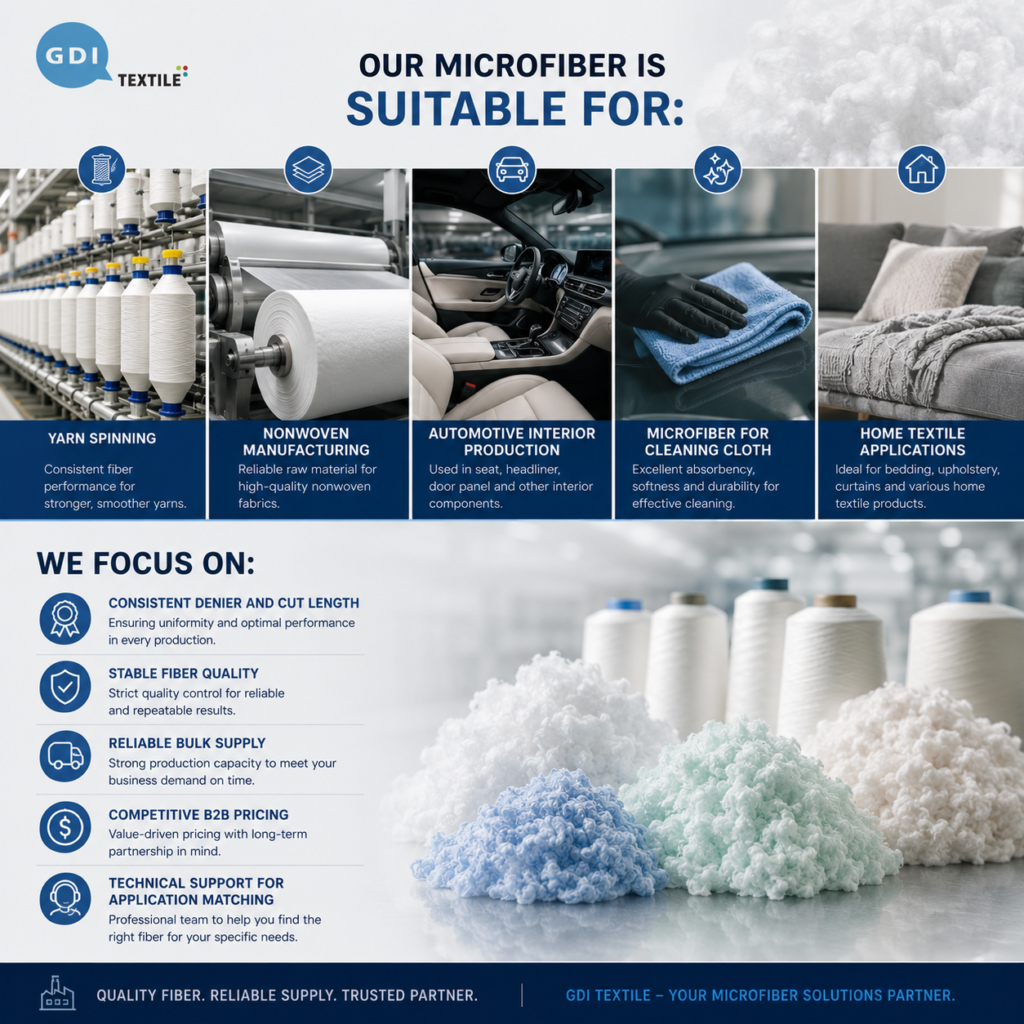
Our microfiber is suitable for:
- yarn spinning
- nonwoven manufacturing
- automotive interior production
- microfiber for cleaning cloth
- home textile applications
We focus on:
- consistent denier and cut length
- stable fiber quality
- reliable bulk supply
- competitive B2B pricing
- technical support for application matching
We understand that switching materials is a strategic decision, and we are here to support your business at every stage.
If you are looking for a trusted recycled micro fiber supplier, our team is ready to support your production needs.
Contact Us:
Email: [email protected]
Tel/WhatsApp: +84981527216
Contact us today to request technical specifications or product samples.