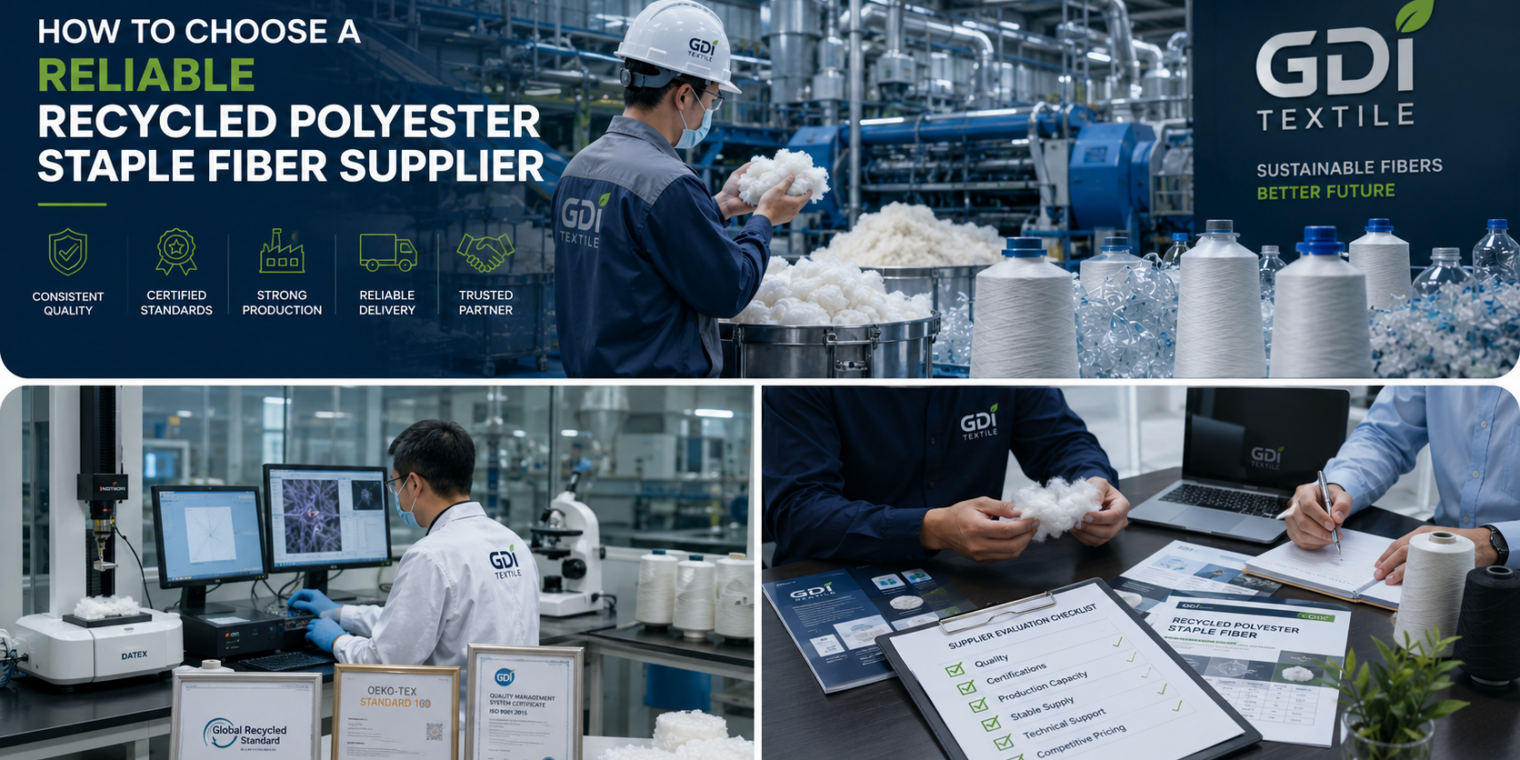
A Complete B2B Guide for Importers, Textile Manufacturers, and Global Buyers
Choosing the right recycled polyester staple fiber supplier is one of the most important decisions for textile manufacturers, spinning mills, nonwoven producers, and industrial fabric companies.
While fiber specifications and pricing are important, long-term business success depends on much more than simply finding the lowest-cost supplier.
A reliable supplier can help you:
- Maintain consistent product quality
- Reduce production downtime
- Improve manufacturing efficiency
- Meet sustainability requirements
- Strengthen your supply chain
On the other hand, selecting the wrong supplier can result in:
- Inconsistent fiber quality
- Shipment delays
- Production losses
- Customer complaints
- Higher operating costs
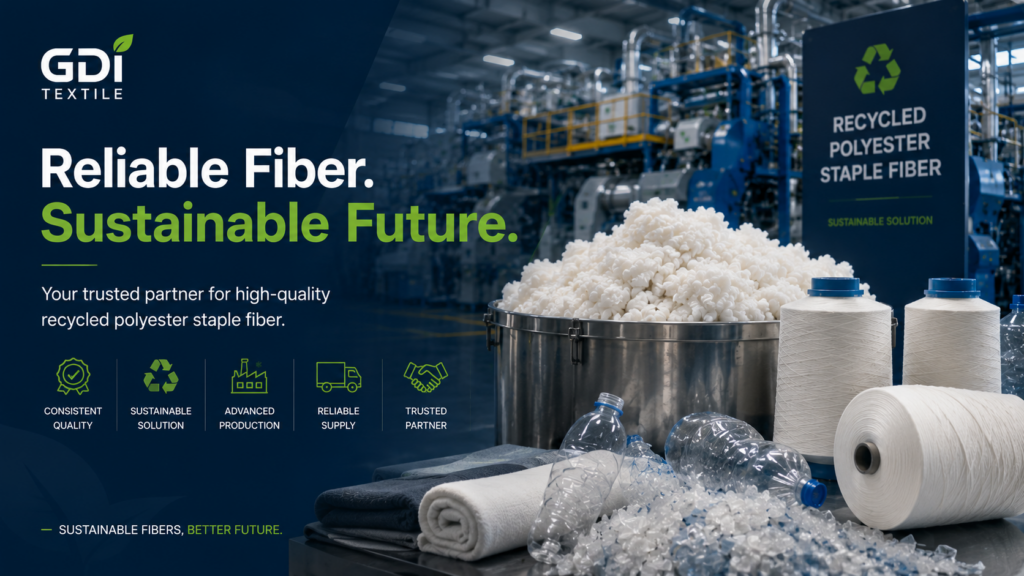
This guide explains how B2B buyers can evaluate and select the right recycled polyester staple fiber supplier, covering technical capabilities, quality control, sustainability, logistics, and long-term partnership considerations.
Why Supplier Selection Matters
Polyester staple fiber is the foundation of many textile products, including:
- Yarn
- Nonwoven fabrics
- Automotive felt
- Cleaning textiles
- Furniture padding
- Geotextiles
- Home textiles
Even small differences in fiber quality can affect:
- Yarn evenness
- Web formation
- Fabric appearance
- Product durability
- Machine efficiency
Because of this, supplier consistency is often more valuable than achieving the lowest purchase price.
1. Evaluate Manufacturing Experience
An experienced supplier understands both fiber production and customer applications.
Ask questions such as:
- How many years have you produced recycled polyester staple fiber?
- Which export markets do you currently serve?
- Which industries are your primary customers?
- Can you provide application recommendations?
Suppliers with broad international experience usually have stronger quality systems and better technical support.
2. Review Production Capacity
Large buyers require suppliers that can deliver consistently over many months or years.
Important questions include:
- Monthly production capacity
- Available denier range
- Available cut lengths
- Color options
- Lead time for production
A supplier with sufficient capacity reduces the risk of supply interruptions.
3. Verify Fiber Specifications
Request a detailed technical specification sheet.
Typical specifications include:
- Denier
- Cut length
- Tensile strength
- Elongation
- Crimp
- Moisture content
- Oil finish
- Color consistency
Stable specifications lead to stable production performance.
4. Assess Quality Control Systems
Reliable suppliers invest heavily in quality management.
Look for companies that perform:
- Incoming raw material inspection
- In-process monitoring
- Final product testing
- Batch traceability
- Laboratory analysis
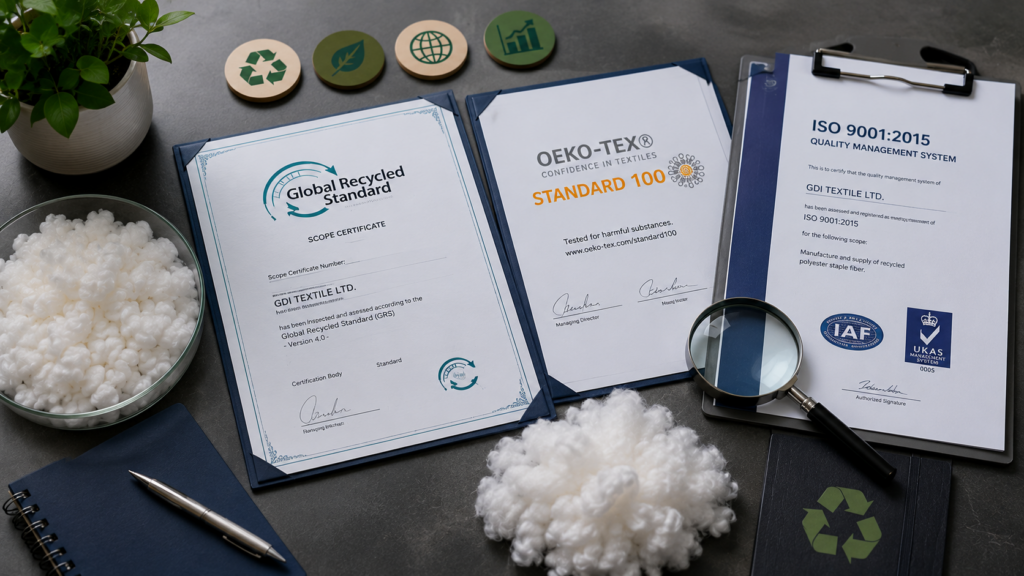
Ask whether each shipment is tested before export.
Strong quality control reduces the likelihood of receiving inconsistent fiber.
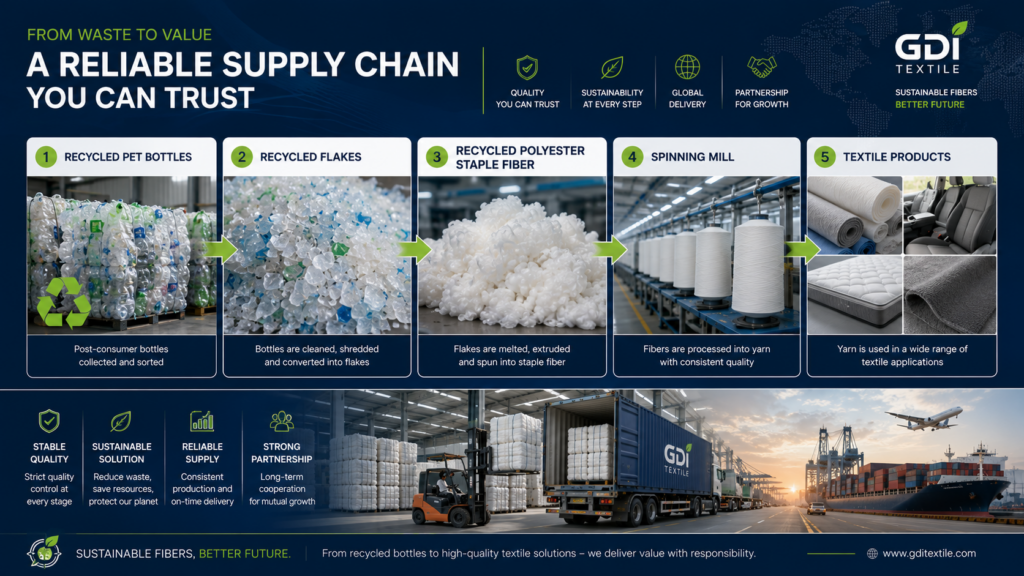
5. Ask About Raw Material Sources
The quality of recycled polyester begins with raw materials.
Reliable manufacturers typically use:
- Clean PET bottle flakes
- Carefully sorted recycled polyester
- Controlled production waste
Poor raw material selection often results in:
- Color variation
- Higher impurity levels
- Lower fiber strength
Understanding the supplier’s sourcing process helps evaluate long-term quality.
6. Confirm Export Experience
International buyers should prioritize suppliers with established export capabilities.
Check whether the supplier can provide:
- Commercial Invoice
- Packing List
- Bill of Lading
- Certificate of Origin
- Quality Certificate
- Container loading support
Export experience reduces shipping delays and documentation problems.
7. Evaluate Sustainability Commitment
Many global buyers now require sustainable sourcing.
Ask potential suppliers about:
- Recycled raw material content
- Environmental management systems
- Traceability processes
- Sustainability initiatives
Suppliers committed to sustainability are often better positioned for long-term international business.
8. Request Product Samples
Never place a large order without evaluating samples.
Testing should include:
- Fiber consistency
- Denier verification
- Cut length
- Spinning performance
- Nonwoven processing
- Absorption (for microfiber)
- Finished product quality
Production trials are the best way to verify supplier capability.
9. Assess Communication and Technical Support
Responsive communication is essential in international trade.
A professional supplier should:
- Respond promptly
- Provide technical advice
- Answer specification questions clearly
- Support product development
- Communicate proactively about production and shipping
Strong communication helps avoid misunderstandings and production delays.
10. Consider Long-Term Partnership Potential
Rather than changing suppliers frequently, many successful manufacturers develop long-term partnerships.
Benefits include:
- Stable pricing discussions
- Better production planning
- Priority scheduling
- Faster problem resolution
- Continuous product improvement
Long-term relationships often create greater value than short-term cost savings.
Common Mistakes Buyers Should Avoid
Many importers focus only on price.
This can lead to:
- Inconsistent shipments
- Hidden production costs
- Higher defect rates
- Machine downtime
- Customer complaints
Other common mistakes include:
- Skipping sample testing
- Ignoring quality documentation
- Choosing suppliers without export experience
- Failing to evaluate production capacity
A structured supplier evaluation process reduces these risks.
Conclusion
Choosing the right recycled polyester staple fiber supplier is about much more than comparing prices.
The best supplier offers:
- Consistent quality
- Reliable production capacity
- Strong quality control
- Export expertise
- Technical support
- Long-term partnership
For manufacturers seeking stable production and sustainable growth, selecting a dependable supplier is one of the smartest investments they can make.
If you are looking for a trusted supplier of recycled polyester staple fiber, Eco Micro Fiber is ready to support your business with reliable products, professional service, and long-term cooperation.
Contact us today to request samples, technical specifications, or a quotation.
Why Buyers Choose Eco Micro Fiber
At Eco Micro Fiber, we specialize in supplying high-quality recycled polyester staple fiber for customers around the world.
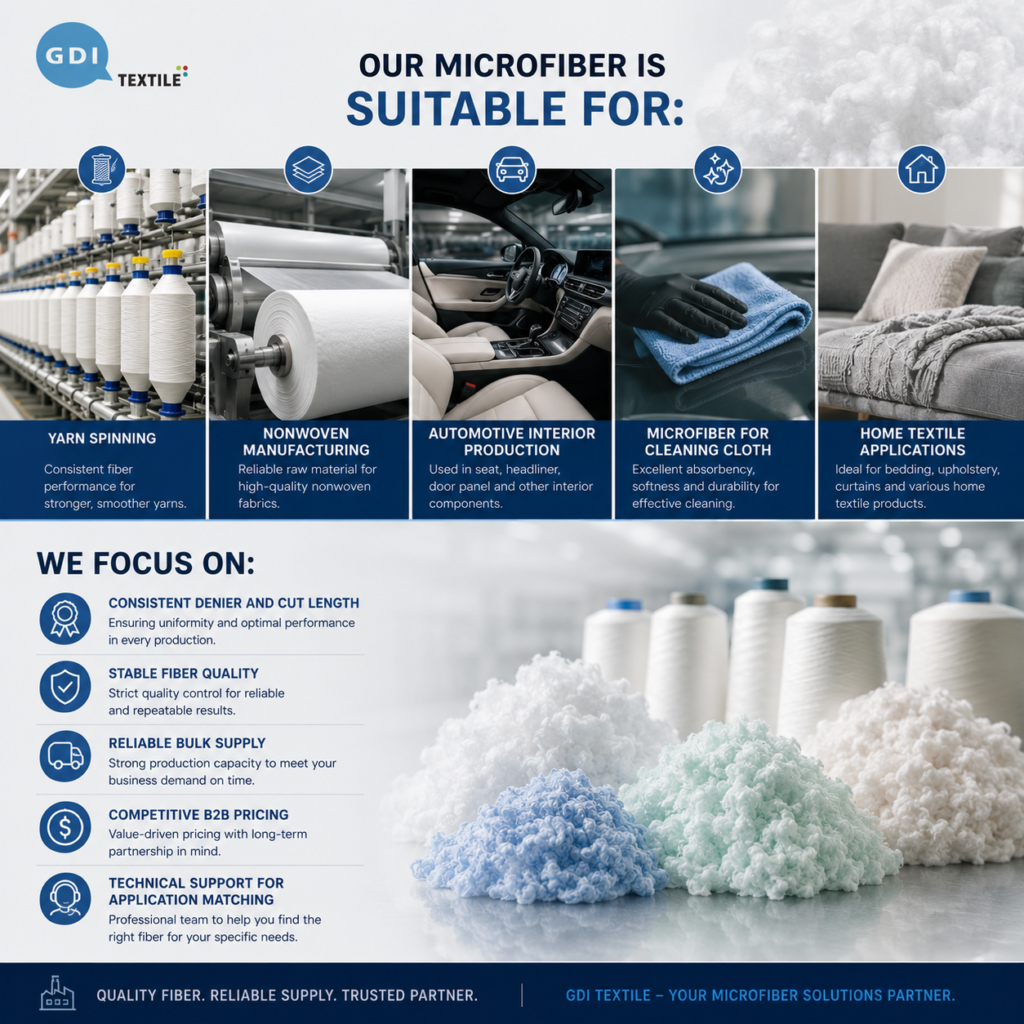
Our products are suitable for:
- Yarn spinning
- Nonwoven manufacturing
- Automotive interiors
- Cleaning textiles
- Home textile applications
We are committed to providing:
- Stable denier and cut length
- Consistent production quality
- Reliable export service
- Competitive factory-direct pricing
- Responsive technical support
Our goal is to become a trusted long-term partner for textile manufacturers and importers worldwide.
If you are looking for a trusted recycled polyester staple fiber supplier, our team is ready to support your production needs.
Contact Us:
Email: [email protected]
Tel/WhatsApp: +84981527216
Contact us today to request technical specifications or product samples.