A Complete B2B Guide to Choosing the Right Microfiber for High-Quality Yarn Production
The global textile industry is increasingly shifting toward high-performance yarns that offer softness, durability, absorption, and sustainability. As a result, demand for microfiber for yarn spinning is growing rapidly across international markets.
From towels and knit fabrics to cleaning textiles and blended yarns, microfiber has become a preferred raw material for spinning mills seeking to improve yarn quality and meet modern buyer expectations.
However, selecting the right microfiber for spinning is not always simple.
Many manufacturers face challenges such as:
- inconsistent yarn quality
- spinning instability
- excessive waste
- poor blending performance
- fiber breakage during production
In most cases, these problems are directly related to incorrect fiber selection or inconsistent microfiber quality.
This guide explains everything B2B buyers and spinning mills need to know about choosing the best microfiber for yarn spinning, including:
- key fiber specifications
- performance advantages
- common production problems
- blending recommendations
- supplier considerations
Understanding these factors can help manufacturers improve yarn quality, reduce production issues, and strengthen competitiveness in global textile markets.
Why Microfiber is Widely Used in Yarn Spinning
Microfiber has become increasingly popular in spinning because of its ultra-fine fiber structure.
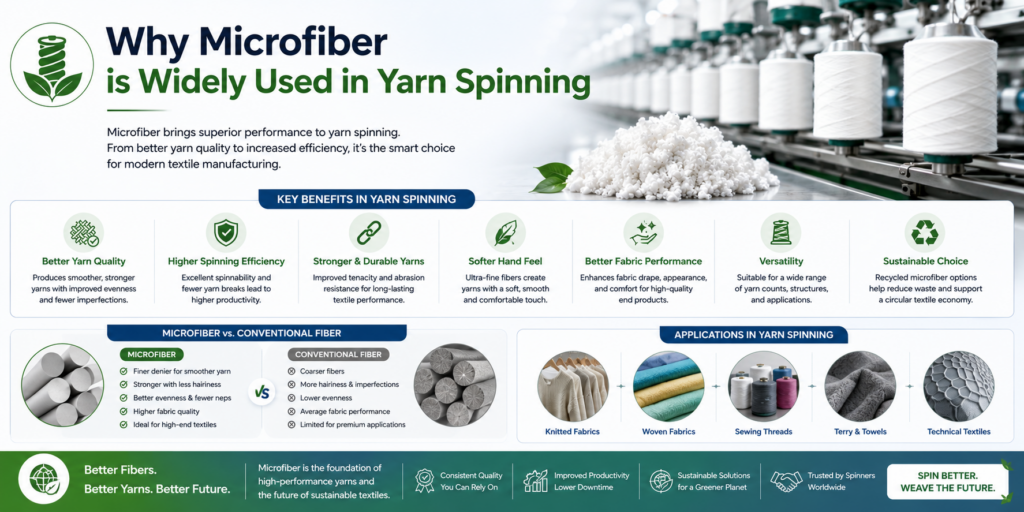
Compared to conventional polyester staple fiber, microfiber provides:
- softer yarn texture
- better fabric feel
- improved absorption
- higher fabric density
- enhanced performance in cleaning textiles
Because microfiber fibers are extremely fine, they create yarns with a smoother and more luxurious appearance.
This makes microfiber highly suitable for:
- towels
- knit fabrics
- cleaning cloth yarn
- home textiles
- blended yarn applications
Today, many spinning mills are transitioning from standard polyester to recycled microfiber to meet sustainability requirements and increase product value.
Understanding Microfiber for Spinning
In spinning applications, microfiber generally refers to polyester staple fiber with very low denier, commonly:
- 0.7D
- 0.9D
- 1.0D
- 1.2D
- 1.5D
The lower the denier, the finer the fiber.
Fine fibers create yarns with:
- softer hand feel
- smoother surface
- higher absorption capability
However, finer fibers also require better process control and consistent fiber quality.
Key Benefits of Using Microfiber for Yarn Spinning
1. Improved Yarn Softness
One of the biggest advantages of microfiber is softness.
Because the fibers are finer, the resulting yarn feels:
- smoother
- softer
- more comfortable
This is especially important for products such as:
- towels
- garments
- bedding textiles
- microfiber cloths
Softness is a major selling point in both consumer and industrial textile markets.
2. Better Absorption Performance
Microfiber yarn has significantly higher absorption capacity compared to standard polyester yarn.
This is due to the larger surface area created by ultra-fine fibers.
As a result, microfiber yarn is ideal for:
- towels
- cleaning cloths
- floor mop yarn
- industrial wiping fabrics
The improved absorption performance helps manufacturers produce higher-value products.
3. Higher Fabric Density and Better Appearance
Microfiber yarn can produce fabrics with:
- tighter structure
- smoother appearance
- better drape
- improved visual quality
This helps textile manufacturers create premium products with better market positioning.
4. Enhanced Cleaning Efficiency
For cleaning textile applications, microfiber yarn performs exceptionally well because it can trap:
- dust
- grease
- microscopic particles
This is why microfiber for cleaning cloth dominates the global cleaning textile market.
5. Compatibility with Blended Yarn Production
Microfiber is often blended with:
- cotton
- viscose
- polyester
- recycled fibers
Blending helps manufacturers achieve specific performance and cost targets.
For example:
Cotton + Microfiber
- softer texture
- improved absorption
- better durability
Viscose + Microfiber
- smoother fabric feel
- lightweight structure
Most Common Applications of Microfiber Yarn
Microfiber yarn is widely used across multiple industries.
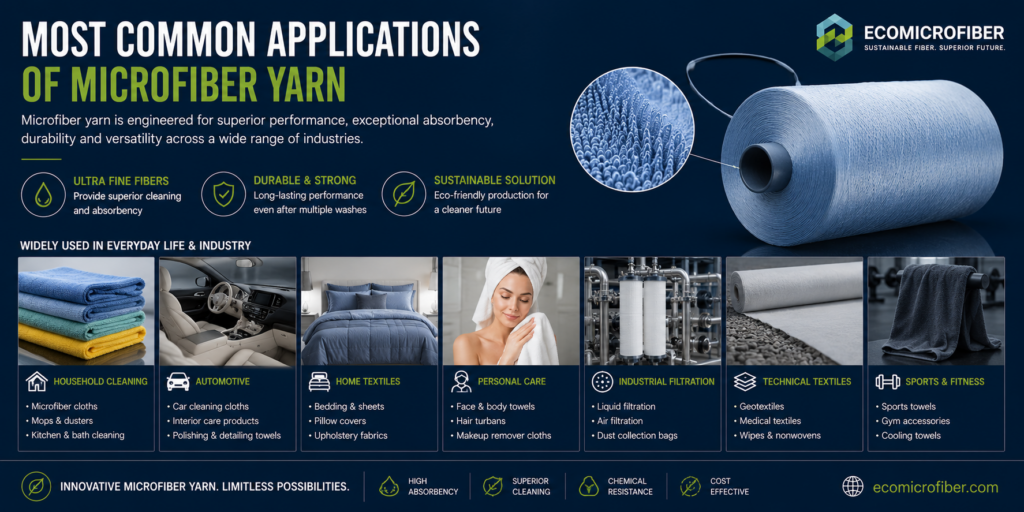
1. Towels and Bath Textiles
Microfiber towel yarn is popular because it offers:
- strong absorption
- quick drying
- soft touch
- lightweight performance
This is one of the largest applications in the spinning industry.
2. Cleaning Cloth Manufacturing
Microfiber yarn is essential for:
- cleaning cloths
- kitchen towels
- industrial wipes
- floor mops
The fiber’s fine structure improves cleaning performance significantly.
3. Knit Fabric Production
Microfiber yarn is commonly used in knit fabrics for:
- sportswear
- soft apparel
- lightweight fabrics
Manufacturers prefer microfiber because it improves comfort and fabric quality.
4. Home Textile Applications
Microfiber spinning yarn is also used for:
- bedding materials
- upholstery fabrics
- household textiles
Its softness and durability make it suitable for long-term use.
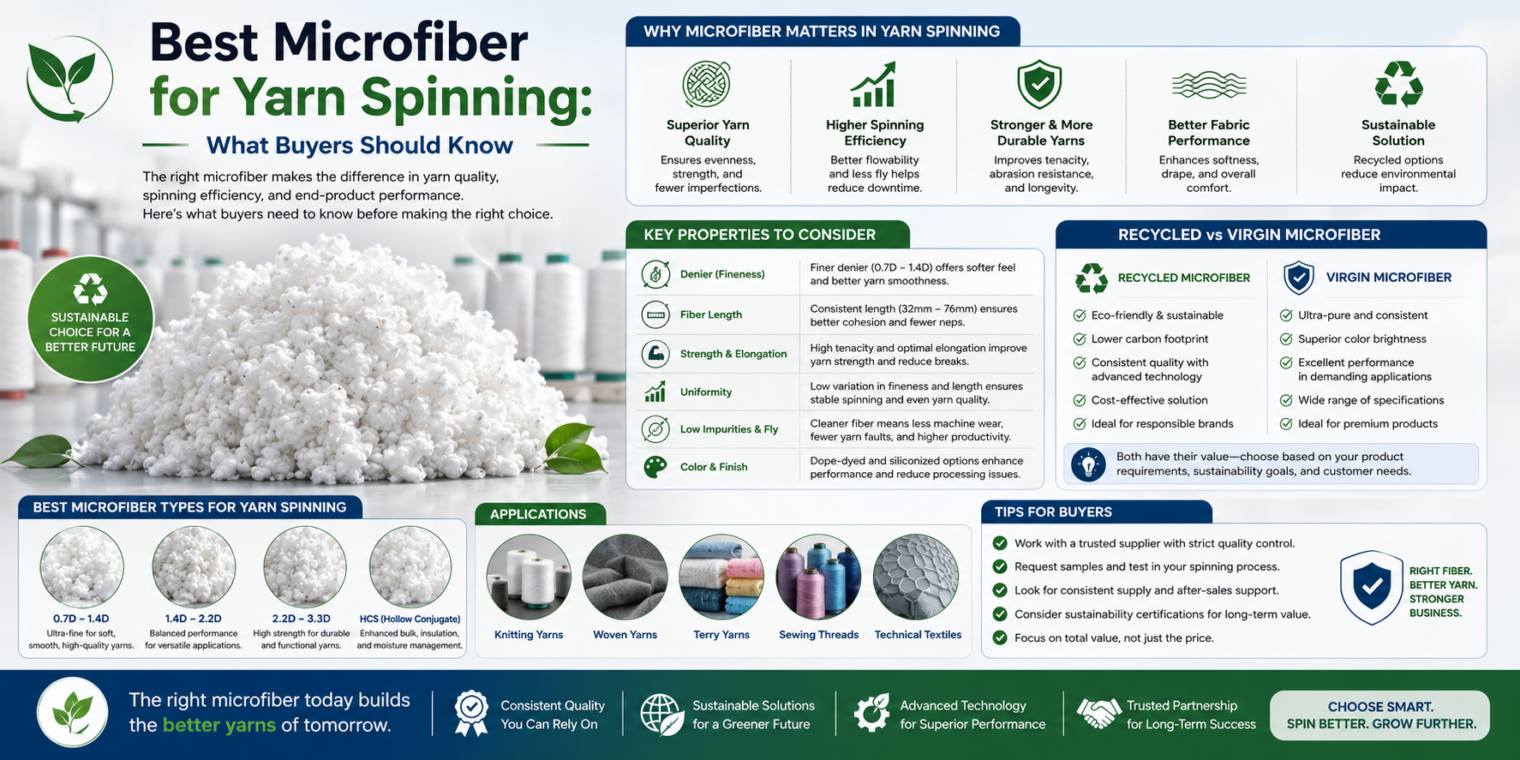
Key Specifications Buyers Should Consider
Choosing the best microfiber for spinning requires careful attention to technical specifications.
1. Denier
Denier is one of the most important factors.
Lower Denier
- softer yarn
- better absorption
- smoother texture
Higher Denier
- easier spinning stability
- stronger yarn structure
Common spinning deniers include:
- 0.9D
- 1.0D
- 1.2D
- 1.5D
The correct denier depends on the final product.
2. Cut Length
Cut length affects spinning behavior and yarn formation.
Typical cut lengths:
- 32mm
- 38mm
- 51mm
Incorrect cut length may cause:
- fiber entanglement
- poor yarn evenness
- processing instability
3. Fiber Strength
Fiber strength directly impacts:
- spinning efficiency
- yarn durability
- breakage resistance
Weak fiber can increase production waste and machine stoppage.
4. Crimp
Crimp improves:
- fiber cohesion
- spinning performance
- yarn consistency
Proper crimp is critical for stable spinning operation.
5. Oil Content / Finish
Fiber finish affects:
- static control
- machine processing
- friction performance
Poor finish quality can create major spinning problems.
Common Problems When Using Low-Quality Microfiber
Many spinning mills experience issues because of inconsistent fiber quality.
Common problems include:
- unstable denier
- excessive lint generation
- poor blending behavior
- uneven yarn appearance
- high breakage rates
These issues can result in:
- lower production efficiency
- higher waste
- customer complaints
- increased operating cost
This is why selecting a reliable microfiber supplier is critical.
Recycled Microfiber vs Virgin Polyester for Spinning
Many buyers now compare recycled microfiber with virgin polyester.
Advantages of Recycled Microfiber
- more sustainable
- softer texture
- lower environmental impact
- preferred by global buyers
Advantages of Virgin Polyester
- traditionally stable quality
- widely available
However, recycled microfiber quality has improved significantly in recent years.
Today, many spinning mills successfully use recycled microfiber in high-quality yarn production.
How Sustainability is Changing Yarn Manufacturing
Global brands increasingly require:
- recycled material content
- sustainable sourcing
- lower carbon footprint
As a result, spinning mills using recycled microfiber gain important advantages in export markets.
This is especially true for:
- Europe
- North America
- Japan
Sustainability is now becoming a key competitive factor in textile sourcing.
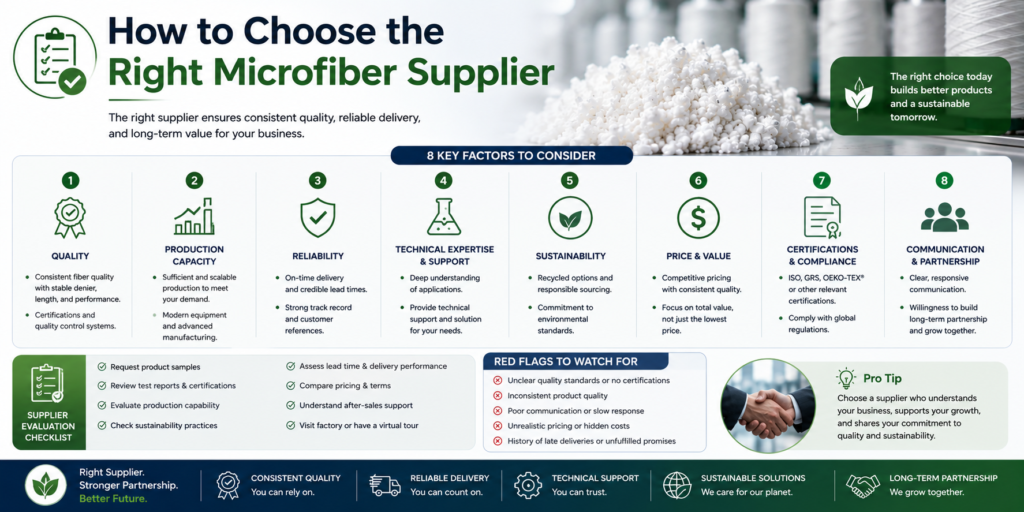
How to Choose the Right Microfiber Supplier
A reliable microfiber supplier should provide:
- stable denier
- consistent cut length
- reliable fiber strength
- technical support
- stable bulk supply
For spinning mills, consistency matters more than low pricing alone.
Even small variations in microfiber quality can impact:
- yarn quality
- machine efficiency
- production cost
Conclusion
Choosing the best microfiber for yarn spinning is critical for producing high-quality yarn and maintaining efficient textile production.
The right microfiber can improve:
- softness
- absorption
- yarn appearance
- spinning efficiency
- final product value
At the same time, poor fiber selection can lead to:
- machine problems
- unstable quality
- increased waste
- higher production cost
As demand for sustainable and high-performance textiles continues to grow, recycled microfiber is becoming an increasingly important material for spinning mills worldwide.
If you are looking for a reliable supplier of microfiber for spinning, Eco Micro Fiber is ready to support your business.
Contact us today for specifications, samples, or quotation.
Eco Micro Fiber – Supporting Your Transition to Sustainable Materials
At Eco Micro Fiber, we supply high-quality recycled microfiber for spinning applications designed for industrial textile applications.
Our microfiber is suitable for:
- yarn spinning
- nonwoven manufacturing
- automotive interior production
- microfiber for cleaning cloth
- home textile applications
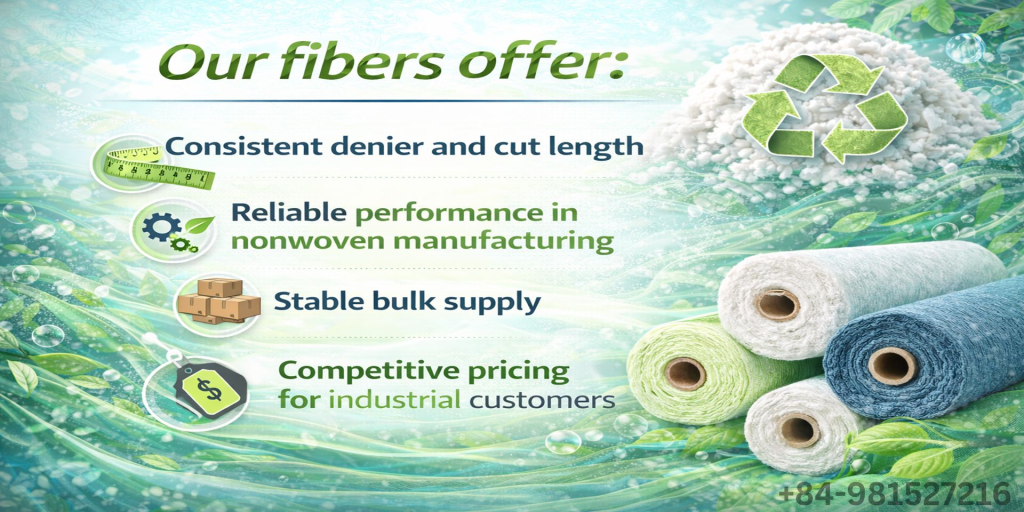
We focus on:
- consistent denier and cut length
- stable fiber quality
- reliable bulk supply
- competitive B2B pricing
- technical support for application matching
We understand that switching materials is a strategic decision, and we are here to support your business at every stage.
If you are looking for a trusted recycled micro fiber supplier, our team is ready to support your production needs.
Contact Us:
Email: [email protected]
Tel/WhatsApp: +84981527216
Contact us today to request technical specifications or product samples.