
A Complete B2B Guide for Textile, Nonwoven, and Industrial Manufacturers
In today’s highly competitive textile and industrial manufacturing market, controlling production cost is more important than ever.
Manufacturers are facing increasing pressure from:
- rising raw material prices
- labor cost increases
- energy consumption
- global competition
- sustainability requirements
At the same time, buyers expect:
- better product quality
- stable pricing
- environmentally responsible production
As a result, many manufacturers are searching for ways to reduce operating costs without sacrificing performance or quality.
One solution that is rapidly gaining attention is the use of recycled polyester micro fiber.
Originally adopted mainly for sustainability purposes, recycled microfiber is now recognized as a material that can also help manufacturers:
- improve production efficiency
- reduce waste
- increase product value
- optimize material usage
- lower long-term operating costs
This guide explains how recycled polyester micro fiber helps reduce production cost across industries such as:
- yarn spinning
- nonwoven manufacturing
- cleaning textile production
- automotive interiors
- industrial textile applications
It also covers:
- key cost-saving advantages
- production optimization strategies
- common mistakes to avoid
- supplier selection considerations
Understanding these factors can help manufacturers improve profitability while staying competitive in global markets.
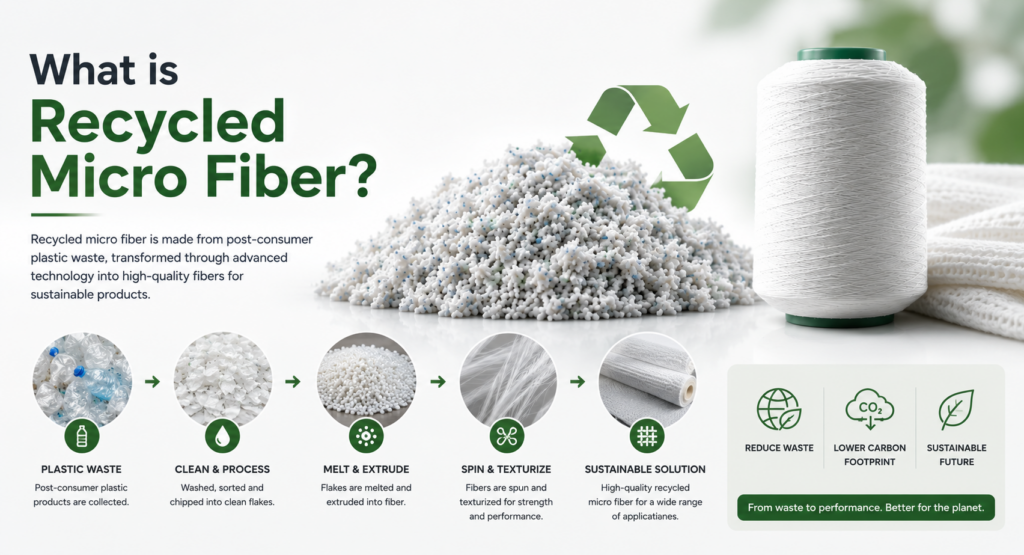
What is Recycled Micro Fiber?
Recycled micro fiber is an ultra-fine polyester staple fiber produced from recycled PET materials such as:
- plastic bottles
- recycled polyester waste
- post-industrial textile waste
Compared to standard polyester fiber, microfiber has:
- finer denier
- larger surface area
- softer texture
- higher absorption capability
Today, recycled microfiber is widely used in:
- microfiber for cleaning cloth
- towels
- industrial wipes
- nonwoven materials
- automotive felt
- yarn spinning applications
Because of its performance advantages, many manufacturers now use recycled microfiber not only for sustainability but also for operational efficiency.
Why Production Cost Matters More Than Ever
In B2B manufacturing, profit margins are often under pressure due to:
- aggressive market pricing
- raw material fluctuations
- buyer negotiation pressure
- increasing operational expenses
Reducing cost while maintaining quality has become essential for long-term survival.
However, cutting cost through low-quality raw materials often creates bigger problems:
- unstable production
- customer complaints
- machine downtime
- excessive waste
- inconsistent final products
The goal should not be simply “cheaper materials,” but rather:
“higher production efficiency with stable quality.”
This is where recycled microfiber offers significant advantages.
1. Reduced Material Waste
One of the biggest hidden costs in textile manufacturing is material waste.
Low-quality or inconsistent fiber often creates:
- production defects
- unusable products
- fiber loss during processing
- excessive trimming waste
High-quality recycled microfiber can help reduce these losses through:
- stable denier
- consistent cut length
- reliable process performance
This improves overall production yield.
Example in Yarn Spinning
In spinning mills, unstable fiber quality may cause:
- yarn breakage
- uneven yarn
- machine stoppages
Consistent recycled microfiber helps reduce these issues, improving operational efficiency.
Example in Nonwoven Production
In nonwoven manufacturing, inconsistent fiber can lead to:
- poor web formation
- uneven thickness
- bonding problems
Stable microfiber specifications improve production stability and reduce rejected material.
2. Improved Product Performance with Less Material
Because microfiber has a larger surface area, it often delivers better performance using less material.
This is especially important in:
- cleaning products
- wipes
- towels
- filtration materials
For example:
- microfiber cleaning cloths absorb more water with lower fabric weight
- microfiber wipes capture more dust with thinner material structure
This allows manufacturers to optimize material usage without sacrificing product performance.
3. Lower Defect Rate
Defective products create major hidden costs:
- wasted raw material
- labor loss
- reprocessing cost
- customer complaints
High-quality recycled microfiber helps reduce defects through:
- consistent fiber properties
- better process stability
- improved final product uniformity
This is particularly important for export-oriented manufacturers.
4. Better Machine Efficiency
Poor-quality fiber often creates processing problems such as:
- machine clogging
- static buildup
- fiber entanglement
- excessive lint generation
These issues reduce production efficiency and increase maintenance costs.
Stable recycled microfiber can improve:
- machine running speed
- process consistency
- production uptime
This leads to lower operating cost over time.
5. Reduced Energy Consumption
Efficient production systems consume less energy.
When microfiber quality is stable:
- machines operate more smoothly
- fewer interruptions occur
- reprocessing decreases
This helps reduce:
- electricity usage
- machine wear
- maintenance requirements
In large-scale manufacturing, even small efficiency improvements can generate major cost savings.
6. Higher Product Value and Better Market Pricing
Reducing production cost does not only mean reducing expenses—it also means increasing product value.
Products made with recycled microfiber often command stronger market positioning because they offer:
- better softness
- improved absorption
- sustainable material content
- higher perceived quality
This allows manufacturers to:
- attract better buyers
- improve margins
- enter premium markets
In many cases, recycled microfiber products can achieve higher selling prices than standard polyester products.
7. Sustainability Helps Win More Customers
Today, sustainability is not just an environmental issue—it is a business advantage.
Many global buyers now prioritize:
- recycled materials
- ESG compliance
- sustainable sourcing
Using recycled microfiber helps manufacturers:
- meet buyer requirements
- improve export opportunities
- strengthen brand positioning
This can directly increase sales opportunities and long-term profitability.
8. Lower Long-Term Business Risk
Dependence on virgin polyester exposes manufacturers to:
- oil price fluctuations
- raw material volatility
- regulatory pressure
Recycled microfiber supports more sustainable and diversified sourcing strategies.
As environmental regulations become stricter globally, recycled materials will likely become even more important.
Early adoption helps manufacturers stay ahead of market changes.
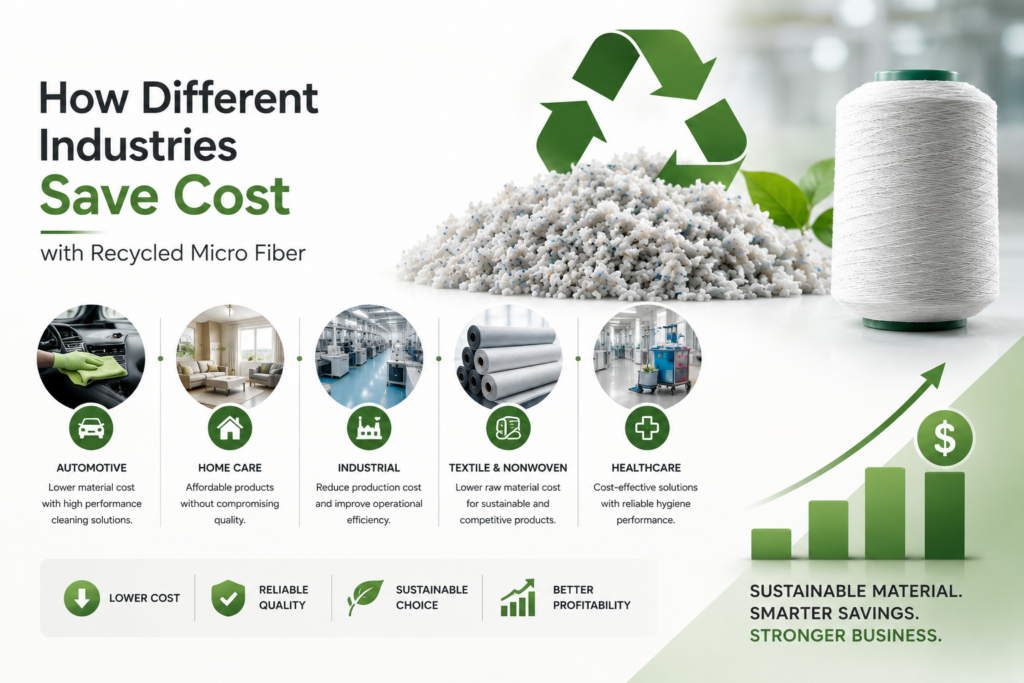
How Different Industries Save Cost with Recycled Micro Fiber
Yarn Spinning Industry
Benefits include:
- softer yarn quality
- lower waste
- better process consistency
- stronger market demand for recycled yarns
Nonwoven Manufacturing
Benefits include:
- improved absorption
- reduced material usage
- stable web formation
- better filtration performance
Cleaning Product Manufacturing
Microfiber for cleaning cloth applications helps:
- improve cleaning efficiency
- reduce fabric weight
- increase product durability
This improves product competitiveness significantly.
Automotive Interior Applications
Automotive manufacturers use recycled microfiber because it provides:
- lightweight structure
- acoustic performance
- sustainability benefits
- cost efficiency in large-scale production
Common Mistakes Manufacturers Make
Even though recycled microfiber offers many advantages, some companies fail to achieve cost savings because they:
- focus only on low price
- use inconsistent suppliers
- ignore technical specifications
- skip production trials
Low-quality microfiber can create serious operational problems.
The key is selecting the correct specification and reliable supplier.
How to Choose the Right Recycled Microfiber Supplier
A professional supplier should provide:
- stable denier
- consistent cut length
- reliable bulk supply
- technical support
- stable quality across shipments
Consistency matters more than the cheapest price.
Reliable suppliers help manufacturers reduce:
- waste
- downtime
- operational risk
while improving long-term efficiency.
Conclusion
Reducing production cost is not simply about buying cheaper raw materials.
True cost reduction comes from:
- higher efficiency
- lower waste
- stable production
- improved product value
- reliable supply partnerships
Recycled microfiber helps manufacturers achieve these goals while also supporting sustainability requirements and future market trends.
For industries such as:
- spinning
- nonwoven
- cleaning products
- automotive interiors
recycled microfiber is becoming both a performance advantage and a strategic business decision.
If you are looking for a reliable supplier of high-quality recycled polyester micro fiber, Eco Micro Fiber is ready to support your business.
Contact us today for technical specifications, samples, or quotations.
Eco Micro Fiber – Supporting Cost-Efficient Manufacturing
At Eco Micro Fiber, we supply high-quality recycled polyester micro fiber for:
- yarn spinning
- nonwoven manufacturing
- microfiber for cleaning cloth
- automotive interior applications
- industrial textile production
We focus on:
- stable fiber specifications
- reliable quality consistency
- strong absorption performance
- competitive B2B pricing
- long-term supply partnerships
Our goal is to help manufacturers reduce operational cost while improving product quality and sustainability performance.
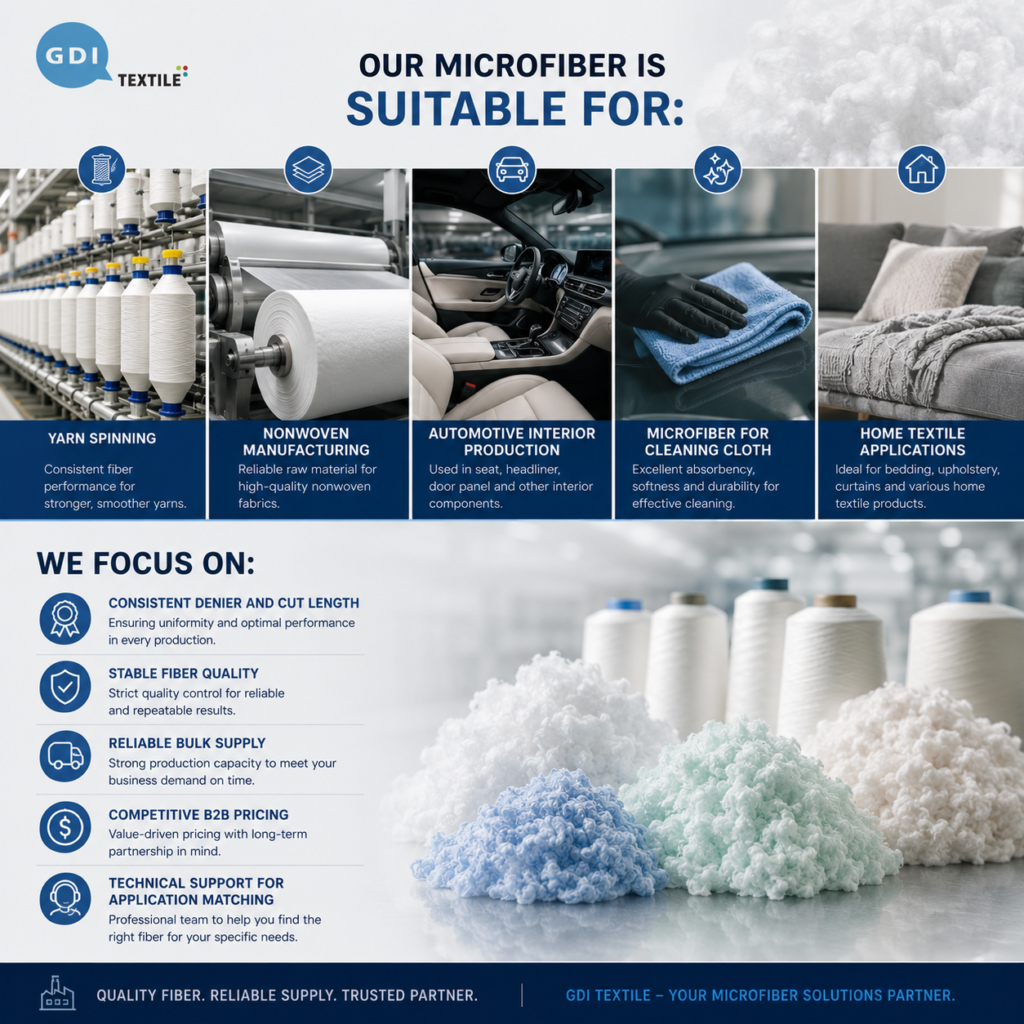
If you are looking for a trusted recycled micro fiber supplier, our team is ready to support your production needs.
Contact Us:
Email: [email protected]
Tel/WhatsApp: +84981527216
Contact us today to request technical specifications or product samples.