
In the global textile and industrial materials market, sourcing the right microfiber is critical for maintaining product quality, production efficiency, and long-term business stability.
Whether you manufacture:
- cleaning cloths
- microfiber towels
- nonwoven wipes
- automotive felt
- spun yarn
- industrial textiles
the quality of the microfiber you purchase directly affects your final product performance.
Unfortunately, many buyers focus only on:
- price
- delivery time
- basic specifications
without properly testing the material before bulk purchasing.
This often leads to serious production problems such as:
- unstable quality
- poor absorption
- excessive lint generation
- machine stoppages
- customer complaints
- increased production cost
For B2B buyers, understanding how to properly test microfiber quality before buying is essential.
This guide explains:
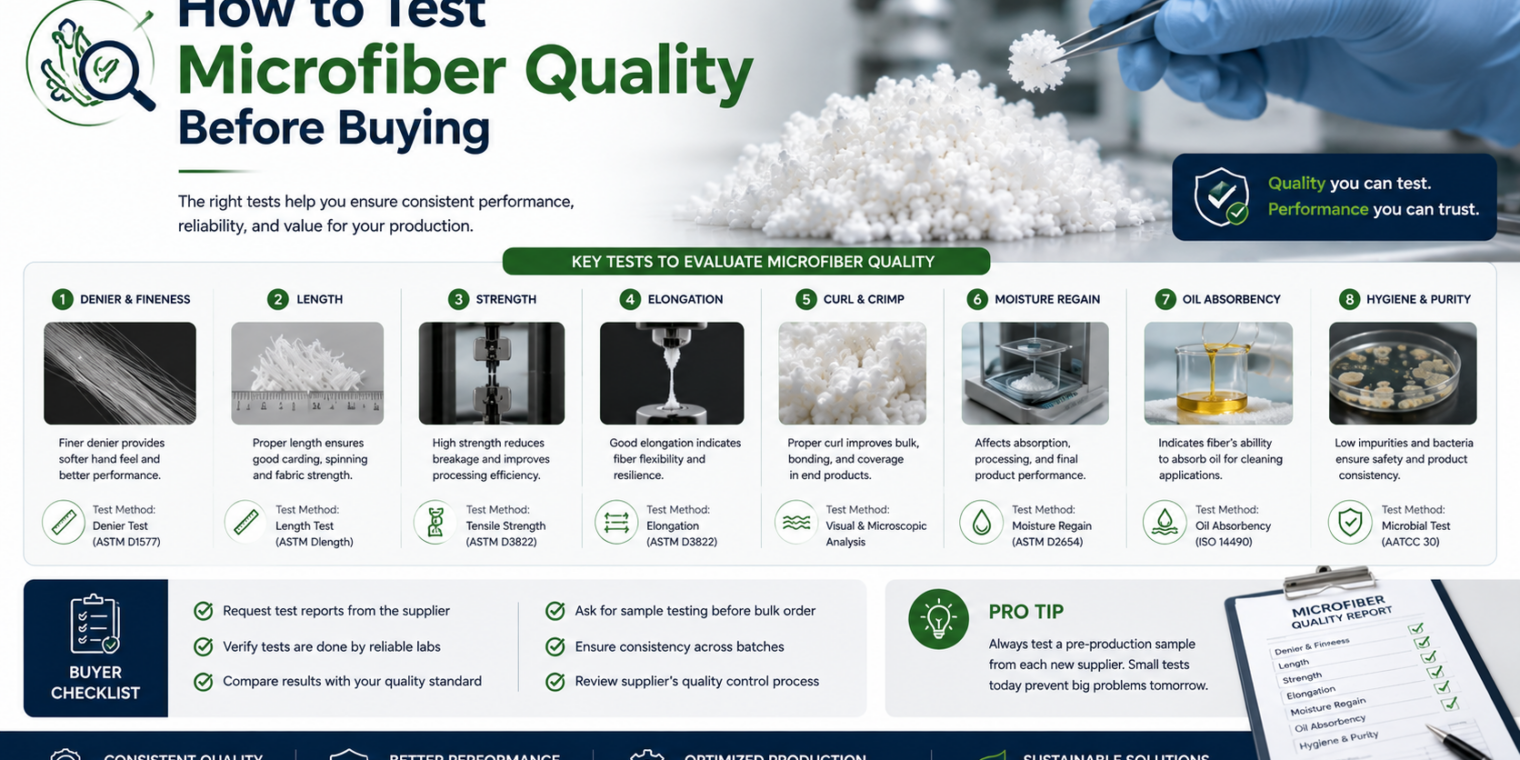
- the most important microfiber quality tests
- what buyers should evaluate
- common quality problems
- how poor fiber affects production
- how to choose a reliable microfiber supplier
If you are sourcing recycled microfiber, microfiber staple fiber, or microfiber for cleaning cloth applications, these testing methods can help reduce risk and improve purchasing decisions.
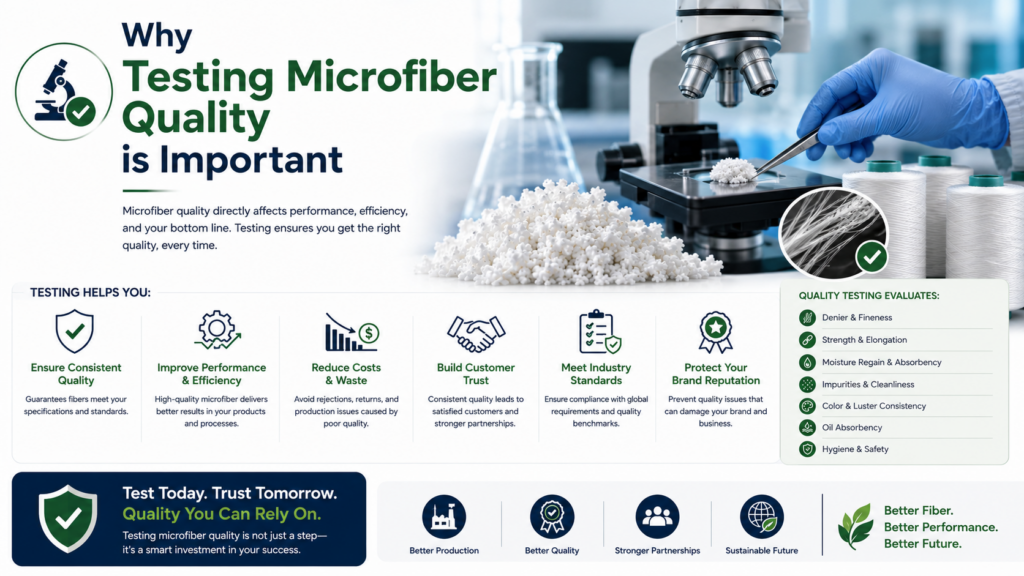
Why Testing Microfiber Quality is Important
Microfiber may look similar across suppliers, but actual performance can vary significantly depending on:
- raw material quality
- production technology
- process control
- fiber consistency
Even small variations in microfiber quality can affect:
- spinning stability
- nonwoven web formation
- cleaning performance
- product durability
- absorption capability
For large-scale manufacturers, poor-quality fiber can create major operational losses.
Testing before bulk purchase helps buyers:
- reduce production risk
- avoid inconsistent shipments
- improve product performance
- protect customer satisfaction
In B2B manufacturing, prevention is always less expensive than correction.
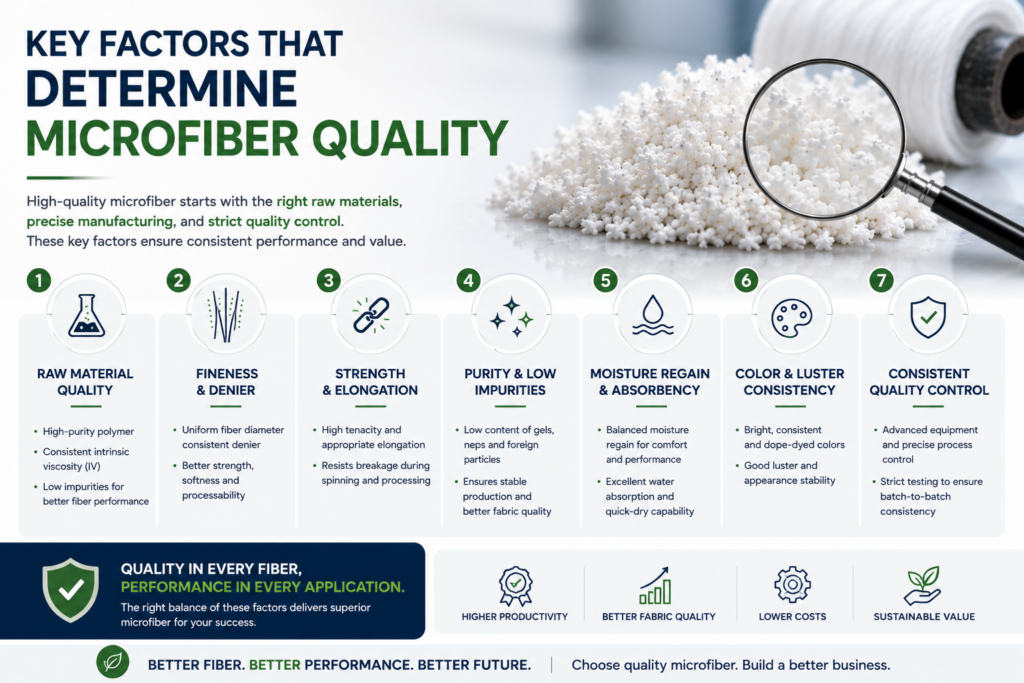
Key Factors That Determine Microfiber Quality
Before discussing testing methods, it is important to understand what defines high-quality microfiber.
The most important factors include:
- denier consistency
- cut length consistency
- fiber strength
- crimp quality
- absorption performance
- cleanliness
- oil finish quality
- processing stability
These characteristics determine whether the microfiber will perform reliably during production.
1. Denier Testing
Denier is one of the most important specifications in microfiber production. It refers to the thickness of the fiber.
Lower Denier Means:
- finer fiber structure
- softer texture
- better absorption
- improved cleaning performance
Higher Denier Means:
- stronger structure
- easier process stability
- lower softness
Why Denier Consistency Matters
Inconsistent denier can cause:
- uneven yarn quality
- unstable nonwoven formation
- inconsistent fabric performance
For applications such as:
- microfiber for cleaning cloth
- towels
- wipes
stable denier is extremely important.
How Buyers Test Denier
Professional testing laboratories use specialized fiber analysis equipment.
However, buyers can also evaluate:
- softness consistency
- visual uniformity
- process performance during trial production
Reliable suppliers should provide:
- technical data sheets
- denier specifications
- quality consistency reports
2. Cut Length Testing
Cut length affects:
- spinning performance
- web formation
- fiber cohesion
- machine efficiency
Common microfiber cut lengths include:
- 32mm
- 38mm
- 51mm
Problems Caused by Inconsistent Cut Length
Poor cut length consistency may create:
- fiber entanglement
- uneven yarn
- unstable web structure
- excessive waste
How Buyers Can Check Cut Length
Simple manual sampling can help verify:
- average fiber length
- consistency between fibers
- presence of excessive short fibers
High-quality microfiber should have stable and uniform cut length throughout the shipment.
3. Fiber Strength Testing
Fiber strength directly affects:
- yarn durability
- production efficiency
- resistance to breakage
Weak microfiber can create:
- machine stoppages
- excessive lint
- low product durability
This is especially important for:
- spinning mills
- industrial wipes
- automotive applications
Testing Fiber Strength
Professional tensile testing equipment provides accurate results.
Buyers should also evaluate:
- fiber breakage during trial production
- spinning performance
- fabric durability after manufacturing
Reliable microfiber should maintain stable strength across batches.
4. Absorption Testing
Absorption performance is one of the most important characteristics of microfiber.
This is particularly critical for:
- microfiber for cleaning cloth
- floor mops
- towels
- industrial wipes
Why Absorption Matters
High absorption improves:
- cleaning efficiency
- water retention
- product value
Poor absorption performance can reduce product competitiveness.
Simple Absorption Test
Buyers can compare microfiber samples by testing:
- water absorption speed
- liquid retention capacity
- drying behavior
High-quality microfiber should absorb water quickly and evenly.
5. Softness and Surface Feel Evaluation
Softness is an important quality factor for many textile applications.
Applications requiring soft microfiber include:
- towels
- knit fabrics
- cleaning cloths
- automotive interiors
Why Softness Matters
Soft microfiber improves:
- product comfort
- cleaning performance
- perceived product quality
Poor-quality microfiber may feel:
- rough
- stiff
- inconsistent
How Buyers Evaluate Softness
Softness is often evaluated through:
- hand feel inspection
- fabric testing
- comparison against approved samples
Consistency is critical in large-scale production.
6. Lint and Cleanliness Testing
Low-quality microfiber often generates excessive lint during processing or use.
This can create major issues in:
- cleaning products
- industrial wiping
- automotive applications
Problems Caused by Excessive Lint
- contamination
- poor cleaning performance
- customer complaints
- machine maintenance problems
How to Check Lint Performance
Buyers can:
- rub fabric surfaces
- test during production trials
- inspect fiber cleanliness visually
High-quality microfiber should produce minimal lint.
7. Crimp Quality Testing
Crimp affects:
- fiber cohesion
- spinning behavior
- nonwoven web formation
Poor crimp quality may cause:
- unstable processing
- weak web structure
- uneven yarn quality
What Buyers Should Look For
Good microfiber should have:
- uniform crimp
- stable elasticity
- consistent fiber behavior
8. Oil Finish and Static Control Testing
Fiber finish affects:
- machine processability
- static control
- friction behavior
Poor finish quality can lead to:
- excessive static electricity
- machine sticking
- processing instability
How to Evaluate Fiber Finish
During production trials, buyers should observe:
- static buildup
- machine performance
- fiber flow consistency
Stable processing usually indicates good finish quality.
Why Trial Production is Essential
One of the biggest mistakes buyers make is relying only on laboratory specifications.
Even if microfiber looks correct on paper, actual production performance may differ.
This is why trial production is critical.
Benefits of Trial Testing
Trial production helps evaluate:
- spinning performance
- nonwoven web formation
- cleaning product performance
- machine compatibility
- final product quality
This step can prevent expensive purchasing mistakes.
Common Problems Buyers Face with Low-Quality Microfiber
Many manufacturers experience problems caused by inconsistent microfiber quality.
Common issues include:
- unstable denier
- excessive lint
- poor absorption
- weak durability
- inconsistent color
- machine downtime
These issues increase:
- production waste
- operational cost
- customer dissatisfaction
This is why supplier reliability matters as much as material specification.
How to Choose a Reliable Microfiber Supplier
A professional microfiber supplier should provide:
- stable specifications
- consistent quality
- technical support
- sample testing support
- reliable bulk supply
For B2B manufacturing, consistency is more valuable than short-term price advantages.
Eco Micro Fiber – Reliable Quality for Industrial Applications
At Eco Micro Fiber, we supply high-quality recycled microfiber for:
- microfiber for cleaning cloth
- yarn spinning
- nonwoven manufacturing
- automotive interior applications
- industrial textile production
We focus on:
- stable denier and cut length
- reliable fiber strength
- strong absorption performance
- consistent bulk supply
- technical support for buyers
So our goal is to help customers reduce production risk and improve product performance.
Conclusion
Testing microfiber quality before buying is essential for:
- maintaining production stability
- improving final product quality
- reducing waste and operational cost
- protecting long-term customer satisfaction
Buyers should evaluate:
- denier
- cut length
- absorption
- fiber strength
- softness
- lint generation
- processing stability
In today’s competitive market, selecting the right microfiber supplier is a strategic business decision.
As demand for sustainable and high-performance textiles continues to grow, reliable microfiber quality will become even more important.
If you are looking for a trusted supplier of high-quality recycled microfiber, Eco Micro Fiber is ready to support your business.
Contact us today for samples, technical specifications, or quotations.
Eco Micro Fiber – Reliable Quality for Industrial Applications
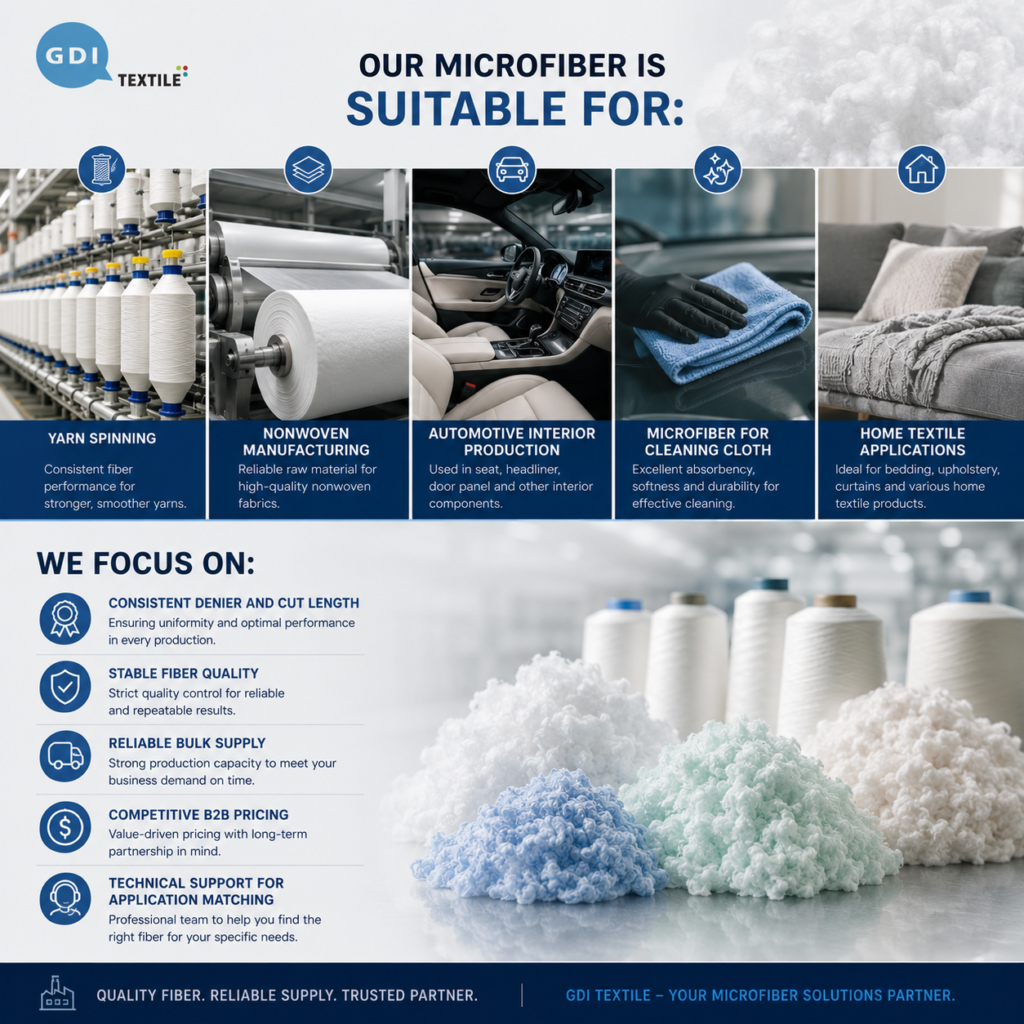
At Eco Micro Fiber, we supply high-quality recycled microfiber for:
- yarn spinning
- nonwoven manufacturing
- automotive interior production
- microfiber for cleaning cloth
- home textile applications
We focus on:
- consistent denier and cut length
- stable fiber quality
- reliable bulk supply
- competitive B2B pricing
- technical support for application matching
We understand that switching materials is a strategic decision, and we are here to support your business at every stage.
If you are looking for a trusted recycled micro fiber supplier, our team is ready to support your production needs.
Contact Us:
Email: [email protected]
Tel/WhatsApp: +84981527216
Contact us today to request technical specifications or product samples.