
A Practical B2B Guide for Buyers, Spinners, Nonwoven Manufacturers, and Industrial Users
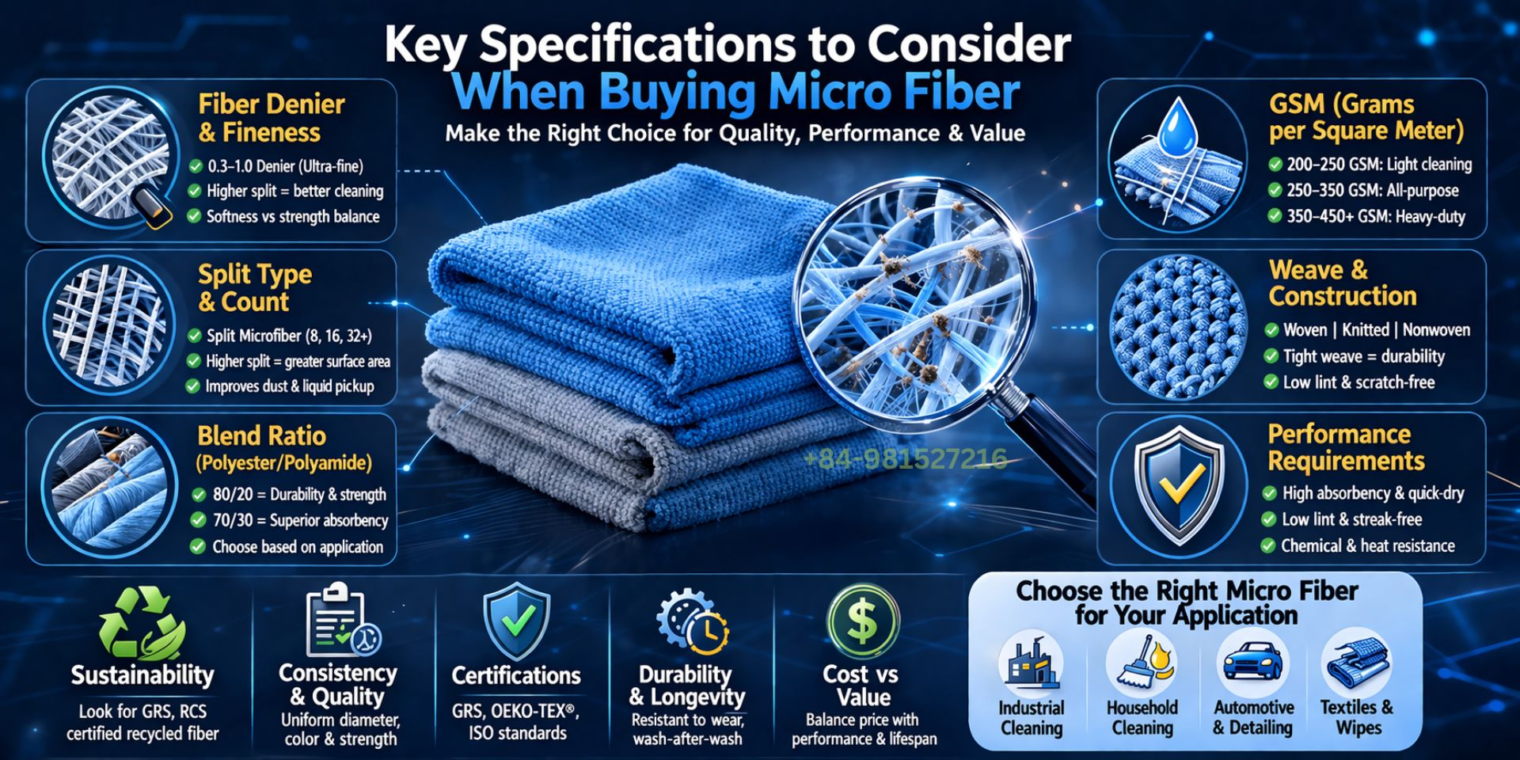
When sourcing raw materials for textile or industrial production, buyers often focus first on price and availability. However, when it comes to micro fiber, selecting the right specification is just as important as securing a competitive quotation.
A small difference in fiber specification can significantly affect:
- spinning performance
- web formation in nonwoven production
- product softness and appearance
- absorption performance
- durability of the finished product
- machine efficiency and waste rate
That is why professional buyers, sourcing managers, and technical teams should evaluate micro fiber specifications carefully before making a purchasing decision.
Whether you are buying micro fiber for yarn spinning, nonwoven fabrics, cleaning textiles, automotive interiors, or home textile products, understanding the key technical factors will help you choose the right material for your application.
At Eco Micro Fiber, we work closely with customers to match the correct fiber specification to their end use and production process.
This guide explains the most important specifications to consider when buying micro fiber and why they matter in real manufacturing conditions.
What is Micro Fiber?
Before evaluating technical specifications, it is important to understand what makes microfiber different from conventional polyester staple fiber.
Micro fiber refers to very fine synthetic fibers, usually with a denier significantly lower than standard staple fiber. Because these fibers are extremely fine, they create materials with:
- softer hand feel
- higher surface area
- better absorption
- improved cleaning efficiency
- finer and smoother fabric structure
This is why microfiber is widely used in:
- towels
- cleaning cloths
- floor mops
- knit fabrics
- automotive felt
- nonwoven wipes
- interior textile applications
However, not all microfiber performs the same. The actual result depends heavily on fiber specification.
1. Denier (D) – One of the Most Important Micro Fiber Specifications
When buying microfiber, denier is one of the first and most critical specifications to review.
Denier refers to the thickness or fineness of the fiber. In general:
- Lower denier = finer fiber
- Higher denier = thicker fiber
Because microfiber is designed to be ultra-fine, denier directly affects the feel, performance, and end use of the material.
Why Denier Matters
Denier influences:
- softness of the final product
- surface smoothness
- absorption performance
- dust and dirt capture ability
- yarn count possibilities
- nonwoven texture and density
Typical Micro Fiber Denier Applications
Different end uses may require different denier levels.
For example:
Very fine denier microfiber is often used for:
- premium cleaning cloths
- soft towels
- high-absorption fabrics
- lightweight knit applications
Slightly higher denier microfiber may be better for:
- industrial wipes
- floor mops
- automotive felt
- nonwoven structural materials
For B2B buyers, choosing the wrong denier can lead to:
- poor process performance
- inconsistent finished product quality
- higher machine waste
- customer complaints
This is why denier should always be matched to the production method and end product.
2. Cut Length – Essential for Processing Stability
Another key specification to consider when buying microfiber is cut length.
Cut length refers to the physical length of each staple fiber. This specification has a direct impact on:
- spinning behavior
- drafting performance
- fiber blending
- web formation in nonwoven production
- material cohesion
Why Cut Length Matters
If the cut length is not appropriate for your machinery or process, it can cause:
- poor fiber opening
- uneven drafting
- machine stoppages
- inconsistent yarn formation
- web irregularity in nonwoven lines
Common Considerations by Application
For yarn spinning, cut length must match the spinning system and desired yarn structure.
For nonwoven manufacturing, cut length affects:
- carding performance
- web uniformity
- bonding efficiency
Automotive felt or industrial applications, the right cut length can improve:
- structural integrity
- thickness consistency
- production efficiency
For industrial buyers, cut length is not just a number — it is a major factor in process stability.
3. Fibers Strength – Important for Durability and Processing
Fiber strength is another important factor when purchasing microfiber, especially for industrial and high-performance applications.
Fibers strength affects both:
- how the fiber behaves during production
- how the finished product performs in actual use
Why Fiber Strength Matters
Microfiber with suitable strength helps ensure:
- smoother spinning performance
- reduced fiber breakage
- better yarn integrity
- stronger nonwoven structure
- longer-lasting finished products
Application Relevance
For example:
Cleaning products need enough fiber strength to withstand:
- repeated washing
- friction during use
- long-term wear
Automotive applications require fibers that can perform well in:
- felt structures
- layered interior materials
- mechanical stress environments
Yarn production also depends on adequate strength to maintain spinning stability and fabric durability.
If microfiber strength is too low, buyers may face:
- excessive linting
- production waste
- poor end-product durability
- lower customer satisfaction
That is why strength consistency should always be reviewed before bulk purchasing.
4. Crimp – A Key Factor in Cohesion and Process Performance
Crimp refers to the natural waviness or curl in the staple fiber.
Although buyers sometimes overlook crimp, it is a highly important characteristic in microfiber performance.
Why Crimp Matters
Crimp helps improve:
- fiber cohesion
- spinning efficiency
- web formation
- bulk and loft
- structural stability in nonwoven products
Why It Matters in Production
In yarn spinning, crimp helps fibers hold together better, improving yarn formation and reducing process issues.
In nonwoven production, appropriate crimp can improve:
- web bonding behavior
- product bulk
- material uniformity
For applications such as:
- floor mop materials
- automotive felt
- industrial wipes
crimp can play a meaningful role in overall material behavior.
When buying microfiber, it is important to confirm that the crimp level is suitable for your process rather than assuming all fibers will behave the same.
5. Oil Content / Finish – Important for Machine Performance
One specification that many commercial buyers overlook — but technical teams understand very well — is oil content or fiber finish.
Fiber finish is applied to help the microfiber move efficiently through processing equipment.
Why Fiber Finish Matters
Proper finish can improve:
- fiber opening
- carding behavior
- spinning smoothness
- static control
- machine productivity
If the finish is not well controlled, it may lead to:
- static problems
- fiber sticking
- uneven processing
- machine contamination
- poor web or yarn consistency
Why This Matters for Buyers
If you are buying microfiber for:
- spinning mills
- nonwoven production lines
- industrial textile conversion
you should always ensure the supplier can provide stable and process-appropriate finish levels.
This is especially important in large-scale B2B production, where even small processing inconsistencies can create major downstream cost issues.
6. Color Consistency – Important for Product Uniformity
If you are purchasing microfiber for products where appearance matters, color consistency should also be evaluated.
This is particularly relevant for:
- towels
- cleaning cloths
- visible nonwoven materials
- automotive interior layers
- blended textile products
Why Color Consistency Matters
Poor color consistency can lead to:
- uneven final product appearance
- dyeing variation
- rejection by customers
- inconsistency across production batches
Even when the microfiber is used as a functional material rather than a decorative one, color stability can still affect buyer perception and downstream processing.
For B2B buyers serving export markets, consistency in color is often part of quality control expectations.
7. Application Suitability – The Most Important Buying Principle
One of the biggest mistakes buyers make is sourcing microfiber based only on “general specification” rather than application suitability.
There is no single microfiber specification that is best for every use.
The correct microfiber depends on the final application.
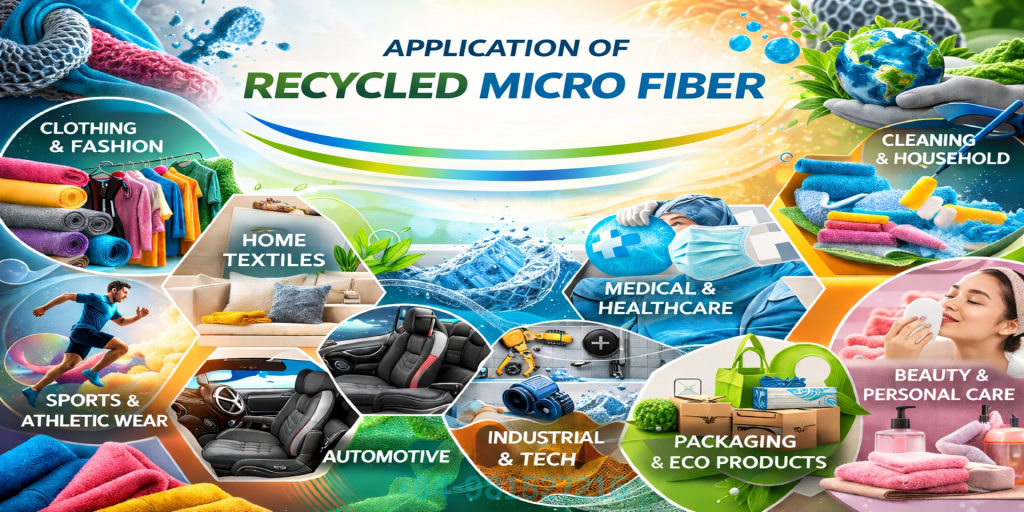
Examples of Application Matching
Used Microfiber for cleaning cloth
- needs softness
- strong absorption
- effective dirt capture
- good wash durability
Microfiber for yarn spinning
- needs suitable denier
- stable cut length
- smooth drafting performance
- fiber cohesion
Microfiber for nonwoven
- needs strong web formation
- process compatibility
- structural consistency
Used Microfiber for automotive felt
- needs durability
- bulk performance
- insulation support
- process stability
This is why serious B2B sourcing should always begin with a simple technical question:
What is the actual end use of the fiber?
Once that is clear, the correct specification becomes much easier to identify.
8. Supplier Consistency – A Specification Beyond the Datasheet
Even when a fiber looks good on paper, the real question is whether the supplier can deliver that specification consistently across every shipment.
This is one of the most important factors in long-term B2B procurement.
Why Supplier Consistency Matters
Inconsistent supply can create:
- machine adjustment problems
- product quality variation
- higher waste rates
- delayed production
- customer complaints
A reliable microfiber supplier should be able to provide:
- stable denier
- consistent cut length
- repeatable physical properties
- dependable quality from lot to lot
- commercial reliability for bulk orders
For industrial buyers, the best supplier is not always the cheapest one — it is the one that helps reduce production risk.
9. Why Buyers Should Ask for Samples and Technical Confirmation
Before placing a large order, professional buyers should always request:
- technical specifications
- production suitability information
- application recommendations
- material samples
Why Sampling Matters
Even if a microfiber looks suitable based on a quotation sheet, real production results may vary depending on:
- machine settings
- blending ratios
- line speed
- end-product requirements
Testing a sample before bulk purchase helps buyers reduce risk and confirm whether the fiber is suitable for their actual process.
This is especially important for customers producing:
- microfiber for cleaning cloth
- microfiber yarn
- nonwoven wipes
- automotive felt
- industrial textile materials
A supplier that supports technical discussion and sampling is often a better long-term partner than one that only offers pricing.
How to Choose the Right Micro Fiber for Your Business
When buying microfiber, the best approach is to evaluate the material through both technical and commercial lenses.
A good microfiber purchasing decision should consider:
- Denier
- Cut length
- Fiber strength
- Crimp
- Oil content / finish
- Color consistency
- End-use suitability
- Supplier reliability
For B2B buyers, this ensures the fiber is not only cost-effective, but also suitable for stable and efficient production.
Eco Micro Fiber – Helping Buyers Source the Right Micro Fiber
At Eco Micro Fiber, we supply high-quality recycled micro fiber for a wide range of industrial and textile applications.
Our microfiber is suitable for:
- yarn spinning
- nonwoven manufacturing
- automotive interior materials
- cleaning textile production
- home textile applications
We focus on delivering:
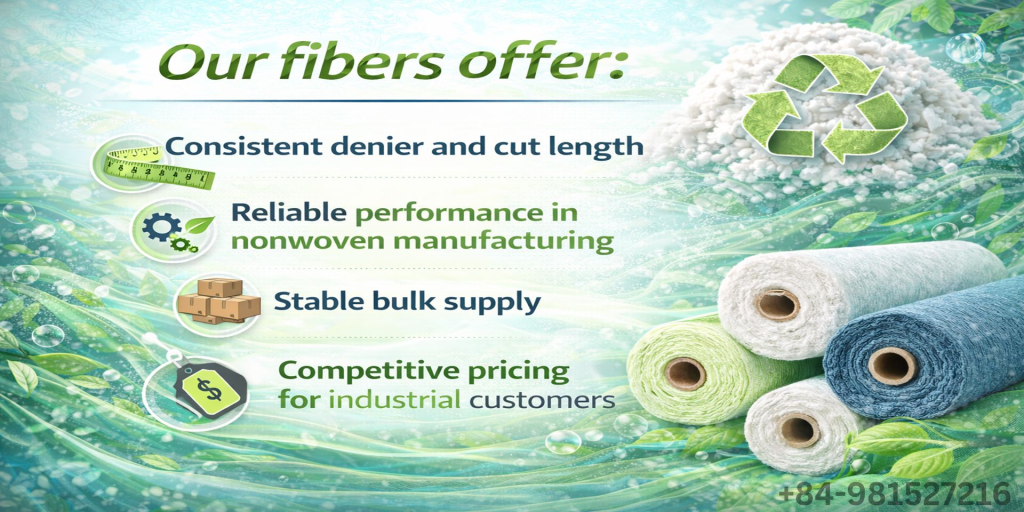
- consistent denier and cut length
- stable fiber quality
- reliable bulk supply
- competitive B2B pricing
- technical support for different applications
Whether you are looking for microfiber for cleaning cloth, spinning yarn, nonwoven wipes, or automotive felt, we can help match the right fiber specification to your production needs.
Conclusion
Buying microfiber is not simply about finding a low price — it is about selecting the right fiber specification for your process, product, and customer requirements.
By understanding the most important technical factors, buyers can make better sourcing decisions and avoid costly production issues.
If you are sourcing micro fiber for textile or industrial use, choosing the correct specification is one of the most important steps toward better product quality and long-term supply stability.
If you are looking for a reliable supplier of recycled micro fiber, Eco Micro Fiber is ready to support your business.
Contact us today to request specifications, samples, or technical consultation.
Eco Micro Fiber – Reliable Supplier for Cleaning Textile Manufacturers
At Eco Micro Fiber, we supply high-quality recycled polyester micro fiber suitable for recycling industrial production.
If you are looking for a trusted recycled micro fiber supplier, our team is ready to support your production needs.
Contact Us:
Email: [email protected]
Tel/WhatsApp: +84981527216
Contact us today to request technical specifications or product samples.