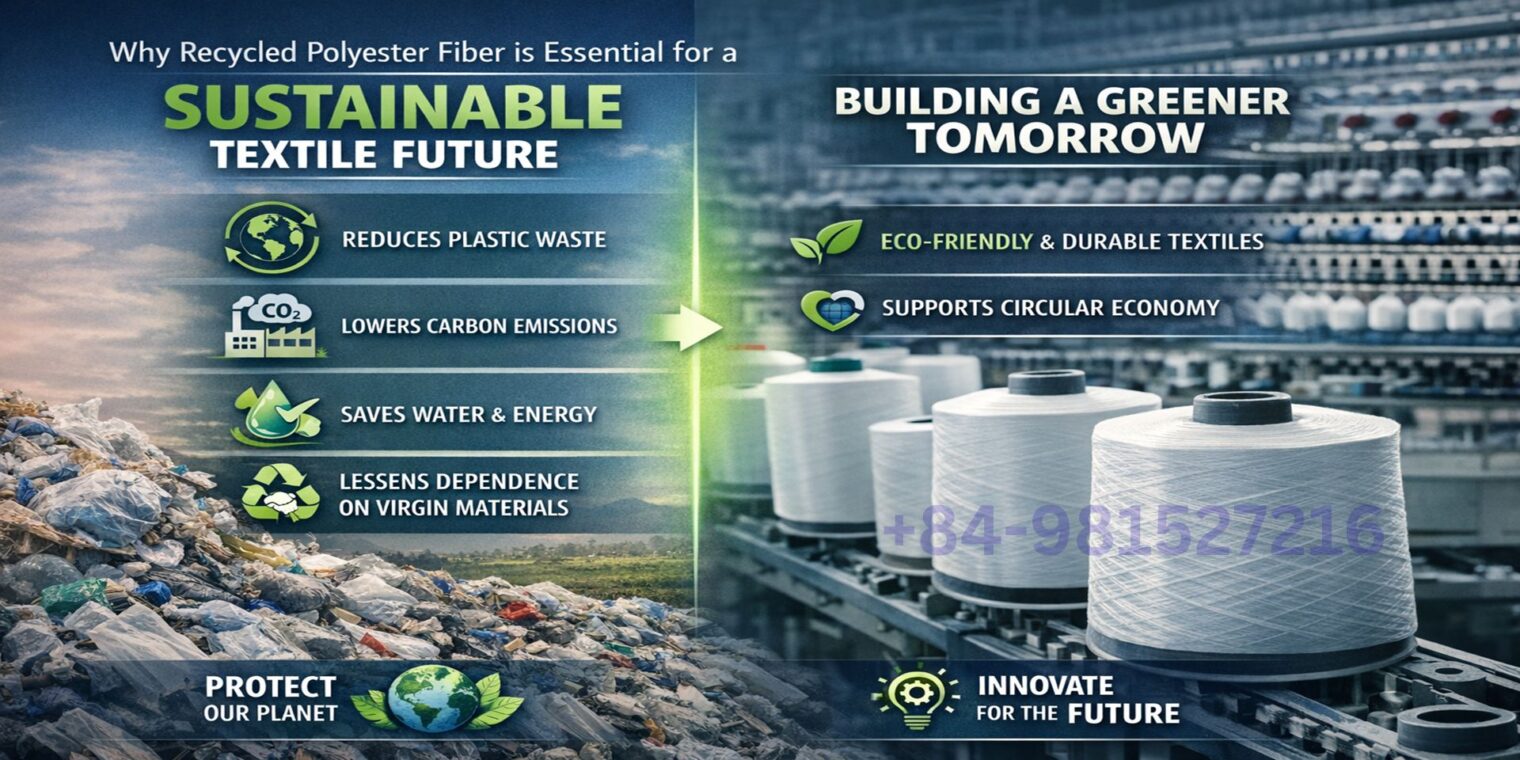
Why Recycled Polyester Fiber is Essential for a Sustainable Textile Future
As sustainability becomes a central priority across the global textile industry, more manufacturers, brands, and sourcing teams are re-evaluating the raw materials used in their production lines. Among the most important solutions available today is recycled polyester fiber.
From spinning mills and nonwoven factories to automotive suppliers and home textile manufacturers, companies are increasingly shifting away from virgin polyester and toward recycled alternatives. This change is not only driven by market demand, but also by the urgent need to reduce plastic waste, lower carbon emissions, and build a more responsible textile supply chain.
For businesses looking to balance performance, cost efficiency, and sustainability, recycled polyester microfiber has become a highly practical and scalable material.
At Eco Micro Fiber, we believe that recycled polyester fiber is no longer just an alternative material — it is becoming the foundation of the next generation of textile manufacturing.
What is Recycled Polyester Fiber?
Recycled polyester fiber is polyester fiber made from recycled PET-based materials rather than virgin petroleum-based raw materials.
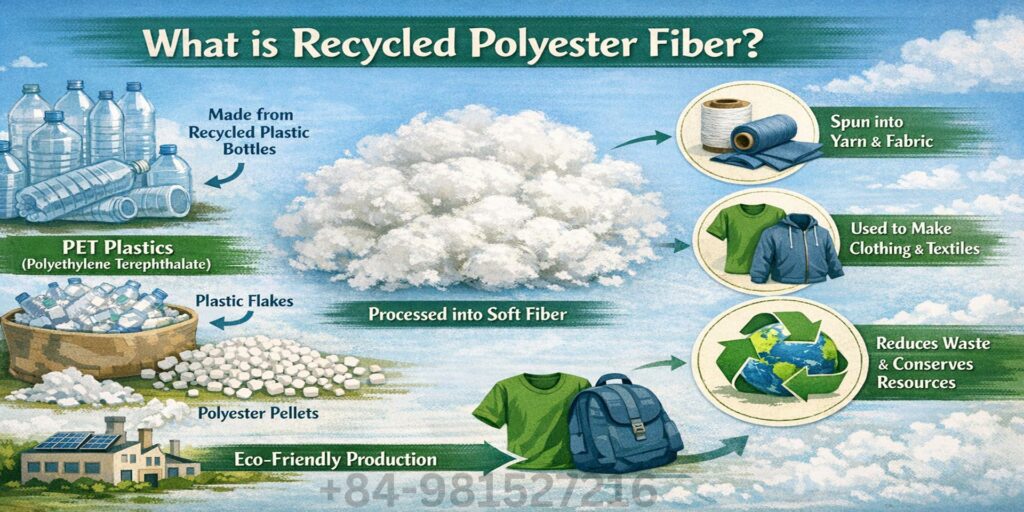
The most common sources include:
- Post-consumer plastic bottles
- Post-industrial polyester waste
- Recycled textile waste
- PET packaging materials
These materials are collected, cleaned, processed, and converted into high-quality polyester fibers suitable for a wide range of applications.
When engineered as micro fiber, recycled polyester offers even more advanced textile performance, making it suitable for:
- Yarn spinning
- Nonwoven production
- Cleaning textiles
- Automotive interior materials
- Home textile applications
This means manufacturers can benefit from the technical properties of polyester while significantly reducing environmental impact.
Why the Textile Industry is Under Pressure to Change
The textile and fiber industry has long relied on virgin polyester, one of the most widely used synthetic fibers in the world. While polyester offers durability, affordability, and versatility, its traditional production model comes with major environmental challenges.
Virgin polyester is produced from fossil fuel-based resources and often involves:
- High energy consumption
- Significant greenhouse gas emissions
- Heavy dependence on non-renewable resources
- Large-scale plastic waste generation over time
At the same time, millions of plastic bottles and polyester-based waste materials are discarded every day. Without recycling systems, much of this waste ends up in landfills, waterways, or the natural environment.
This is why recycled polyester fiber is becoming such a critical material for the future of textiles.
1. Recycled Polyester Fiber Helps Reduce Plastic Waste
One of the most direct and measurable environmental benefits of recycled polyester fiber is its role in reducing plastic waste.
Plastic bottles and polyester-based materials are often difficult to manage once discarded. Instead of allowing these materials to become environmental waste, recycling transforms them into valuable industrial raw materials.
By using recycled polyester fiber, manufacturers help divert plastic from:
- Landfills
- Incineration systems
- Rivers and oceans
- Uncontrolled waste streams
This is especially important as global pressure increases to reduce plastic pollution and improve circular material usage.
For buyers and sourcing teams, this creates a strong sustainability story: waste is not simply disposed of — it is converted into functional fiber for new products.
In practical terms, each ton of recycled polyester fiber can help save thousands of plastic bottles from entering landfill systems.
That makes recycled fiber not only a textile material, but also part of a broader environmental waste solution.
2. Lower Energy Consumption Compared to Virgin Polyester
Another major advantage of recycled polyester fiber is the reduction in energy required during production.
Virgin polyester production starts from petroleum extraction and chemical processing, both of which are energy-intensive stages. Recycled polyester, by contrast, uses already existing PET materials as feedstock, reducing the need for raw petrochemical processing.
This results in:
- Lower total energy demand
- Reduced manufacturing resource consumption
- More efficient material utilization
For textile manufacturers, this is important not only from an environmental perspective but also from a long-term supply chain efficiency standpoint.
As energy costs continue to fluctuate globally, more companies are seeking materials that support both sustainability and operational resilience.
Using recycled polyester fiber allows manufacturers to move toward more resource-efficient production systems without compromising the technical performance required for industrial use.
3. Reduced Carbon Emissions Across the Supply Chain
Carbon reduction has become one of the most important priorities in modern manufacturing. Brands, retailers, and industrial buyers are under increasing pressure to lower emissions across their supply chains.
This is where recycled polyester fiber offers a major advantage.
Because it requires less virgin raw material extraction and generally lower energy input, recycled polyester production contributes to a lower carbon footprint compared to conventional polyester manufacturing.
Environmental benefits include:
- Reduced greenhouse gas emissions
- Lower dependence on fossil fuel extraction
- More efficient use of existing material resources
For many B2B buyers, this is no longer just a marketing benefit — it is a procurement requirement.
Today, many international brands are asking suppliers to provide materials that support:
- Carbon reduction targets
- ESG commitments
- Scope 3 emissions strategies
- Sustainable sourcing programs
By incorporating recycled polyester fiber into production, manufacturers can better align with these buyer expectations and position themselves more competitively in global markets.
4. Supports the Circular Textile Economy
One of the strongest long-term arguments for using recycled polyester fiber is its role in supporting a circular textile economy.
A traditional linear production model typically follows this path:
Raw material → production → use → disposal
A circular model aims to change that by keeping materials in use for as long as possible through recycling, reuse, and reprocessing.
In the case of recycled polyester fiber, plastic and polyester waste are transformed into new textile raw materials rather than discarded.
This helps create a more sustainable loop:
Used PET / polyester waste → recycled fiber → textile products → extended material life cycle
For the textile industry, circularity is becoming a major strategic direction. Global brands and manufacturers increasingly want materials that contribute to:
- Waste reduction
- Resource recovery
- Circular product development
- More responsible material sourcing
This is why recycled polyester fiber is not simply an eco-friendly option — it is becoming a key industrial material in the transition toward circular manufacturing.
5. Helps Manufacturers Meet Global Sustainability Requirements
Across international markets, sustainability is no longer optional. It is becoming a standard expectation in procurement, sourcing, and product development.
Many buyers today actively prefer or require recycled polyester fiber in their supply chain, especially in sectors such as:
- Home textiles
- Cleaning products
- Automotive interior materials
- Apparel and functional textiles
- Nonwoven fabrics
Using recycled polyester fiber helps manufacturers respond to increasing buyer expectations related to:
- Sustainable raw material content
- Recycled product claims
- Responsible sourcing policies
- Environmental compliance requirements
This is particularly relevant for suppliers serving customers in regions where sustainability expectations are becoming more advanced, such as Europe, North America, Japan, and parts of the Middle East.
For B2B suppliers, offering products based on recycled polyester fiber can improve market access and strengthen customer confidence.
6. Reduces Dependence on Virgin Petroleum-Based Materials
Virgin polyester depends heavily on petrochemical resources. This creates both environmental and strategic challenges, especially as industries worldwide move toward lower-carbon and more resource-efficient material systems.
By choosing recycled polyester fiber, manufacturers reduce reliance on:
- Virgin petrochemical feedstock
- Fossil-fuel intensive production chains
- Non-renewable raw material extraction
This is particularly important for companies looking to future-proof their sourcing strategies.
As the textile sector evolves, raw materials that rely less on virgin fossil-based inputs will continue to gain importance. Recycled polyester fiber offers a practical way to move in that direction while maintaining the industrial reliability that polyester is known for.
7. Suitable for High-Performance End Uses
A common concern among buyers is whether sustainable materials can deliver the same performance as conventional materials. In many cases, recycled polyester fiber can absolutely meet industrial application requirements when produced with consistent quality.
Recycled polyester microfiber is widely used in demanding applications such as:
- Yarn spinning for towels, cleaning cloths, and knit fabrics
- Nonwoven manufacturing for wipes, felt, and filtration layers
- Automotive interiors including carpets, insulation, and headliners
- Home cleaning products such as floor mops and reusable cloths
This means manufacturers do not need to choose between sustainability and functionality.
With the right supplier and the right specification, recycled polyester fiber can provide:
- Good strength
- Consistent denier
- Reliable processing performance
- Excellent application versatility
That makes it especially valuable for buyers seeking materials that support both environmental goals and production stability.
8. Strengthens Brand Positioning and Customer Trust
Today’s buyers, distributors, and end customers increasingly pay attention to the environmental profile of the materials used in finished products.
Companies that use recycled polyester fiber can create stronger value propositions around:
- Sustainability
- responsible sourcing
- reduced environmental impact
- modern material innovation
For B2B manufacturers, this matters because sustainability is now influencing not just compliance, but also sales positioning and customer relationships.
When a buyer chooses a supplier, they are often evaluating more than price and specification. They are also looking at whether that supplier can support long-term market expectations.
Offering products based on recycled polyester fiber can help manufacturers:
- Differentiate from lower-value commodity competitors
- Support customer sustainability reporting
- Build stronger trust with global sourcing teams
- Position products for future market demand
In many sectors, sustainable material usage is now directly linked to business competitiveness.
9. Supports Long-Term Industry Transformation
The shift toward recycled polyester fiber is not a short-term trend. It reflects a deeper structural change in how the textile and nonwoven industries are evolving.
Future growth in textiles will increasingly depend on materials that can deliver:
- Performance
- scalability
- environmental responsibility
- supply chain adaptability
Recycled polyester fiber fits these requirements well.
As more brands commit to sustainability targets and more governments introduce environmental regulations, recycled fiber will continue to move from “preferred” to “expected.”
Manufacturers who adopt recycled polyester fiber early are better positioned to:
- Respond to future sourcing requirements
- Expand into sustainability-driven markets
- build stronger long-term partnerships with buyers
For many companies, this transition is no longer about whether to use recycled fiber — it is about how quickly they can integrate it effectively.
Why Buyers Are Looking for Reliable Recycled Polyester Fiber Suppliers
As demand increases, buyers are becoming more selective about who they source from.
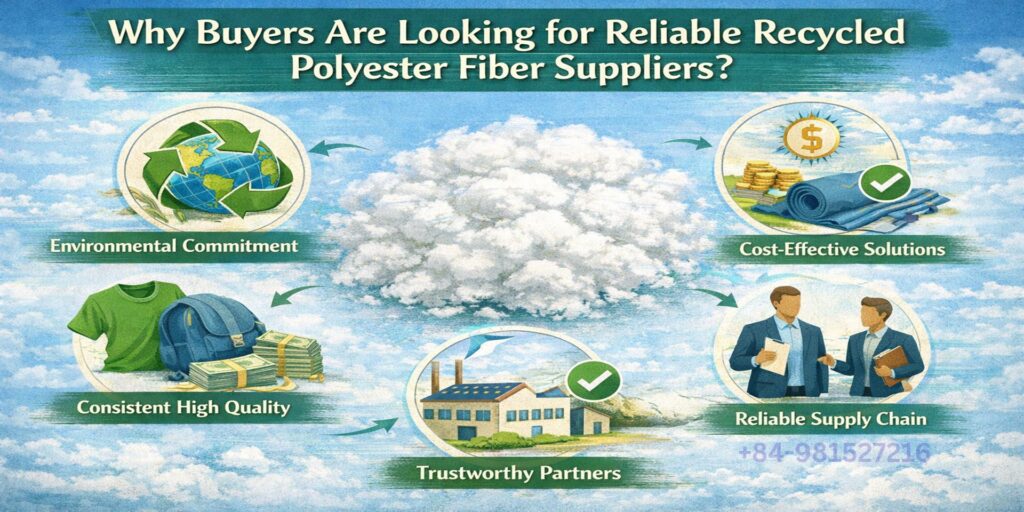
In B2B fiber purchasing, sustainability alone is not enough. Buyers also need:
- Stable quality
- Consistent denier and cut length
- Reliable shipment performance
- Competitive industrial pricing
- Technical suitability for their application
This is why choosing the right supplier is essential.
A reliable supplier of recycled polyester fiber should be able to support both technical production needs and commercial supply continuity.
That is especially important for manufacturers in:
- Spinning mills
- Nonwoven plants
- Automotive supply chains
- Cleaning textile production
- Home textile manufacturing
Eco Micro Fiber – Sustainable Fiber for Modern Manufacturing
At Eco Micro Fiber, we supply high-quality recycled polyester fiber designed for industrial textile applications.
Our recycled microfiber solutions are suitable for:
- Yarn spinning
- Nonwoven production
- Automotive interior applications
- Cleaning textile manufacturing
- Home textile development
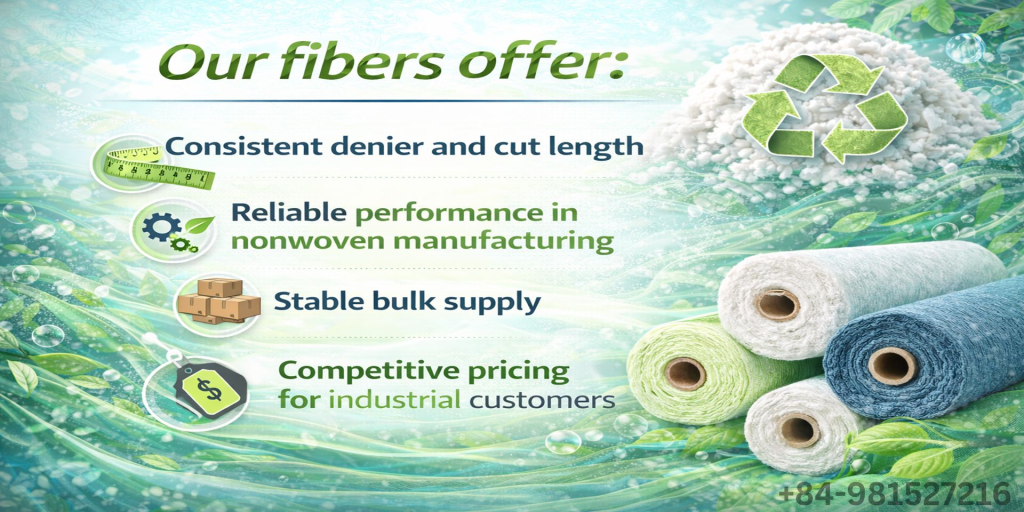
We focus on delivering:
- Stable fiber quality
- Consistent denier and cut length
- Reliable bulk supply
- Competitive B2B pricing
- Sustainable material solutions for global buyers
As the textile industry moves toward a more circular and responsible future, recycled polyester fiber is becoming one of the most important raw materials in modern manufacturing.
For companies that want to reduce environmental impact while maintaining strong production performance, recycled microfiber offers a smart and scalable solution.
Conclusion
The environmental benefits of recycled polyester fiber go far beyond simple waste reduction.
It helps manufacturers:
- Reduce plastic waste
- lower energy consumption
- cut carbon emissions
- support circular production models
- meet global sustainability requirements
- reduce dependence on virgin resources
For B2B buyers, this makes recycled polyester fiber one of the most strategic material choices in today’s textile market.
As industries continue to evolve, the companies that adopt better materials today will be the ones best positioned for tomorrow.
If your business is looking for a reliable source of Recycled Polyester Fiber, Eco Micro Fiber is ready to support your production needs.
Contact us today to request technical specifications, application support, or product samples.
Eco Micro Fiber – Reliable Supplier for Cleaning Textile Manufacturers
At Eco Micro Fiber, we supply high-quality recycled polyester micro fiber suitable for Cleaning Textile production.
If you are looking for a trusted recycled micro fiber supplier, our team is ready to support your production needs.
Contact Us:
Email: [email protected]
Tel/WhatsApp: +84981527216
Contact us today to request technical specifications or product samples.