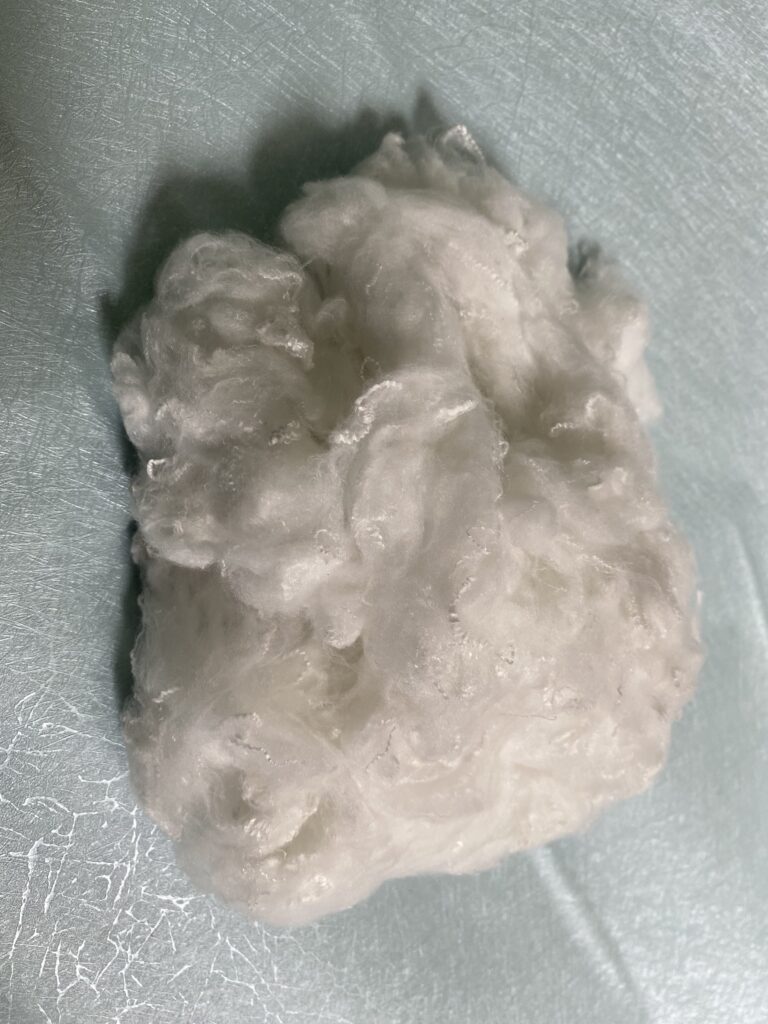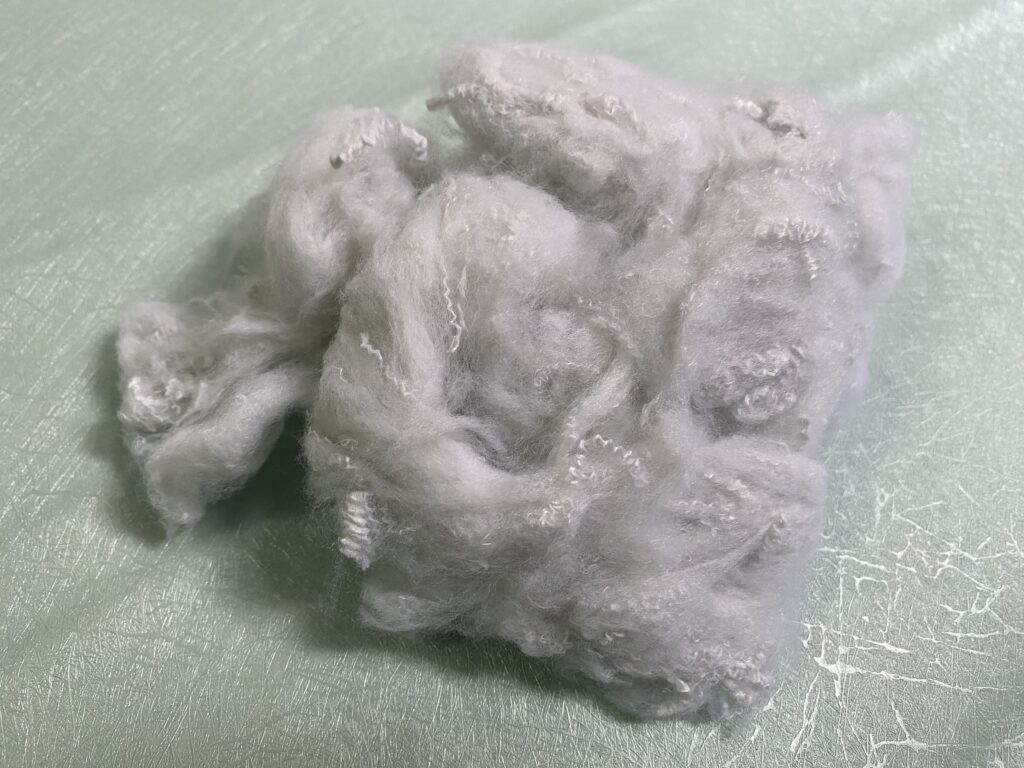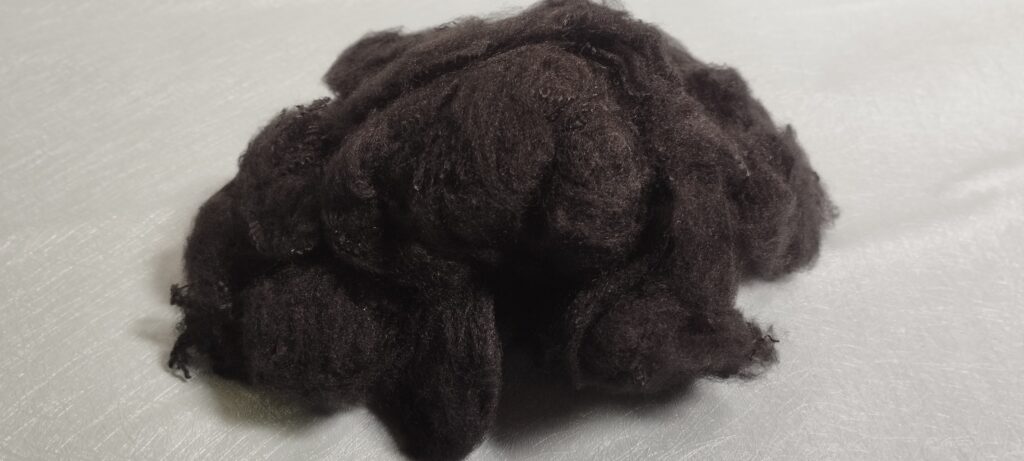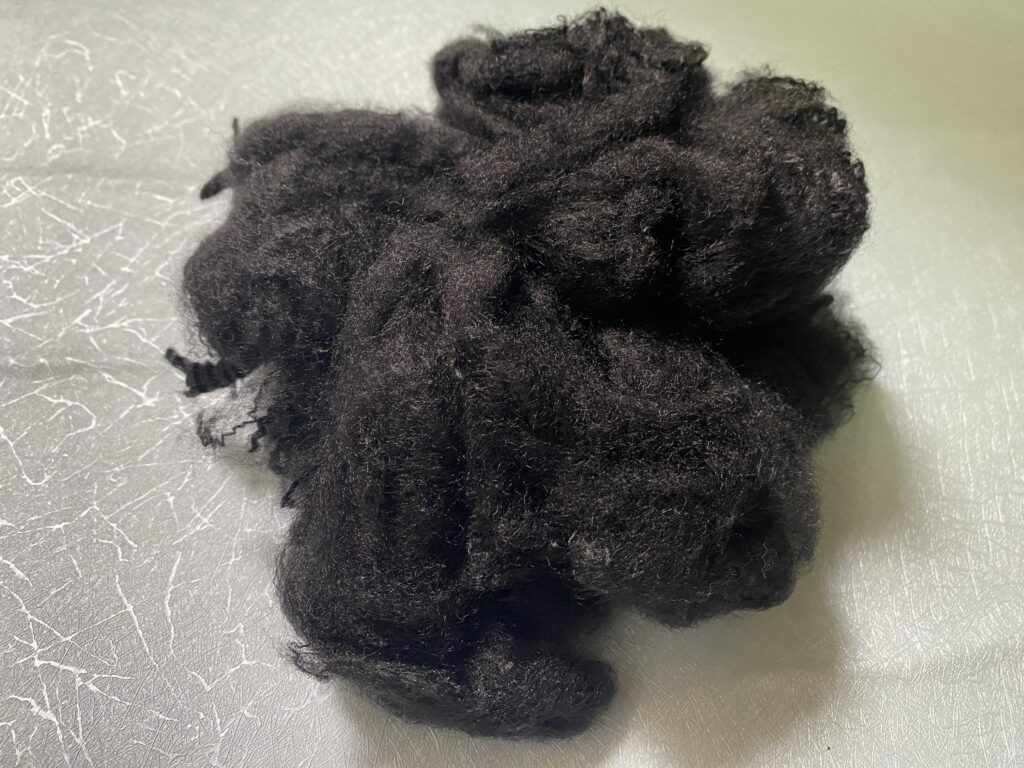
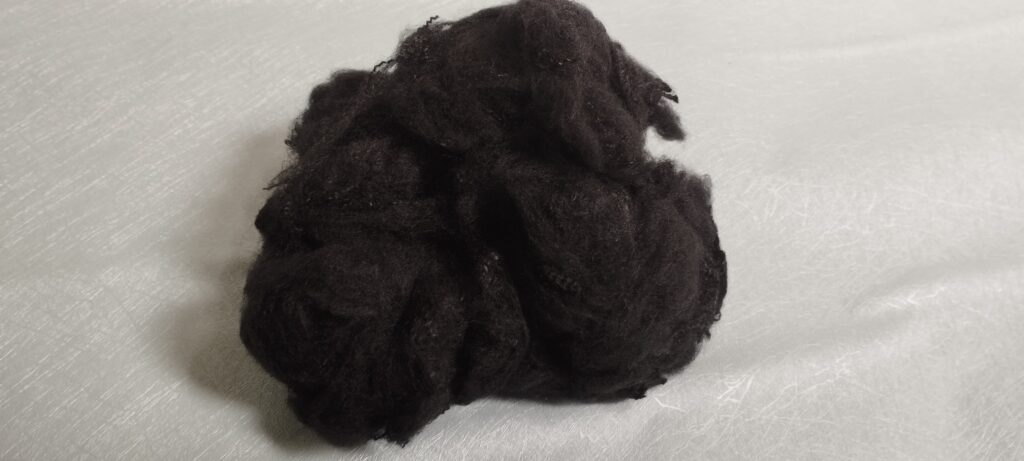
Recycled polyester staple fiber is a raw material option for manufacturers producing needle-punched nonwoven fabrics for industrial, automotive, construction, filtration, and other technical applications.
In needle-punching, fibers are mechanically entangled by needles passing through a fiber web. The characteristics of the incoming fiber, the web-forming process, and the operating conditions all influence the structure and properties of the finished nonwoven material.
For B2B buyers, selecting the right recycled polyester staple fiber is therefore not simply a matter of choosing a denier or finding the lowest price. Buyers should evaluate fiber specifications, processing compatibility, finished-product requirements, quality consistency, and supply documentation together.
This guide explains how to assess recycled polyester staple fiber for needle-punched nonwovens and what manufacturers should confirm before approving a grade for bulk production.
1. What Is Needle-Punched Nonwoven Fabric?
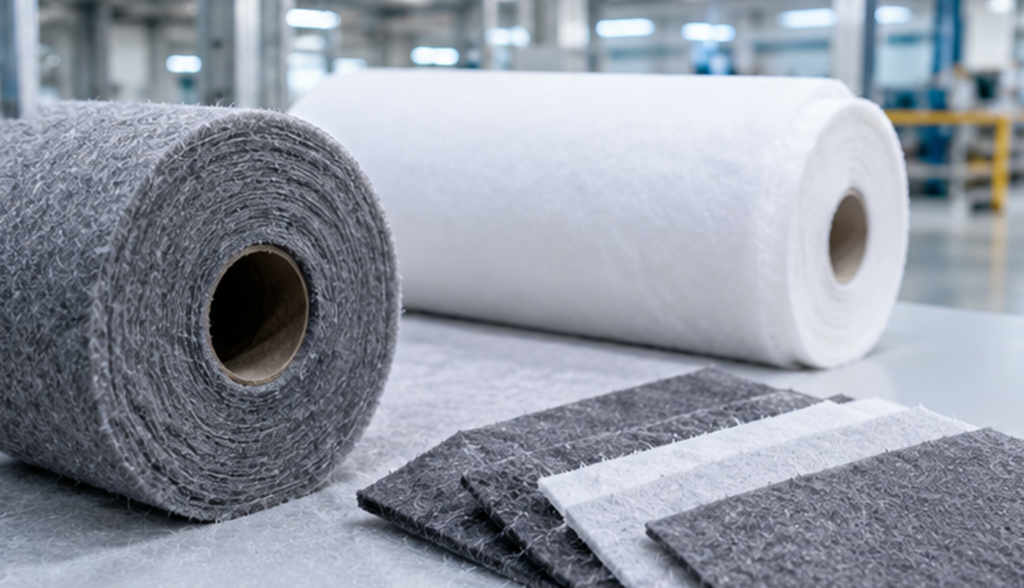
Needle-punched nonwoven fabric is produced by mechanically entangling fibers to form a coherent web. Unlike woven or knitted fabrics, its structure does not depend on conventional yarn interlacing or knitting loops.
A typical manufacturing process may include:
- Opening and preparing the staple fiber.
- Blending fibers when required.
- Carding or otherwise forming a fiber web.
- Cross-lapping or layering the web when required by the product design.
- Needle-punching to entangle the fibers.
- Applying additional finishing or bonding processes if needed.
- Inspecting and converting the finished nonwoven material.
The exact process varies by equipment, product design, and end use.
Recycled polyester staple fiber can be considered for suitable needle-punched applications, provided the grade meets the process requirements and the finished material passes the manufacturer’s evaluation.
2. Where Is Recycled Polyester Fiber Used in Needle-Punched Nonwovens?
The appropriate recycled micro fiber for nonwoven manufacturing grade depends on the performance requirements of the final product. Potential applications include the following.
Automotive Nonwoven Materials
Needle-punched polyester nonwovens used in selected automotive components, such as trunk liners, interior backing materials, floor coverings, and felt-type products.
Fiber selection should reflect the component’s requirements for thickness, structural integrity, appearance, durability, and compatibility with the converting process.
Automotive applications may also involve customer-specific testing and material approval requirements. Buyers should confirm these requirements before selecting a fiber grade.
Geotextiles and Civil Engineering Materials
Some geotextiles use needle-punched nonwoven structures for separation, filtration, drainage, or related functions.
For these applications, the finished geotextile must meet the relevant project specifications. Buyers should evaluate fiber suitability alongside finished-product properties such as tensile behavior, puncture resistance, water-flow characteristics, and durability where required.
A fiber supplier’s general product description alone does not establish that a material is suitable for a particular civil engineering specification.
Industrial Felt and Protective Layers
Needle-punched polyester fiber used in selected industrial felt, backing, padding, and protective-layer applications.
The required fiber properties depend on the material’s thickness, density, surface characteristics, mechanical requirements, and intended operating environment.
Acoustic and Insulation Components
Some acoustic or insulation products use fibrous nonwoven structures. The suitability of recycled polyester fiber depends on the component design and required performance.
Where acoustic, thermal, fire, or other regulated properties are specified, buyers should evaluate the finished material using the relevant test methods. These properties should not be inferred from the fiber type alone.
3. Which Fiber Specifications Should Buyers Evaluate?
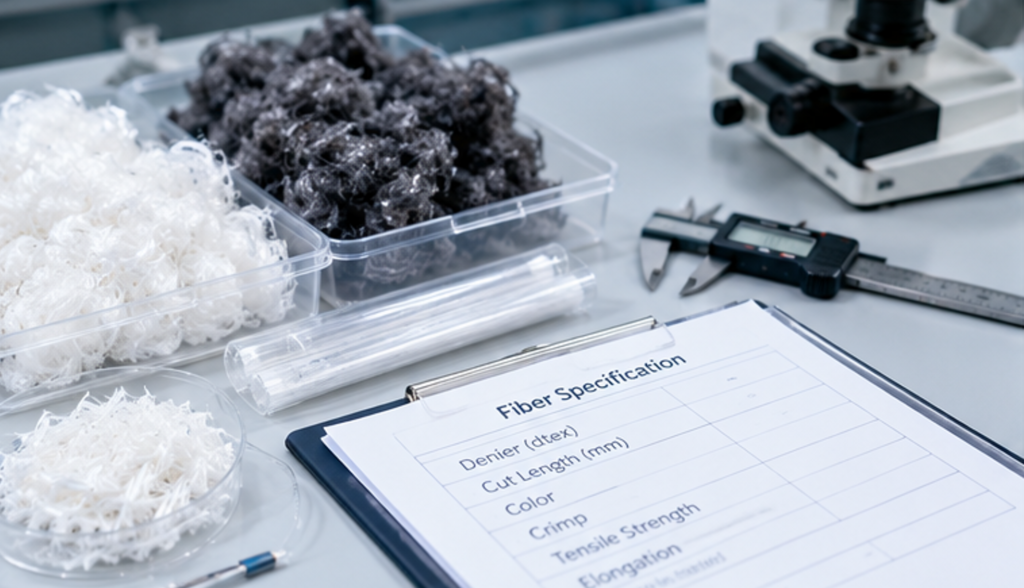
No single fiber specification determines the performance of every needle-punched nonwoven. The following parameters considered together.
Denier
Denier measures the mass in grams of 9,000 meters of fiber and is commonly used to describe fiber fineness.
Deniers can influence the number of fibers present in a given mass, web structure, and processing behavior. However, its effect depends on the complete fiber specification and manufacturing process.
When requesting recycled polyester staple fiber, confirm:
- The required nominal denier.
- The applicable specification tolerance.
- Whether the grade evaluate on a comparable production line.
- Whether the fiber meets the requirements of the intended nonwoven product.
Do not assume that a finer or coarser denier is automatically better. The appropriate choice depends on the target structure and finished-product requirements.
Cut Length
Cut length is the length of each staple fiber. It is an important parameter in opening, blending, carding, web formation, and subsequent mechanical entanglement.
The suitable cut length depends on the production equipment, fiber preparation system, and intended web structure.
Buyers should confirm the required length and tolerance with the production team and validate the selected grade through a representative trial.
Crimp
Fiber crimp can affect fiber cohesion, opening, web formation, and mechanical entanglement.
The required crimp characteristics depend on the fiber grade and the manufacturer’s process. Excessive variation may change how the fiber behaves during processing.
Ask the supplier for the available specification or inspection information and assess the material on the intended line.
Tensile Strength and Elongation
Mechanical properties may influence fiber handling and the behavior of the finished nonwoven.
The relevant requirements depend on the application and the role of the fiber in the finished material. Buyers should specify applicable acceptance criteria and test methods rather than compare values obtained using different methods.
Color and Cleanliness
Color requirements depend on the final application. Some products may require white fiber, while others may accept black or other specified colors.
Incoming inspection should also consider visible contamination, unusual color variation, and other appearance issues that could affect the finished product or downstream processing.
Fiber Finish and Processing Compatibility
Fiber finish can influence friction and fiber behavior during opening, carding, web formation, and needle-punching.
Compatibility should be evaluated under actual production conditions. Buyers should also confirm whether any additional treatment or finishing step is required for the intended product.
4. How Does Fiber Selection Affect Needle-Punching?
Needle-punched nonwoven performance is determined by the interaction between fiber properties, web formation, needle-punching settings, and any subsequent finishing processes.
Web Formation and Uniformity
A uniform web is important for producing nonwoven material with consistent thickness and structure.
Fiber length, fineness, crimp, blending, and the opening and carding systems can all influence web formation.
During trials, manufacturers should examine whether the fiber distributes consistently and whether the web meets the target basis weight and uniformity requirements.
Fiber Entanglement
Needle-punching mechanically entangles fibers within the web. Fiber characteristics and machine settings work together to determine the resulting structure.
The selected grade evaluate for compatibility with the needle-punching equipment and the desired finished-material properties.
Thickness and Density
Finished thickness and density depend on more than the raw fiber. Web weight, layering, needle-punching intensity, compression, and finishing conditions can all contribute to the final structure.
Buyers should define the finished-product requirements and confirm them through testing rather than assuming that a particular fiber specification guarantees a certain thickness or density.
Mechanical Performance
Tensile properties, puncture resistance, dimensional stability, and other mechanical requirements may be important depending on the application.
These are properties of the finished nonwoven and should be verified using the applicable test methods. The raw fiber specification is only one part of the evaluation.
5. Recycled Polyester Fiber vs. Virgin Polyester Fiber
Manufacturers considering recycled polyester should compare candidate grades using the same technical and commercial criteria applied to virgin polyester.
| Evaluation factor | What buyers should check |
|---|---|
| Fiber specifications | Denier, cut length, crimp, and other agreed parameters |
| Processing behavior | Opening, carding, web formation, and needle-punching compatibility |
| Finished-material performance | Compliance with the product’s defined requirements |
| Quality consistency | Variation between samples and production lots |
| Documentation | Available technical data, test reports, and traceability records |
| Purchasing cost | Price per kilogram and total cost under actual production conditions |
Recycled content does not automatically guarantee that a fiber will perform better or worse than virgin polyester. The outcome depends on the material grade, manufacturing controls, and application.
The practical approach is to compare technical data, conduct production trials, and assess finished nonwoven quality before approving a material.
Where recycled-content claims or third-party certification are required, buyers should confirm the specific documentation and chain-of-custody requirements. Do not assume that all recycled polyester fiber carries the same certification.
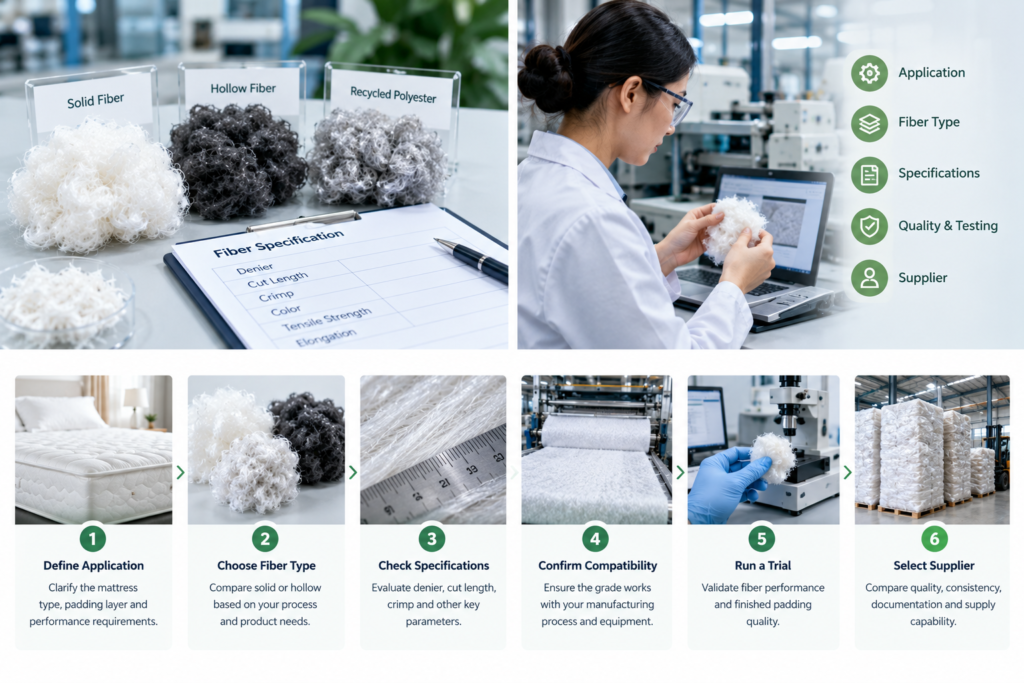
6. How to Choose the Right Recycled Polyester Fiber Grade
A systematic selection process helps reduce the risk of choosing a grade that is unsuitable for the production line.
Step 1: Define the Final Application
Identify the intended product, such as automotive felt, geotextile, industrial backing, or another needle-punched material.
Specify the required finished-product properties and any customer or industry standards that apply.
Step 2: Describe the Manufacturing Process
Provide information about the existing process, including fiber preparation, carding or web formation, needle-punching, and any additional finishing steps.
The more accurately the process is described, the easier it is to assess whether a candidate fiber grade is suitable for a trial.
Step 3: Establish the Fiber Specification
Define the target denier, cut length, color, and other relevant requirements.
If the current specification is not finalized, share the production objective and the properties of the material currently being used. A proposed grade should be confirmed with the supplier and production team before commercial approval.
Step 4: Request Technical Information
Ask for the available technical data sheet and relevant inspection or test records.
Confirm the test methods, specification tolerances, and acceptance criteria. Ensure that the documents refer to the proposed grade rather than a different product.
Step 5: Conduct a Production Trial
Test a representative sample under conditions that reflect normal production.
Evaluate fiber handling, web formation, needle-punching behavior, finished-material uniformity, and the properties required by the end customer.
Step 6: Approve the Grade for Bulk Production
Record the approved specification, acceptance criteria, sample results, and any agreed conditions.
After approval, compare incoming production lots against the same requirements. A successful sample trial should be followed by ongoing quality checks.
7. How to Evaluate a Recycled Fiber Supplier
For industrial nonwoven manufacturers, supplier evaluation should cover more than the quoted price.
Specification Control
Ask how the supplier defines and checks the agreed denier, cut length, color, and other relevant parameters.
Clarify which inspection records or test reports are available for the actual grade being offered.
Sample-to-Bulk Consistency
A sample must represent the material that will be supplied commercially.
Discuss lot identification, specification tolerances, inspection procedures, and how any nonconforming material will be handled.
Supply and Shipment Planning
Confirm the actual order quantity, packaging, production schedule, shipment arrangements, and delivery terms before committing to a purchase.
Do not assume that availability, capacity, or lead time is guaranteed until it has been confirmed for the specific order.
Technical Communication
A suitable supplier should be able to discuss the product specification, clarify available documentation, and respond to questions about the intended application.
Clear technical communication helps align the buyer, supplier, and production team before bulk procurement.
Documentation and Traceability
If the customer requires recycled-content evidence, test reports, or third-party certification, confirm which documents are available and whether they cover the proposed material and supply chain.
Documentation should be verified rather than assumed from a general marketing claim.
8. Common Purchasing Mistakes to Avoid
Several common mistakes can create unnecessary risk when sourcing recycled polyester staple fiber for needle-punched nonwovens.
Choosing by denier alone. Denier is important, but cut length, crimp, processing compatibility, and finished-product requirements also matter.
Assuming one grade works for every application. Automotive felt, geotextiles, and industrial backing may have different technical requirements.
Approving a sample without a production trial. Laboratory inspection alone may not reveal how a fiber behaves on the actual production line.
Comparing supplier prices without comparing specifications. A meaningful price comparison requires equivalent product requirements, documentation, and commercial terms.
Assuming recycled content guarantees certification or performance. Verify the specific documentation and test evidence required for the intended product.
Failing to define acceptance criteria. Buyers and suppliers should agree on the specification and the method used to assess compliance before placing a bulk order.
9. Buyer Checklist for Needle-Punched Nonwoven Fiber
Before requesting a quotation or approving a grade, confirm the following:
- Intended nonwoven application is clearly defined.
- Required denier and cut length are specified.
- Relevant crimp, strength, and other fiber requirements are identified.
- Color and cleanliness criteria are agreed.
- Compatibility with the existing production line has been considered.
- Finished-material performance requirements and test methods are defined.
- A representative sample is available for evaluation.
- Sample trial results meet the agreed acceptance criteria.
- Available technical documents and recycled-content evidence have been reviewed, where required.
- Bulk quantity, packaging, shipment terms, and schedule are confirmed.
- Lot identification and nonconformance procedures are agreed.
This checklist can be used by procurement teams, quality managers, and production engineers when comparing potential fiber suppliers.
10. Request a Quotation for Recycled Polyester Fiber
Contact Us for your requirement, include the following details in your inquiry:
- Intended application: automotive felt, geotextile, industrial felt, or another nonwoven product
- Target denier and cut length
- Required fiber color
- Preferred fiber grade or existing specification, if available
- Needle-punching and web-forming process
- Finished-product requirements
- Sample or trial quantity
- Expected order quantity and purchasing frequency
- Required quality documents or recycled-content evidence
- Destination port and preferred shipping terms
If you do not have a complete specification, describe the final product and your current production process. The supplier can then clarify which parameters need to be agreed before a trial.
11. Source Recycled Polyester Staple Fiber from Vietnam
Eco Micro Fiber provides information for international buyers sourcing recycled polyester staple fiber for textile and industrial applications.
For needle-punched nonwoven requirements, buyers should confirm the available grade, denier, cut length, color, technical documentation, and suitability for the intended process before ordering.
To discuss your requirement, contact [email protected]. Include your target specification, application, trial quantity, and destination market to help clarify the next steps.
Frequently Asked Questions
What recycled polyester fiber is suitable for needle-punched nonwovens?
The suitable grade depends on the end application, fiber specification, web-forming process, needle-punching equipment, and finished-material requirements. Buyers should confirm the grade through technical review and production trials.
Why are denier and cut length important for needle-punched fabric?
Denier describes fiber fineness, while cut length describes the length of each staple. Both can influence processing and web formation, but their effects depend on other fiber properties and machine settings.
Can recycled polyester staple fiber be used for geotextiles?
Some recycled polyester fiber grades may be suitable for selected geotextile products. The finished geotextile must meet the relevant project requirements, which should be verified through appropriate testing.
Can recycled polyester fiber be used for automotive nonwovens?
Potential applications include selected automotive felt, backing, and interior components. Suitability depends on the grade, component design, customer specifications, and required testing or approval process.
What should buyers test before bulk purchasing?
Buyers should evaluate the fiber under representative production conditions and test the finished nonwoven against agreed criteria. Depending on the application, these may include uniformity, thickness, mechanical properties, or other specified performance requirements.
What documents should a recycled polyester fiber supplier provide?
Depending on the grade and customer requirements, buyers may request a technical data sheet, relevant inspection or test reports, lot information, and recycled-content or certification documentation where applicable. The availability and scope of each document should be confirmed with the supplier.
Conclusion
Selecting recycled polyester fiber for needle-punched nonwovens requires more than choosing a nominal denier or comparing price per kilogram.
Manufacturers should assess denier, cut length, crimp, mechanical properties, color, processing compatibility, and the requirements of the finished nonwoven. Supplier evaluation should also cover quality consistency, documentation, and the ability to meet the agreed commercial requirements.
By defining a clear specification, conducting representative production trials, and establishing measurable acceptance criteria, nonwoven manufacturers can make more informed sourcing decisions and build a more consistent raw-material procurement process.