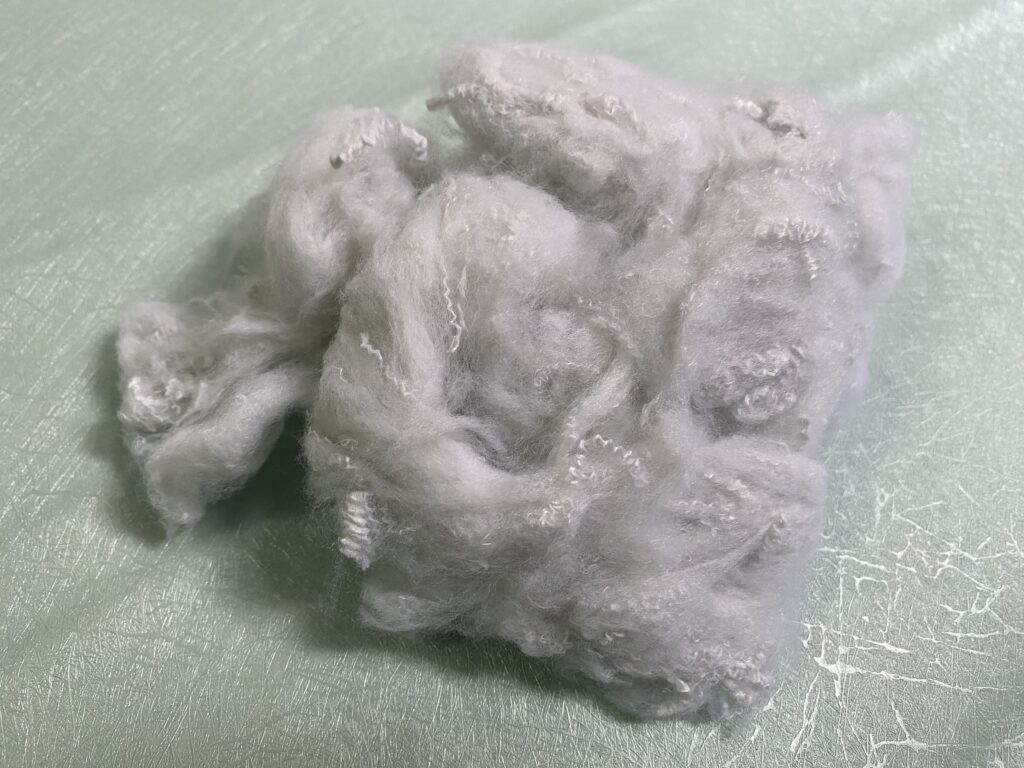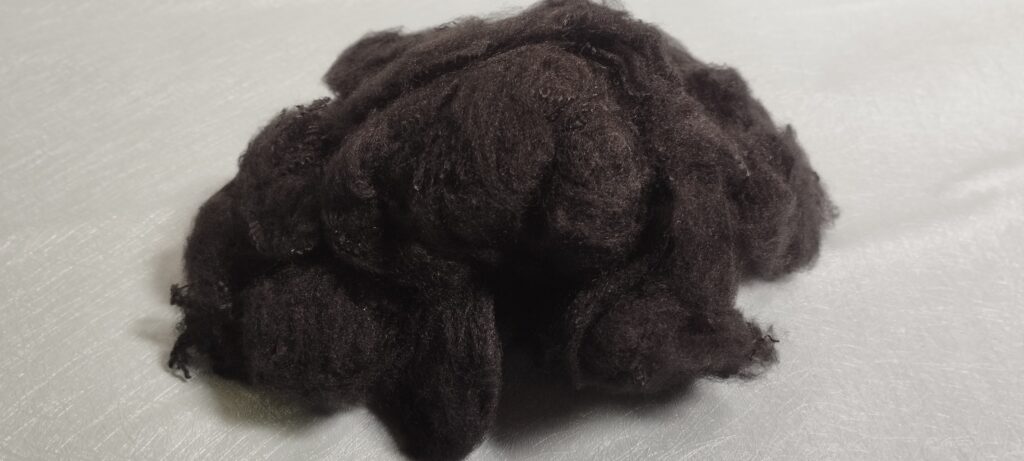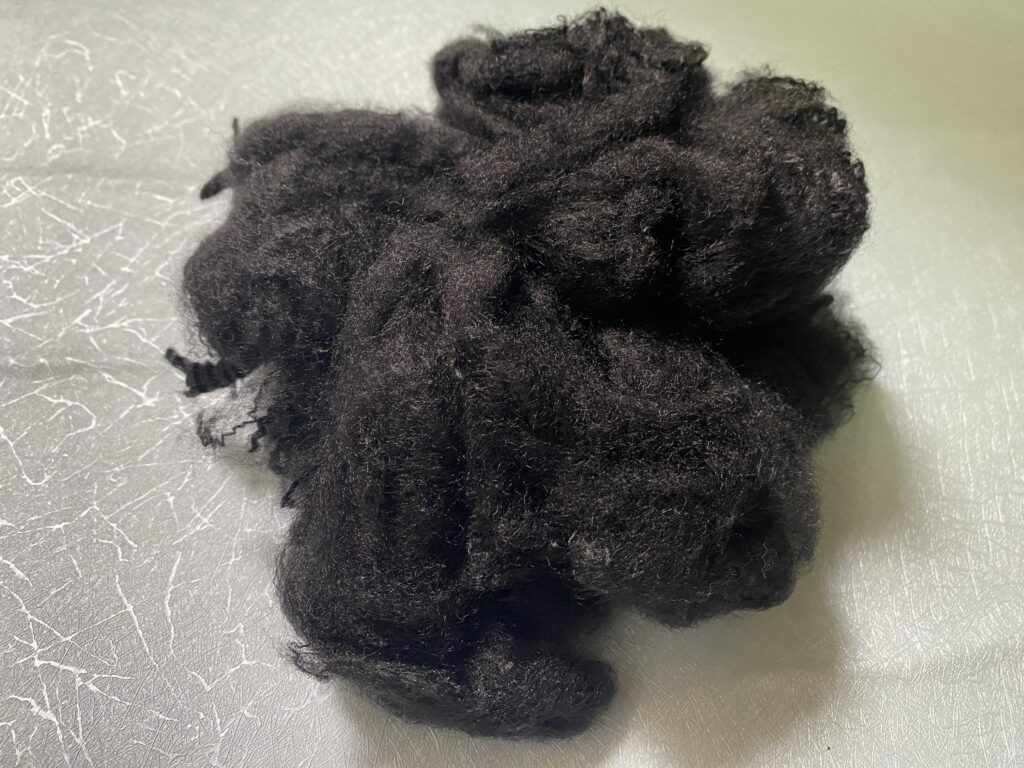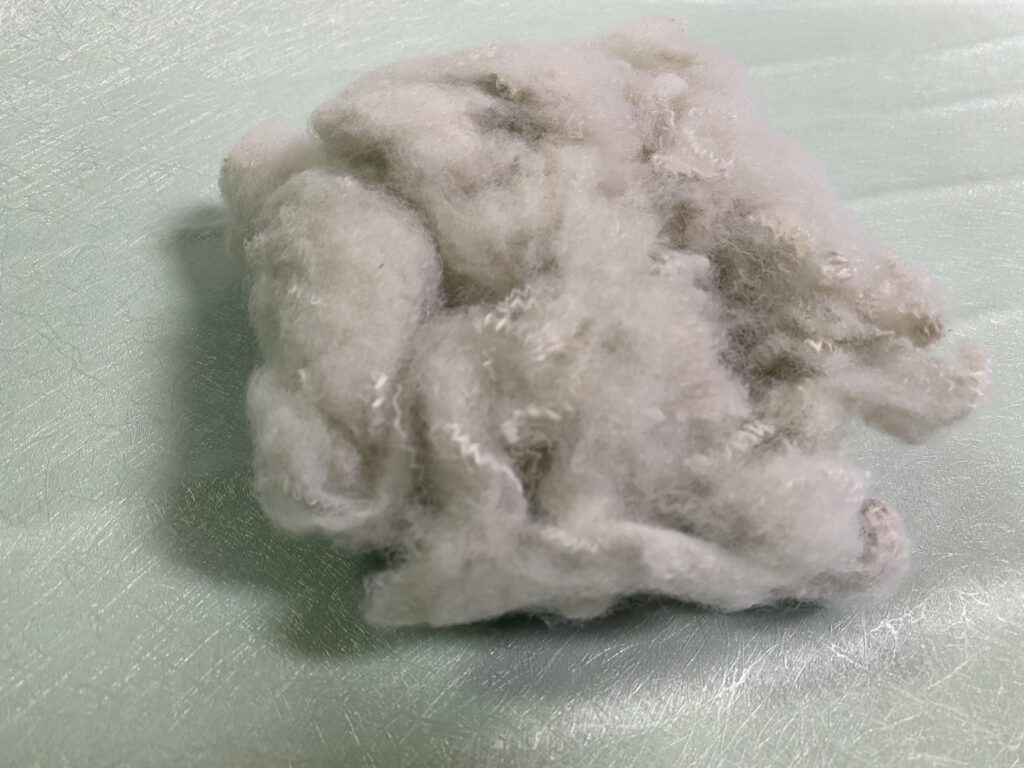
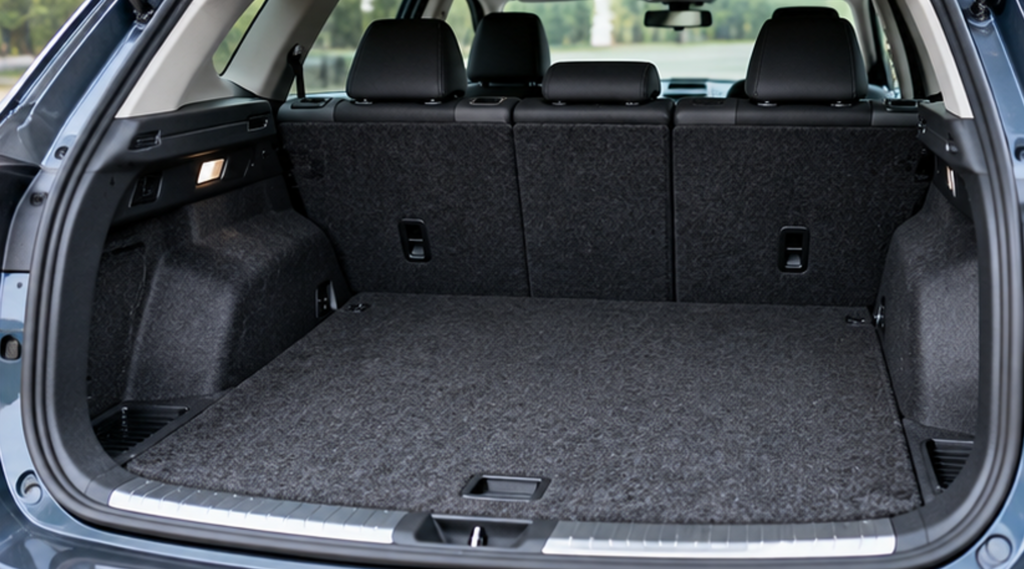
Automotive carpet and trunk liner manufacturers require fiber materials that can support consistent processing, reliable product performance, and demanding automotive supply requirements.
As manufacturers explore recycled materials, recycled polyester staple fiber (RPSF) is an important option for selected automotive textile and nonwoven applications.
Recycled polyester fiber can be processed into needle-punched nonwovens, molded textile components, and other fiber-based structures used in vehicle interiors.
However, not every recycled polyester fiber grade is suitable for automotive applications.
Fiber fineness, cut length, tensile properties, crimp, cleanliness, thermal behavior, and consistency between production lots can influence manufacturing performance.
This guide explains how recycled polyester staple fiber is used in automotive carpet and trunk liners, which technical characteristics buyers should evaluate, and how manufacturers can approach supplier qualification.
1. What Is Recycled Polyester Fiber for Automotive Applications?
Recycled polyester staple fiber is a short-length synthetic fiber manufactured using recycled polyester feedstock.
Depending on the manufacturing process, the resulting fiber can be supplied in different deniers, cut lengths, colors, and structural configurations.
For automotive textile production, polyester staple fibers may be processed into nonwoven materials through technologies such as carding and needle punching.
The resulting textile structures can be incorporated into various vehicle interior components.
Potential applications include:
- Passenger compartment carpet structures
- Trunk floor covering
- Trunk side trim liners
- Wheelhouse textile liners
- Under-carpet textile layers
- Selected automotive acoustic and protective nonwoven components
The suitability of recycled polyester fiber depends on the intended component, processing method, and the automotive manufacturer’s performance requirements.
Recycled content alone does not establish that a fiber is suitable for a particular vehicle application.
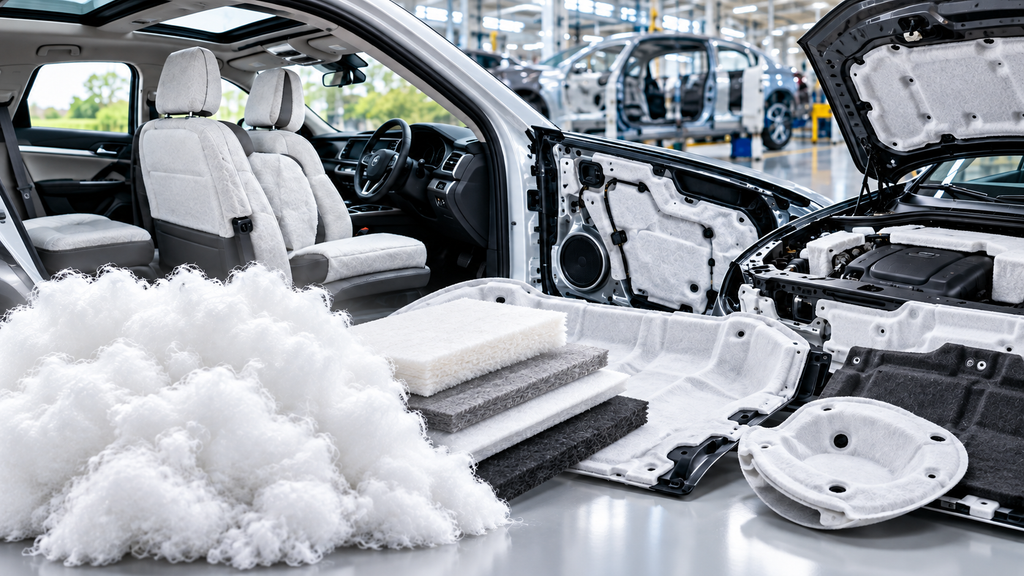
2. How Recycled Polyester Fiber Is Used in Automotive Carpet
Automotive carpet is not a single universal textile construction.
Different manufacturers use different material structures depending on vehicle design, cost targets, processing technology, and performance requirements.
Some automotive carpets incorporate needle-punched polyester nonwoven layers, while others use tufted or composite constructions.
Needle-Punched Automotive Carpet
In needle-punched carpet manufacturing, staple fibers are generally opened, blended, formed into a web, and mechanically entangled using barbed needles.
Needle punching helps consolidate the fiber web into a textile structure.
The finished material may undergo additional treatments such as:
- Thermal stabilization
- Backing application
- Lamination
- Surface finishing
- Cutting and forming
The final process depends on the product design.
Why Polyester Staple Fiber Is Considered
Polyester staple fiber offers characteristics that can be useful in selected automotive carpet constructions, including:
- Availability in different fiber fineness grades
- Compatibility with certain nonwoven manufacturing technologies
- Potential for mechanical strength in suitable textile structures
- Ability to be processed into different web weights and constructions
- Availability of recycled-content material options
However, the final carpet’s abrasion resistance, dimensional stability, and other performance characteristics depend on the complete material construction and manufacturing process, not solely on the fiber.
3. Recycled Polyester Fiber for Automotive Trunk Liners
Automotive trunk liners are textile or composite components used to cover and protect parts of the vehicle’s luggage compartment.
Depending on vehicle design, these components may include:
- Trunk floor covering
- Sidewall liners
- Rear compartment trim
- Wheelhouse covers
- Spare-wheel compartment covers
Trunk liner materials may need to accommodate complex shapes, mechanical loading, temperature changes, and repeated contact with luggage.
Important Material Characteristics
Dimensional stability
The material should maintain the required shape and fit after manufacturing and during its intended service conditions.
Abrasion resistance
The finished liner may experience friction from luggage, tools, and other objects.
Formability
Some trunk liners has shaped by using heat, pressure, or other forming processes.
Surface appearance
Color, texture, and visual uniformity may be important for visible interior components.
Acoustic performance
Some trunk-area textile structures has designed to contribute to noise management, depending on their construction and placement.
How Fiber Selection Influences Trunk Liner Production
Fiber properties can affect carding, needle punching, web consistency, and downstream processing.
For example, fiber cut length and crimp may influence how effectively the material forms a uniform nonwoven web.
Fiber fineness and blend composition may influence the structure of the finished textile.
However, finished-component performance must be verified through relevant material and part-level testing.
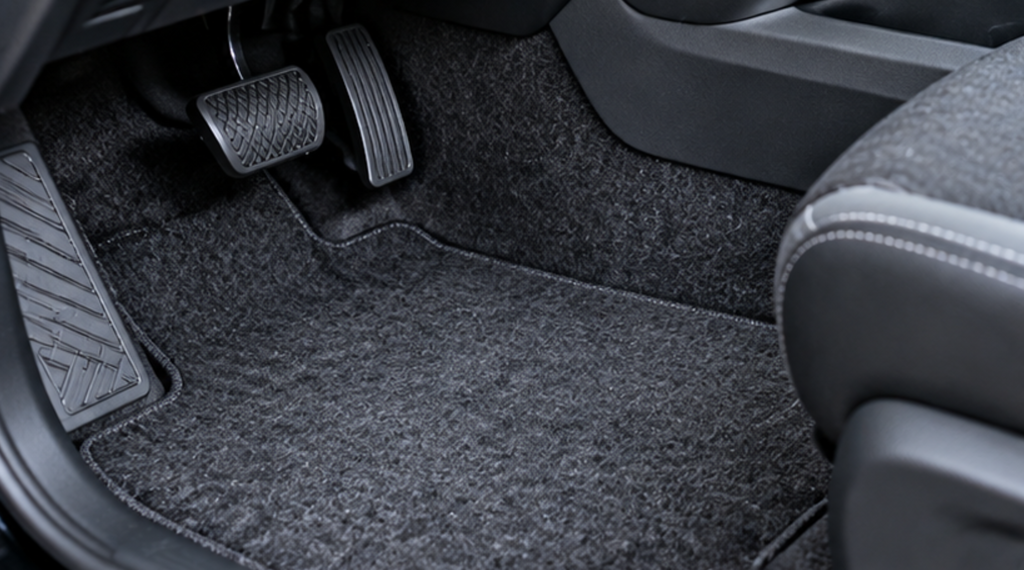
4. Key Fiber Specifications for Automotive Carpet and Trunk Liners
Buyers should evaluate several technical parameters before approving recycled polyester staple fiber for automotive nonwoven manufacturing.
| Fiber Parameter | Why It Matters |
|---|---|
| Fiber denier | Influences fiber fineness, web structure, and processing behavior |
| Cut length | Affects opening, carding, and web formation |
| Tenacity | Influences fiber resistance to mechanical loading |
| Elongation | Affects fiber behavior under tension |
| Crimp | Influences cohesion, bulk, and web formation |
| Color | Important for appearance-sensitive applications |
| Cleanliness | Helps reduce contamination-related defects |
| Fiber finish | Influences friction, static behavior, and processing |
| Thermal behavior | Relevant to heat treatment, lamination, or molding |
| Batch consistency | Supports repeatable manufacturing performance |
These parameters should be reviewed together rather than individually.
A fiber that meets nominal denier and cut length requirements may still be unsuitable if other characteristics do not match the manufacturing process.
5. Selecting Fiber Denier for Automotive Carpet
Fiber denier is an important consideration in automotive textile manufacturing.
Lower-denier fibers are finer, while higher-denier fibers are coarser.
Different fiber fineness grades may be evaluated depending on the intended carpet construction.
Fine Polyester Staple Fiber
Finer fibers may be considered where a relatively fine textile structure or particular surface characteristics are desired.
However, finer fibers may require different processing adjustments.
Medium and Coarser Polyester Staple Fiber
Coarser fibers may be evaluated for selected structures where fiber stiffness, web characteristics, or other construction requirements make them suitable.
Examples of commercial recycled polyester staple fiber grades include 3D, 6D, and 15D.
These are examples of available fiber fineness categories, not universal recommendations for automotive carpet.
Why There Is No Single Best Denier
The appropriate fiber denier depends on:
- Target carpet construction
- Needle-punching equipment
- Web weight
- Surface requirements
- Mechanical performance targets
- Fiber blend composition
- Downstream processing
Automotive textile manufacturers should evaluate representative samples rather than selecting fiber solely by nominal denier.
6. Choosing the Right Fiber Cut Length
Cut length affects how polyester staple fiber behaves during opening, carding, and web formation.
Common commercial cut lengths include 38mm, 51mm, 64mm, and 76mm.
The appropriate length depends on equipment configuration and intended nonwoven construction.
Shorter Staple Fibers
Shorter fibers may be suitable for certain carding systems and web structures.
However, very short fibers can create processing challenges depending on equipment and fiber characteristics.
Longer Staple Fibers
Longer fibers may contribute to fiber entanglement and web integrity in compatible manufacturing processes.
However, excessive length relative to equipment capability may cause opening and carding difficulties.
What Buyers Should Confirm
Before selecting a cut length, manufacturers should review:
- Carding machine compatibility
- Fiber opening requirements
- Needle-punching process
- Target fabric weight
- Required web uniformity
- Downstream molding or lamination requirements
The selected cut length has validated through actual production trials.
7. The Role of Crimp in Automotive Nonwoven Production
Crimp refers to the wave-like configuration introduced into staple fibers.
It can influence fiber cohesion, bulk, opening behavior, and web formation.
For automotive carpet and trunk liner production, crimp characteristics may affect how fibers interact during carding and needle punching.
Why Crimp Consistency Matters
Variation in crimp may contribute to changes in:
- Fiber opening behavior
- Web formation
- Fiber distribution
- Nonwoven bulk
- Mechanical entanglement
Buyers should review the supplier’s crimp specifications and confirm how crimp is measured.
Where crimp is a critical process parameter, production trials has used to evaluate the actual impact on finished textile performance.
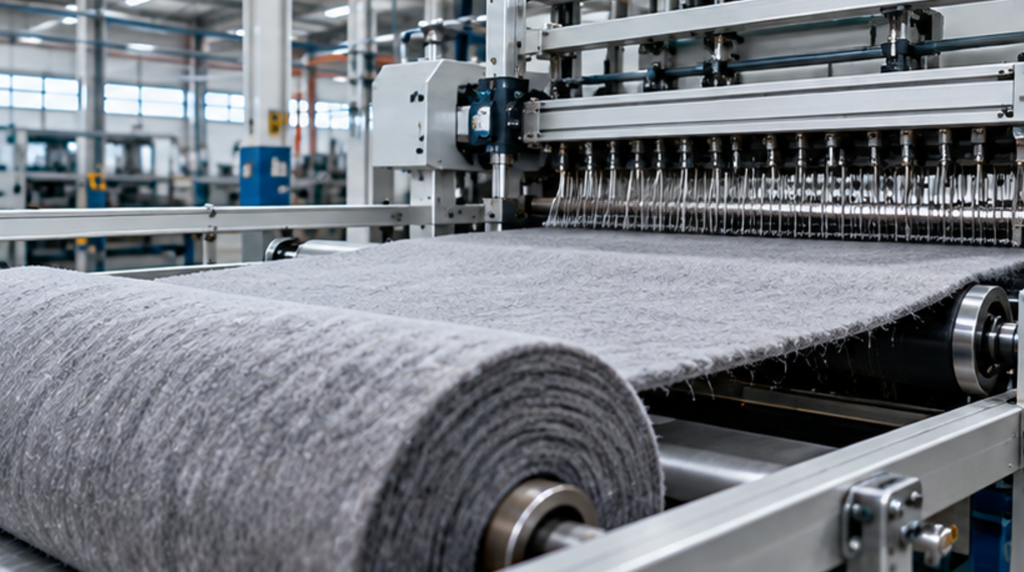
8. How Needle Punching Converts Polyester Fiber into Automotive Nonwovens
Needle punching is a widely used mechanical bonding method for selected automotive nonwoven applications.
The process typically includes several stages.
Step 1: Fiber Opening
Compressed staple fibers are opened to separate fiber masses and prepare the material for further processing.
Step 2: Fiber Blending
Different fiber grades or materials may be blended to achieve the desired textile characteristics.
Step 3: Carding
Carding helps form a more uniform fiber web.
Step 4: Web Laying
The web may be layered to achieve the required structure and basis weight.
Step 5: Needle Punching
Barbed needles mechanically entangle fibers, helping consolidate the web.
Step 6: Finishing and Forming
Depending on the component, the nonwoven may undergo thermal treatment, backing, lamination, cutting, or molding.
Why Raw Material Consistency Matters
Changes in fiber fineness, cut length, crimp, finish, or contamination can influence processing behavior.
Therefore, recycled polyester staple fiber should be evaluated as part of the complete nonwoven production system.
9. Recycled Polyester Fiber and Automotive Acoustic Performance
Vehicle manufacturers may use textile and nonwoven structures as part of their noise management systems.
Automotive carpets, trunk liners, and related components can contribute to acoustic performance depending on their design and placement.
However, fiber material alone does not determine sound absorption or sound insulation performance.
Acoustic behavior depends on factors such as:
- Fiber fineness
- Web density
- Material thickness
- Porosity
- Airflow resistance
- Layer construction
- Backing materials
- Installation conditions
A recycled polyester nonwoven can evaluate for acoustic applications, but the final structure must be tested against the relevant acoustic requirements.
Buyers should avoid relying on unsupported claims about sound absorption based only on fiber denier or recycled content.
10. What Automotive Buyers Should Check Before Purchasing RPSF
Automotive supply chains often require more structured supplier qualification than general-purpose textile purchasing.
Fiber buyers should assess both technical suitability and the supplier’s ability to maintain agreed specifications.
Technical Data Sheet
Request a TDS identifying the proposed fiber grade and relevant technical characteristics.
Representative Samples
Confirm that the samples correspond to the intended commercial product.
Production Trial
Evaluate opening, carding, needle punching, finishing, and finished textile performance.
Lot Consistency
Discuss how the supplier identifies production lots and manages specification variation.
Contamination Control
Review cleanliness requirements and inspection procedures.
Recycled Content Documentation
If recycled-content verification is required, request appropriate supporting documentation.
Automotive-Specific Requirements
Confirm which customer or OEM requirements apply.
These may include testing related to:
- Abrasion
- Dimensional stability
- Colorfastness
- Odor
- Fogging
- Flammability
- Chemical substances
- Acoustic performance
The applicable test methods and acceptance criteria depend on the vehicle manufacturer, component, market, and contractual requirements.
A fiber supplier should not be assumed to hold automotive-specific approvals or certifications without verification.
11. Common Problems When Selecting Recycled Polyester Fiber
Problem 1: Inconsistent Fiber Length
Length variation can affect opening and carding performance.
Problem 2: Excessive Contamination
Foreign particles and unwanted materials may cause surface defects, machine cleaning requirements, or quality problems.
Problem 3: Unstable Crimp
Changes in crimp characteristics can influence web formation and nonwoven processing.
Problem 4: Color Variation
Color inconsistency may create problems for visible carpet or trunk liner surfaces.
Problem 5: Poor Compatibility with Molding Processes
A fiber or nonwoven structure that performs adequately during needle punching may not necessarily meet subsequent heat-forming requirements.
Problem 6: Selecting Material Based Only on Price
Lower fiber purchase cost does not always result in lower total manufacturing cost.
Waste, downtime, processing adjustments, and rejected material should also can consider.
12. How to Qualify a Recycled Polyester Fiber Supplier for Automotive Textiles
A structured qualification process helps manufacturers reduce material-related risks.
Step 1: Define the application.
Specify whether the fiber will be used for passenger carpet, trunk floor covering, side trim, or another component.
Step 2: Confirm the manufacturing process.
Identify the nonwoven formation, bonding, finishing, and molding methods.
Step 3: Establish technical requirements.
Define relevant fiber properties, acceptable tolerances, and quality expectations.
Step 4: Review the supplier’s documentation.
Evaluate the proposed TDS, available quality records, and relevant recycled-content documentation.
Step 5: Conduct sample trials.
Test representative material under actual production conditions.
Step 6: Validate finished-product performance.
Verify the resulting textile or component against applicable customer specifications.
Step 7: Agree on commercial supply conditions.
Clarify product grade, quality acceptance criteria, packaging, lot identification, and shipment requirements.
Step 8: Monitor repeat-order performance.
Evaluate consistency across subsequent commercial lots.
This approach supports a more reliable purchasing decision than approving a supplier based solely on a quotation or sample appearance.
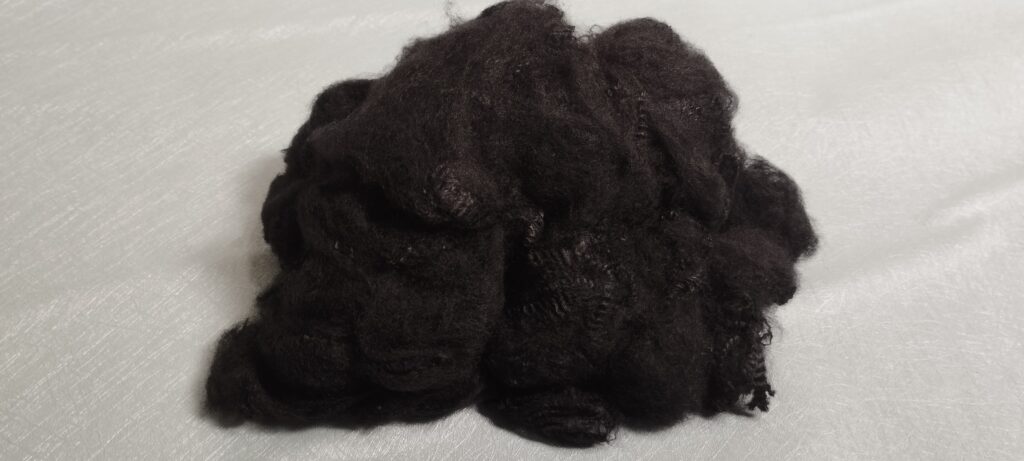
13. Recycled Polyester Fiber Supply from GDI Textile
GDI Textile supplies recycled polyester staple fiber for industrial textile applications.
For manufacturers evaluating recycled polyester fiber for automotive carpet, trunk liners, and related nonwoven products, material selection should begin with the actual production requirements.
Buyers may discuss suitable options from the available recycled polyester staple fiber portfolio, including relevant denier, cut length, and color combinations.
For example, grades such as 3D × 51mm, 6D × 64mm, and 15D × 76mm consider for technical evaluation where compatible with the customer’s manufacturing process.
These specifications are examples for discussion, not confirmed automotive approvals or guarantees of application suitability.
Information to Include in Your Inquiry
To support a focused technical and commercial discussion, please provide:
- Automotive application: carpet, trunk liner, felt, or another component
- Manufacturing process: needle punching, carding, molding, or lamination
- Required fiber denier and cut length
- Color requirements
- Current fiber specification or reference sample
- Relevant customer quality requirements
- Estimated monthly consumption
- Destination country or port
Looking for Recycled Polyester Staple Fiber for Automotive Nonwovens?
Contact GDI Textile to discuss available fiber grades, technical requirements, sample evaluation, and export supply options.
Website: https://ecomicrofiber.com/

Frequently Asked Questions
Can recycled polyester staple fiber be used for automotive carpet?
Yes. Suitable recycled polyester staple fiber grades has evaluated for selected automotive carpet constructions, particularly certain needle-punched nonwoven structures. Final suitability depends on manufacturing processes and finished-product requirements.
What fiber denier is suitable for automotive carpet?
There is no universal denier for all automotive carpets. Manufacturers may evaluate different fiber fineness grades depending on carpet structure, surface requirements, mechanical properties, and equipment compatibility.
Is 6D × 64mm recycled polyester fiber suitable for trunk liners?
It is a candidate for evaluation in certain nonwoven constructions, but suitability must be confirmed through processing trials and finished-component testing. The specification alone does not establish automotive approval.
Why is crimp important in automotive nonwoven manufacturing?
Crimp influences fiber cohesion, bulk, and web formation. Consistent crimp characteristics can support more predictable processing when matched to the manufacturing system.
Can recycled polyester fiber improve vehicle acoustic performance?
Recycled polyester fiber has used in nonwoven structures designed for acoustic applications. However, acoustic performance depends on the complete material construction, including thickness, density, porosity, and installation.
What quality documents should automotive textile buyers request?
Buyers may request a Technical Data Sheet, relevant test results, representative samples, lot-specific quality records, and recycled-content documentation where required. Additional documentation depends on customer specifications.
Is recycled polyester fiber automatically approved for automotive use?
No. Recycled content or a general-purpose fiber specification does not establish automotive approval. Qualification depends on the relevant manufacturer, component, test requirements, and supply agreement.
Conclusion
Recycled polyester staple fiber offers a material option for manufacturers developing automotive carpet, trunk liners, and related nonwoven textile components.
However, successful material selection requires more than choosing a nominal denier and cut length.
Buyers should evaluate fiber fineness, cut length, crimp, tensile properties, cleanliness, thermal behavior, and production-lot consistency.
They should also verify the compatibility of the proposed fiber with needle punching, finishing, molding, and applicable automotive performance requirements.
The most effective purchasing approach combines technical specification review, representative production trials, and clear quality acceptance criteria.
For manufacturers sourcing recycled polyester staple fiber from Vietnam, these steps provide a practical foundation for evaluating material suitability and developing reliable long-term supply relationships.