Recycled polyester staple fiber (RPSF) is an important material for manufacturers looking to source polyester fibers for yarn spinning, nonwoven production, filling, padding and other industrial applications. However, selecting the right fiber involves more than choosing recycled material or comparing prices per kilogram.
Buyers need to evaluate fiber specifications, application requirements, consistency between production lots, quality documentation, packaging and supply arrangements. A fiber that works well in one manufacturing process may not be suitable for another, even when both products are made from recycled polyester.
This guide explains what recycled polyester staple fiber is, how its main specifications work, where it is used and what international buyers should consider when evaluating suppliers.
Table of Contents
- What Is Recycled Polyester Staple Fiber?
- How Is Recycled Polyester Staple Fiber Produced?
- Recycled Polyester Staple Fiber vs. Virgin Polyester Fiber
- Understanding RPSF Specifications
- Main Applications of Recycled Polyester Staple Fiber
- How to Select the Right RPSF for Your Application
- How to Evaluate a Recycled Polyester Fiber Supplier
- How to Compare RPSF Quotations
- Common Mistakes When Buying Recycled Polyester Staple Fiber
- What Information Should You Include in an RPSF RFQ?
- Frequently Asked Questions
- Request a Recycled Polyester Staple Fiber Quotation
1. What Is Recycled Polyester Staple Fiber?
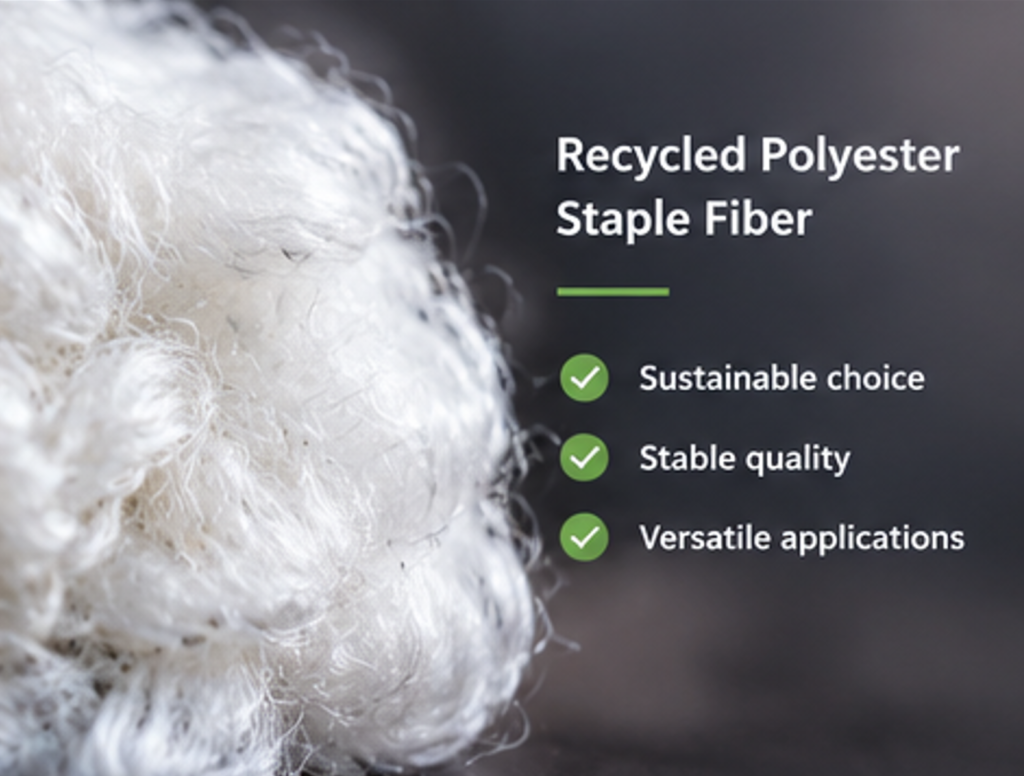
Recycled polyester staple fiber is a polyester fiber produced from recycled polyester raw materials and supplied as relatively short, discrete fibers rather than continuous filaments.
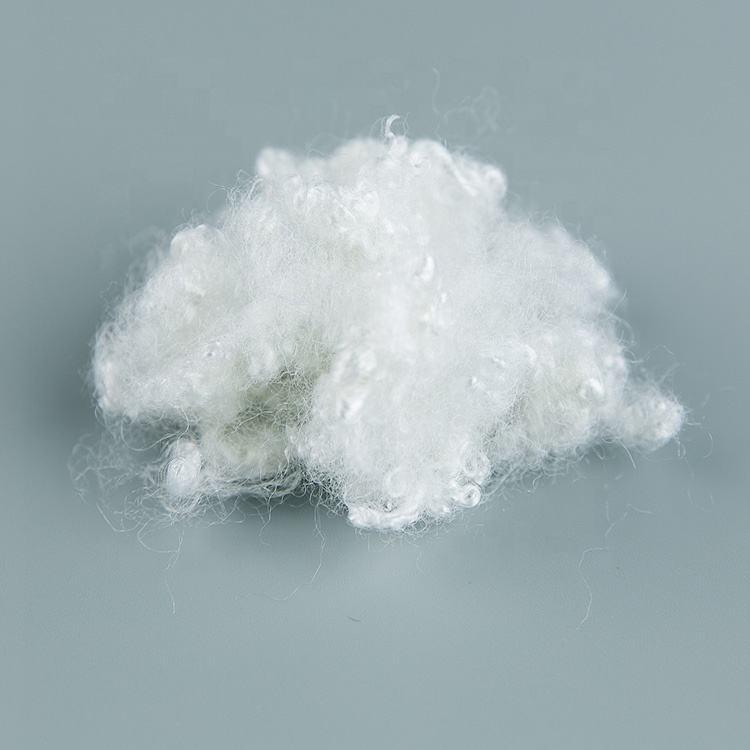
It is commonly abbreviated as RPSF, meaning recycled polyester staple fiber. Depending on the production process and intended application, RPSF can be supplied in different deniers, cut lengths, colors and other technical configurations.
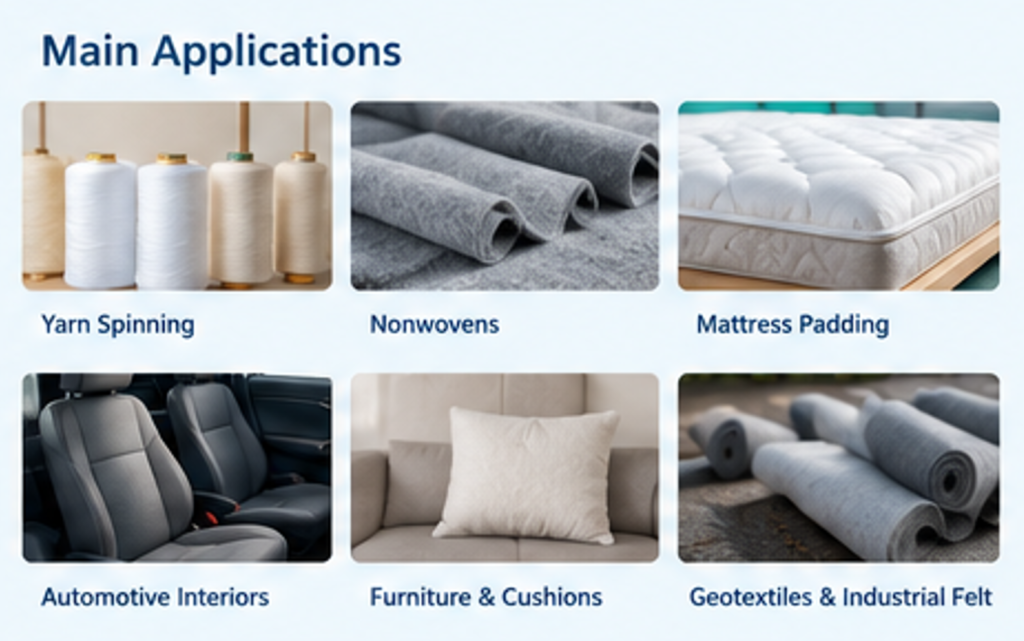
Manufacturers use recycled polyester staple fiber in a range of products, including:
- Recycled and blended yarns
- Needle-punched nonwoven materials
- Mattress padding and filling
- Cushion, pillow and furniture filling
- Automotive interior materials
- Industrial felt and selected geotextile applications
- Carpets, rugs and other textile products
The correct specification depends on the manufacturing process and the properties required in the finished product.
For example, a spinning mill needs to consider fiber characteristics that support its yarn-making process. A mattress-padding producer may prioritize fiber behavior during web formation, bonding or filling. A nonwoven manufacturer may need a specification suited to its web-forming and consolidation process.
The key principle: RPSF should be selected according to the requirements of the intended application, not simply by the fact that it is recycled polyester.
2. How Is Recycled Polyester Staple Fiber Produced?
Recycled polyester staple fiber can be manufactured using different recycled feedstocks and production routes. The specific process depends on the raw material, equipment and product requirements.
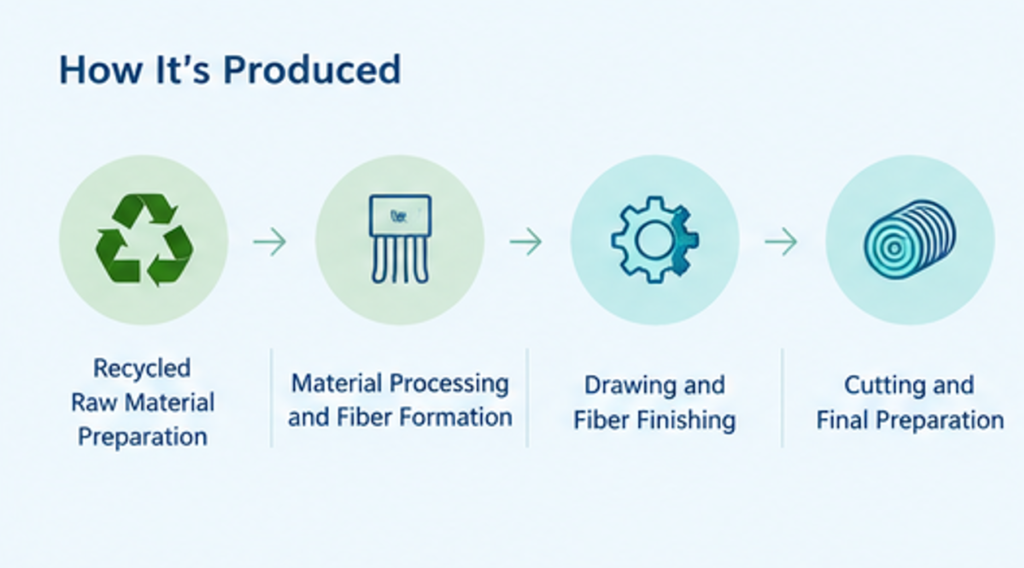
A simplified overview includes the following stages.
2.1 Recycled raw material preparation
Recycled polyester feedstock is collected and prepared for processing. Depending on the production route, the feedstock may include recycled PET materials or other suitable polyester sources.
Raw-material preparation and control are important because the incoming material can influence the consistency of the final fiber. Buyers evaluating a supplier should ask what documentation and quality controls are available for the specific product being offered.
2.2 Material processing and fiber formation
The prepared material is processed into a form suitable for fiber production. In a typical melt-spinning route, polyester material is melted and extruded through spinnerets to form filaments.
The production conditions and material characteristics influence the properties of the resulting fiber. Actual specifications should therefore be confirmed with the manufacturer rather than assumed from the term “recycled polyester.”
2.3 Drawing and fiber finishing
The filaments undergo further processing to achieve the required characteristics. Depending on the product, this may involve drawing, crimping, finishing and other operations.
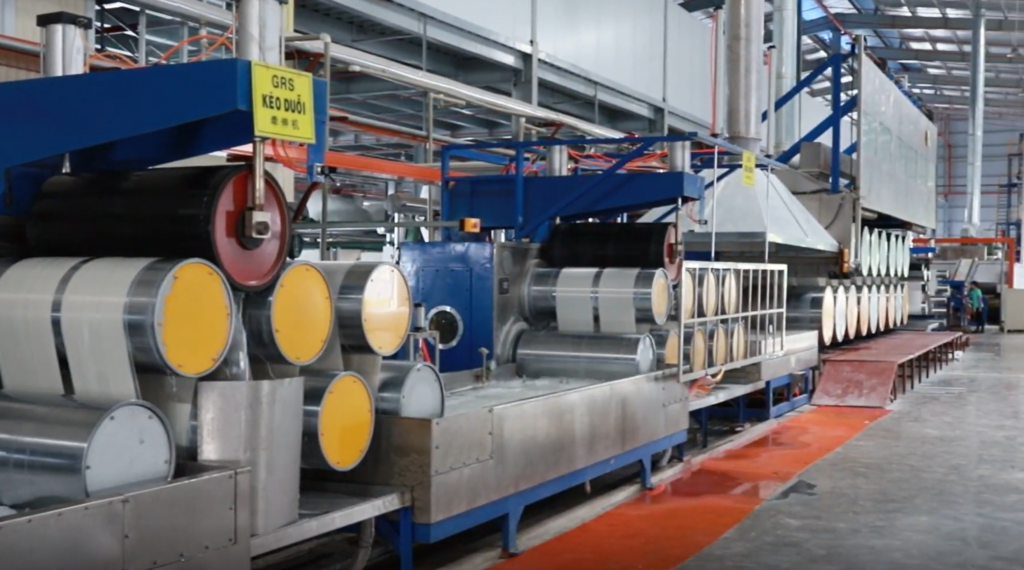
Not every fiber has the same finish or structure. Buyers should confirm relevant requirements, such as crimp, finish or other application-specific characteristics, before placing an order.
2.4 Cutting and final preparation
The fiber is cut to the specified length and prepared for packing. The finished product is then checked against the applicable specification and quality requirements.
For B2B procurement, the important question is not only how the fiber is made. It is whether the supplier can clearly document the offered specification, confirm the agreed requirements and maintain appropriate controls across production lots.
3. Recycled Polyester Staple Fiber vs. Virgin Polyester Fiber
Recycled and virgin polyester staple fibers share the same broad polymer family, but they differ in raw-material origin and may differ in product characteristics, depending on how they are manufactured.
| Comparison factor | Recycled polyester staple fiber | Virgin polyester staple fiber |
|---|---|---|
| Raw-material origin | Produced from recycled polyester feedstock | Produced from virgin polyester raw materials |
| Main selection criteria | Application suitability, specifications, consistency and documentation | Application suitability, specifications, consistency and documentation |
| Environmental assessment | Depends on feedstock, production process, energy use and supporting evidence | Depends on raw materials and production process |
| Quality evaluation | Requires verification against the agreed product specification | Requires verification against the agreed product specification |
| Procurement considerations | Includes recycled-material traceability where required, alongside normal quality and supply checks | Includes normal quality, technical and supply checks |
Neither category should automatically be assumed to be superior for every application. The suitability of a fiber depends on the required properties and the performance of the material in the buyer’s actual process.
Buyers should also distinguish between a product being made from recycled material and a product having independently verified environmental or chain-of-custody credentials. If a certification or recycled-content claim is a purchasing requirement, request the relevant documentation and verify that it applies to the specific supplier, facility and product concerned.
4. Understanding Recycled Polyester Staple Fiber Specifications
A clear technical specification helps buyers compare offers and reduces the risk of ordering a fiber that does not fit their manufacturing process.
4.1 Denier (D)
Denier is a unit used to describe the linear mass of a fiber or filament. One denier corresponds to one gram per 9,000 meters of fiber.
In practical terms, denier is one of the main parameters used to identify a polyester staple fiber grade.
Examples of denier specifications include:
- 1.4D
- 2.5D
- 3D
- 6D
- 15D
- 20D
These values identify different fiber grades. A higher denier indicates greater linear mass per unit length, but denier alone does not determine whether a fiber is suitable for a particular application.
The appropriate grade depends on the equipment, manufacturing process and requirements of the final product.
4.2 Cut length
Cut length describes the length to which staple fiber is cut. It is commonly expressed in millimeters (mm).
Examples of product specifications include:
- 32 mm
- 38 m
- 51 mm
- 64 mm
- 76 mm
- 90 mm
Cut length matters because fiber length interacts with the manufacturing process. Spinning systems, web-forming equipment and filling applications may have different requirements.
Before selecting a cut length, buyers should confirm the length range or tolerance required by their process and the supplier’s actual specification.
4.3 Color
Recycled polyester staple fiber may be offered in different colors, including white and black, depending on the product range.
Color requirements should be stated clearly in an inquiry. Buyers may also need to clarify the acceptable color variation, the intended end use and whether the fiber will be dyed, blended or used in a product where its original color remains visible.
Do not assume that all recycled white fibers have identical whiteness or that all black fibers have the same shade. If color consistency is important, request representative samples and agree on the applicable acceptance criteria.
4.4 Solid and hollow fiber structures
Solid and hollow polyester fibers have different cross-sectional structures and may serve different functional purposes.
Solid fiber is used in applications where a solid fiber structure is required by the product design or manufacturing process. Hollow fiber may be selected for applications with different bulk, loft or filling requirements.
The terms should not be treated as interchangeable. Buyers should specify whether they require solid or hollow fiber and confirm that the proposed product matches their equipment and end-use requirements.
4.5 Other specification details
Depending on the application, buyers may need to confirm additional parameters, including:
- Fiber color and acceptable variation
- Crimp characteristics, where relevant
- Finish or siliconization requirements, where relevant
- Moisture and contamination requirements
- Tensile or elongation requirements, where relevant
- Packaging type and net weight
- Applicable inspection and testing methods
- Permitted variation within and between production lots
Not every parameter applies to every product. A useful specification sheet should focus on the characteristics that matter to the buyer’s process and finished product.
Related product pages: Buyers looking for a particular grade can review the 1.4D × 38mm recycled polyester fiber, 6D × 64mm recycled polyester fiber and 15D × 76mm recycled polyester fiber pages, then confirm the exact specification and availability with the supplier.
5. Main Applications of Recycled Polyester Staple Fiber
RPSF is used across multiple industries. The right product specification depends on how the fiber will be processed and the characteristics required in the finished material.
5.1 Yarn spinning
Spinning mills use polyester staple fiber as a raw material for producing yarn, either as a standalone fiber input or in blends with other fibers.
When evaluating RPSF for spinning, buyers should consider:
- Compatibility with the spinning system
- Required denier and cut length
- Fiber consistency and handling characteristics
- Requirements for blending with other fibers
- Trial results on the intended production line
- Yarn quality requirements and process stability
A specification that is suitable for one yarn count or spinning process may not be appropriate for another. Buyers should share their intended yarn and process requirements when requesting a quotation.
Explore the recycled polyester staple fiber product range for an overview of the category.
5.2 Nonwoven production
Recycled polyester staple fiber can be used in nonwoven manufacturing, including selected needle-punched applications.
Potential end products include industrial felt, padding, selected automotive materials and other technical textile structures.
Important considerations include the fiber’s compatibility with the web-forming process, the required structure of the finished nonwoven and any bonding or finishing steps used by the manufacturer.
A nonwoven producer should explain its process and end-use requirements before selecting a grade. The supplier can then confirm whether the offered fiber matches those requirements.
5.3 Mattress padding and filling
Polyester staple fiber is used in mattress-related products, including padding, wadding and filling applications.
The required fiber depends on the construction of the mattress component and the manufacturing process. Buyers may need to distinguish between solid and hollow structures, as well as confirm the required denier, cut length, finish and other application-specific characteristics.
For solid fiber requirements, review the solid recycled polyester fiber page.
Before ordering, mattress-material manufacturers should confirm the intended application and evaluate samples under their normal production conditions.
5.4 Automotive interior materials
Polyester staple fiber may be used in selected automotive interior and technical textile applications, including certain nonwoven structures, carpet-related materials and padding components.
Automotive supply chains can have specific requirements for material consistency, documentation, testing and approval. Buyers should communicate the intended component, manufacturing process and applicable customer requirements.
A general-purpose fiber specification should not be assumed to satisfy an automotive application without the necessary technical evaluation and customer approval.
For black fiber applications, color requirements and acceptance criteria should be confirmed separately.
5.5 Furniture, cushions and pillows
Polyester staple fiber is also used in furniture-related materials, including selected cushion, pillow and filling products.
Selection depends on the product construction and the required filling characteristics. Buyers should identify whether the fiber will be used as loose filling, as part of a bonded structure or in another type of material.
The required fiber structure and finish should be confirmed before an order is placed.
5.6 Geotextiles, industrial felt and carpet-related products
Some recycled polyester staple fiber grades may be suitable for geotextiles, industrial felt, carpet-related products and other technical textile applications.
These uses can have different requirements for fiber handling, web formation, material structure and end-use performance. The buyer should provide the intended application and any relevant technical specifications so that the proposed grade can be evaluated appropriately.
6. How to Select the Right RPSF for Your Application
A practical selection process begins with the buyer’s manufacturing requirements, not with a supplier’s product list alone.
Step 1: Define the end product
Start by describing what you manufacture. For example, are you producing spun yarn, needle-punched nonwoven, mattress padding, furniture filling or an automotive component?
The end product helps establish which fiber characteristics need to be evaluated.
Step 2: Confirm the required specification
Prepare the available technical requirements, including:
- Denier
- Cut length
- Color
- Solid or hollow structure, where relevant
- Finish requirements, where relevant
- Required test parameters and tolerances
If your factory already uses an approved specification, share it with the supplier instead of relying on a general product name.
Step 3: Explain your manufacturing process
Tell the supplier how the fiber will be processed and whether it will be blended with other materials.
The same nominal grade may be used differently across manufacturing systems. Process information helps the supplier assess whether the proposed material is an appropriate match.
Step 4: Request a sample and technical information
Before approving a new material, request a representative sample and the available technical documentation.
Compare the sample with your actual requirements. Where necessary, conduct a trial on your own equipment and evaluate the results against predefined acceptance criteria.
A sample evaluation does not automatically guarantee that every future production lot will be identical. Buyers should separately confirm the supplier’s production controls and lot-to-lot requirements.
Step 5: Confirm quality and supply conditions
Before placing a commercial order, align on:
- The final agreed product specification
- Quality inspection and acceptance criteria
- Packaging and labeling
- Order quantity and shipment terms
- Required documents
- Production and shipment schedule
- Procedure for addressing nonconformities
Documenting these points helps both parties understand what has been agreed.
7. How to Evaluate a Recycled Polyester Fiber Supplier
Choosing a supplier involves more than comparing product descriptions. International buyers should assess technical suitability, communication, documentation and the ability to meet agreed commercial requirements.
7.1 Specification clarity
A reliable offer should clearly identify the product grade and the specifications being quoted. Avoid comparing offers solely by broad descriptions such as “recycled polyester fiber” when the actual denier, cut length or structure may differ.
7.2 Quality documentation
Ask which technical documents are available for the proposed product. Depending on the supplier and grade, these may include a specification sheet, applicable test reports, inspection records or other agreed documents.
Confirm that the documents correspond to the product being offered. Do not assume that every document or certification is available for every grade.
7.3 Production-lot consistency
For repeat orders, clarify how the supplier identifies production lots and checks the product against the agreed requirements.
If your process is sensitive to variation, define the relevant parameters and acceptance limits before ordering. Ask how any deviation will be communicated and handled.
7.4 Sample and order alignment
Confirm whether the sample represents the same product specification that will be supplied commercially. If a sample is approved, document the approved grade and the criteria used for acceptance.
This makes it easier to compare subsequent deliveries against the original agreement.
7.5 Communication and delivery coordination
A supplier should be able to clarify technical questions, confirm the agreed order details and communicate production or shipment updates.
Before confirming a purchase, establish the order quantity, shipment terms, required documents and expected schedule in writing.
7.6 Recycled-content and certification requirements
If your company or end customer requires recycled-content evidence, traceability or a specific certification, state this requirement at the beginning of the sourcing process.
Ask for relevant supporting documents and verify their scope, validity and applicability to the specific product and supplier. Do not treat a general sustainability statement as a substitute for required evidence.
8. How to Compare RPSF Quotations
The lowest quoted price per kilogram does not necessarily represent the best purchasing decision.
A meaningful comparison starts by checking whether the offers cover the same material and commercial conditions.
| Comparison item | What the buyer should confirm |
|---|---|
| Fiber specification | Same denier, cut length, color and structure |
| Quality requirements | Comparable test parameters and acceptance criteria |
| Product documentation | Required documents included and available |
| Quantity | Same order quantity and packaging basis |
| Price basis | Currency, unit, Incoterm and named place |
| Freight and related costs | Which charges are included or excluded |
| Payment terms | Payment method, timing and conditions |
| Shipment schedule | Confirmed production and delivery expectations |
| Claims handling | Agreed process for quality issues or discrepancies |
For example, two quotations may appear similar but refer to different cut lengths, different quality requirements or different delivery terms. These differences can make a direct price comparison misleading.
Buyers should first normalize the technical and commercial terms, then compare the offers against their operational needs.
A practical purchasing decision considers the total cost of sourcing and using the material, including the potential impact of unsuitable specifications, production interruptions, additional inspections or rejected material. These risks should be assessed using the buyer’s actual process and supplier evidence rather than unsupported assumptions.
9. Common Mistakes When Buying Recycled Polyester Staple Fiber
Choosing by price alone
A low price is useful only when the offered material meets the required specification and the commercial terms are comparable.
Providing an incomplete specification
An inquiry that says only “recycled polyester fiber” may result in quotations for different products. Include the denier, cut length, color, structure and application whenever possible.
Skipping application trials
A product description cannot establish suitability for every production line. Sample evaluation and, where appropriate, a production trial help buyers assess material compatibility.
Assuming all recycled fibers are equivalent
Feedstock, manufacturing route, product grade and finishing requirements may vary. Buyers should evaluate the actual product being offered rather than relying on the recycled label alone.
Treating general claims as verified evidence
Claims about certifications, recycled content, environmental benefits or technical performance should be supported by relevant documentation when they are purchasing requirements.
Failing to document the approved specification
If the sample, quotation, purchase order and final delivery refer to different descriptions, disagreements become more likely. Use a clearly documented product specification and acceptance criteria throughout the transaction.
10. What Information Should You Include in an RPSF RFQ?
A complete request for quotation (RFQ) helps suppliers identify the required product and prepare a more relevant offer.
Use the checklist below when contacting a recycled polyester staple fiber supplier.
Product requirements
- Product type and intended application
- Denier and cut length
- Color
- Solid or hollow structure, if applicable
- Finish or other special requirements, if applicable
- Technical specification or sample, if available
Commercial requirements
- Estimated order quantity
- Destination country and port, where relevant
- Preferred Incoterm
- Required shipment schedule
- Packaging requirements
- Payment terms, if already specified by your company
Quality and documentation
- Required test parameters
- Sample evaluation requirements
- Inspection and acceptance criteria
- Required technical and shipping documents
- Recycled-content or certification requirements, if applicable
You do not need to know every technical parameter before making an inquiry. Share the information available and identify anything that still needs to be confirmed.
A useful RFQ gives the supplier enough context to check product suitability, identify missing information and quote against a clearly defined commercial basis.
11. Frequently Asked Questions
What does RPSF stand for?
RPSF stands for recycled polyester staple fiber. It refers to staple fiber manufactured from recycled polyester raw materials.
What is the difference between denier and cut length?
Denier describes the linear mass of the fiber, while cut length describes the length of the staple fiber. Both are important specification parameters, but neither alone determines whether a product is suitable for a particular application.
Which recycled polyester staple fiber is suitable for yarn spinning?
The suitable grade depends on the spinning system, required yarn characteristics, fiber blend and production conditions. Buyers should share their intended yarn and process requirements with the supplier and evaluate samples where necessary.
Which recycled polyester fiber is used for mattress padding?
The appropriate grade depends on the mattress component and manufacturing process. Buyers should confirm the required denier, cut length, fiber structure and other relevant characteristics before selecting a product.
Can recycled polyester staple fiber be used for nonwoven production?
Yes, selected grades are used in nonwoven applications. Suitability depends on the fiber specification, web-forming method, consolidation process and requirements of the finished material.
How can I compare two RPSF suppliers?
Compare equivalent specifications and commercial terms first. Then assess documentation, sample results, agreed quality controls, communication and the supplier’s ability to meet the required order and shipment conditions.
What should I request before placing a bulk order?
Request the agreed product specification, available technical documentation, representative samples where appropriate, quality acceptance criteria, packaging details, shipment terms and required documents. Confirm all important points in writing before order approval.
Does recycled polyester fiber automatically have a sustainability certification?
No. The fact that a fiber is described as recycled does not, by itself, establish that it holds a particular certification. If certification or verified recycled-content documentation is required, ask the supplier for relevant evidence and confirm that it covers the product and supply arrangement concerned.
How do I request a quotation for recycled polyester staple fiber?
Provide the required denier, cut length, color, intended application, quantity, destination and preferred shipping terms. If some details are unknown, explain your application and ask the supplier to help clarify the appropriate specification.
12. Request a Recycled Polyester Staple Fiber Quotation
Are you sourcing recycled polyester staple fiber for yarn spinning, nonwoven production, mattress padding, furniture filling or another industrial application?
Eco Micro Fiber welcomes inquiries from international buyers seeking to discuss product specifications and sourcing requirements.
To help us understand your needs, please include:
- Required denier and cut length
- Color and fiber structure
- Intended application
- Estimated order quantity
- Destination port or country
- Any specific technical, quality or documentation requirements
If you already have a technical specification or reference sample, mention it in your inquiry so the product requirements can be reviewed more precisely.
Contact Eco Micro Fiber to discuss your recycled polyester staple fiber requirements and request a quotation.
Email: [email protected]
Product specifications, availability, documentation and commercial terms should be confirmed for each inquiry before an order is placed.