A Complete B2B Comparison for Textile, Nonwoven, and Industrial Buyers
In today’s global textile and industrial materials market, choosing the right raw material is no longer just about price—it is about performance, sustainability, supply stability, and long-term competitiveness.
One of the most important decisions buyers now face is whether to use recycled micro fiber or virgin polyester.
Both materials are widely used across industries such as yarn spinning, nonwoven manufacturing, automotive interiors, and cleaning textiles. However, as sustainability requirements increase and market expectations evolve, recycled microfiber is rapidly gaining momentum.
This article provides a comprehensive B2B comparison to help you determine which material is better for your business, based on real production needs and market trends.
What is Virgin Polyester?
Virgin polyester is a synthetic fiber made from petroleum-based raw materials through a chemical polymerization process. It has been the backbone of the textile industry for decades due to its:
- High tensile strength
- Good durability
- Consistent industrial quality
- Wide availability
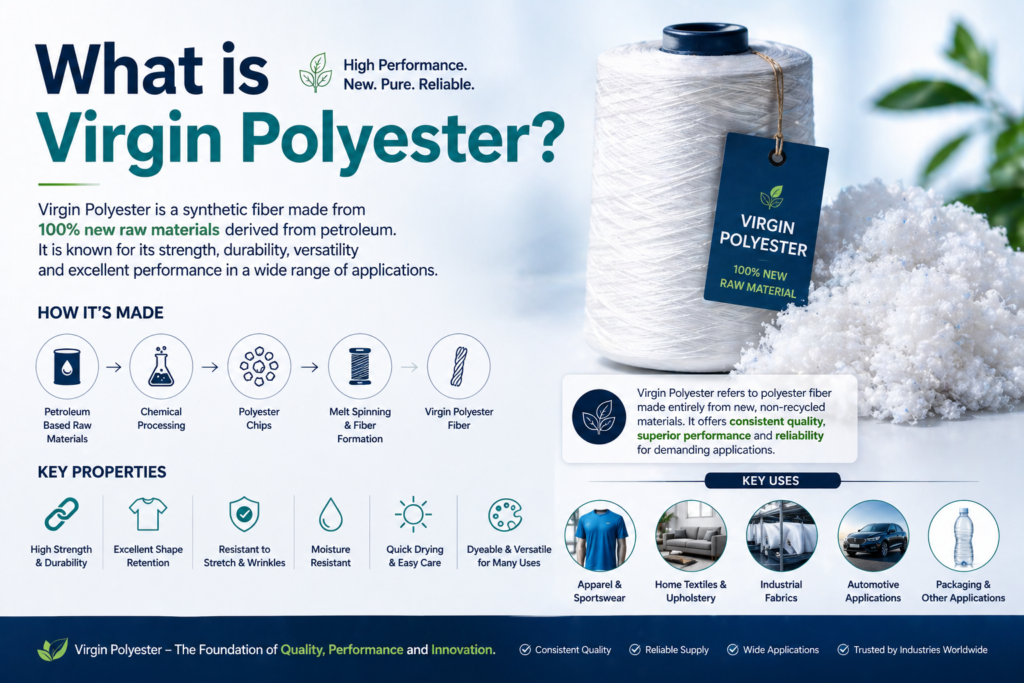
Virgin polyester is commonly used in:
- apparel fabrics
- home textiles
- industrial textiles
- automotive materials
- nonwoven products
However, its production requires significant energy input and fossil resources, which has raised environmental concerns in recent years.
What is Recycled Micro Fiber?
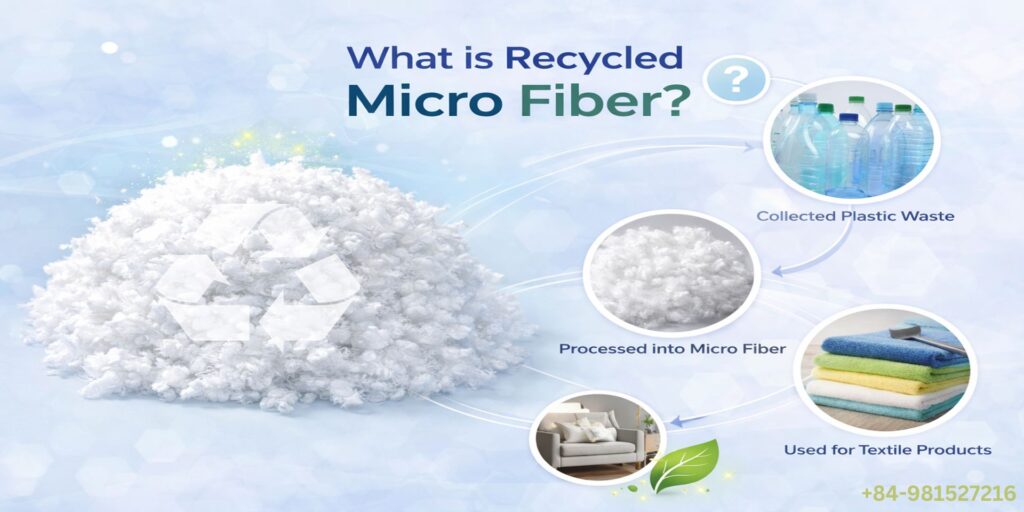
Recycled micro fiber is a fine-denier polyester staple fiber produced from recycled PET materials such as:
- plastic bottles
- post-industrial polyester waste
- recycled textile waste
What makes microfiber unique is its extremely fine fiber diameter, typically below 1.5 denier. This gives it a much larger surface area compared to standard polyester fibers.
As a result, recycled microfiber offers:
- enhanced softness
- higher absorption capacity
- improved cleaning performance
- lightweight structure
- strong durability
It is widely used in:
- microfiber for cleaning cloth
- towels and wiping materials
- nonwoven wipes
- automotive interior felt
- yarn spinning applications
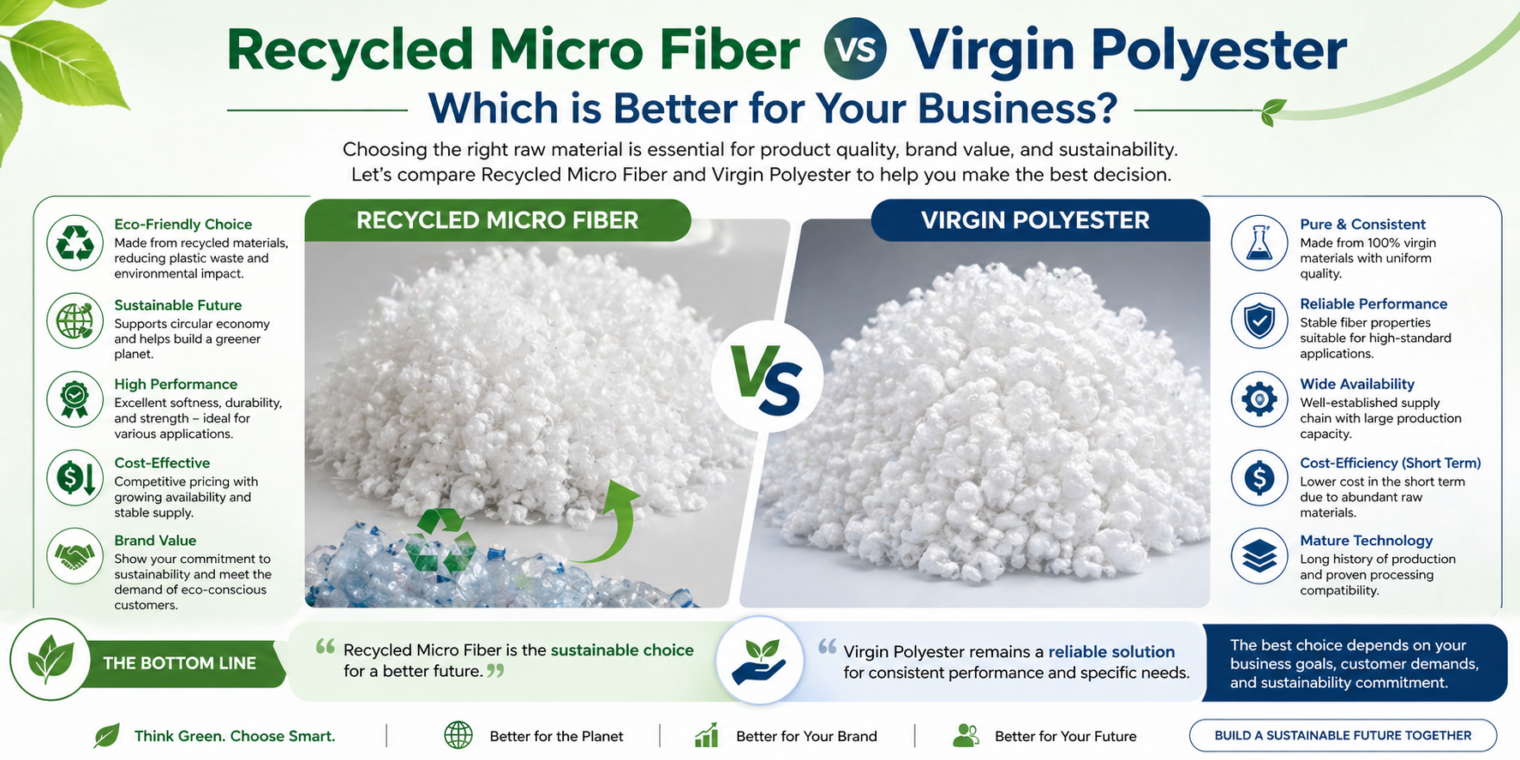
Key Differences Between Recycled Micro Fiber and Virgin Polyester
To make an informed decision, buyers need to compare both materials across several important criteria.
1. Performance and Functional Properties
From a performance perspective, both materials can deliver strong results, but they behave differently depending on the application.
Virgin Polyester:
- strong and durable
- stable performance in structural applications
- lower absorption
- standard surface feel
Recycled Micro Fiber:
- equally durable in most applications
- significantly softer due to fine denier
- much higher absorption
- superior cleaning efficiency
- larger surface area for better functionality
👉 For applications such as cleaning cloths, towels, and wipes, recycled microfiber clearly provides better functional performance.
👉 For heavy-duty structural applications, virgin polyester may still be used, but the gap is narrowing as recycled fiber quality improves.
2. Application Suitability
The choice between recycled microfiber and virgin polyester often depends on the end-use application.
Recycled Micro Fiber is ideal for:
- microfiber for cleaning cloth
- floor mops
- industrial wipes
- nonwoven cleaning products
- soft yarn and knit fabrics
- automotive felt and insulation
Virgin Polyester is commonly used for:
- standard textile fabrics
- bulk industrial applications
- lower-cost commodity products
For manufacturers targeting high-performance or value-added products, recycled microfiber is increasingly preferred.
3. Sustainability and Environmental Impact
This is where the biggest difference lies.
Virgin polyester production involves:
- fossil fuel extraction
- high energy consumption
- significant carbon emissions
- reliance on non-renewable resources
In contrast, recycled micro fiber helps:
- reduce plastic waste (especially PET bottles)
- lower energy consumption
- reduce carbon footprint
- support circular material usage
For B2B buyers working with global brands, sustainability is no longer optional. Many customers now require:
- recycled material content
- environmental compliance
- reduced carbon footprint
Using recycled microfiber directly supports these requirements.
4. Cost Consideration in B2B Production
At first glance, virgin polyester may appear to have a price advantage in some markets. However, B2B buyers should consider total production cost, not just raw material price.
Recycled microfiber can reduce overall cost through:
- better production efficiency
- lower defect rates
- improved product performance
- higher product value in the market
For example:
- In cleaning products, better absorption means less material needed
- In spinning, finer fiber can improve yarn quality
- In nonwoven, better performance can reduce material usage
Over time, these factors can offset or even exceed initial price differences.
5. Market Demand and Buyer Preference
Global demand is shifting rapidly toward sustainable materials.
Many industries now prioritize recycled materials, including:
- home cleaning products
- automotive interior manufacturing
- nonwoven production
- textile export markets
Buyers, especially in Europe, North America, and Japan, increasingly require recycled content in products.
This means manufacturers using recycled microfiber are more likely to:
- win contracts
- meet buyer requirements
- expand into new markets
6. Supply Chain and Availability
Both materials are widely available, but the market dynamics are changing.
Virgin polyester:
- traditionally stable supply
- large global production capacity
Recycled micro fiber:
- rapidly growing supply
- increasing demand may create shortages
- quality consistency depends on supplier
This makes supplier selection critical when sourcing recycled microfiber.
Working with a reliable supplier ensures:
- stable quality
- consistent specification
- dependable delivery
7. Product Differentiation and Competitive Advantage
In competitive markets, product differentiation is key.
Using recycled microfiber allows manufacturers to:
- offer sustainable products
- improve product performance
- meet modern buyer expectations
- strengthen brand positioning
In contrast, products made from standard virgin polyester are often seen as commodity products, which compete mainly on price.
For B2B companies, this can impact margins and long-term growth.
8. Long-Term Industry Trend
The textile and industrial materials industry is clearly moving toward:
- sustainability
- circular economy
- responsible sourcing
Recycled materials, including recycled microfiber, are expected to play a major role in the future of manufacturing.
Many companies are already setting targets such as:
- increasing recycled content
- reducing carbon emissions
- eliminating virgin plastic usage
This trend will continue to accelerate.
When Should You Choose Recycled Micro Fiber?
You should consider switching to recycled micro fiber if your business focuses on:
- cleaning textiles (microfiber for cleaning cloth)
- nonwoven wipes and filtration
- yarn spinning for soft fabrics
- automotive interior components
- export-oriented textile products
It is especially suitable when:
- sustainability is a buyer requirement
- product performance matters
- differentiation is important
When Should You Still Use Virgin Polyester?
Virgin polyester may still be suitable when:
- cost is the primary factor
- product is low-end or commodity-based
- performance requirements are basic
- sustainability is not a priority in your market
However, even in these cases, many companies are gradually shifting toward recycled alternatives.
Conclusion
The choice between recycled micro fiber vs virgin polyester depends on your business goals, production requirements, and market positioning.
However, the trend is clear:
- recycled microfiber offers strong performance
- sustainability advantages are significant
- global demand is increasing rapidly
For B2B buyers and manufacturers, recycled microfiber is not just an alternative—it is becoming a preferred material for future-ready production.
If your goal is to improve product performance, meet sustainability requirements, and stay competitive in global markets, recycled microfiber is the better choice.
Eco Micro Fiber – Supporting Your Transition to Sustainable Materials
At Eco Micro Fiber, we supply high-quality recycled micro fiber designed for modern industrial applications.
Our microfiber is suitable for:
- yarn spinning
- nonwoven manufacturing
- automotive interior production
- microfiber for cleaning cloth
- home textile applications
We focus on:
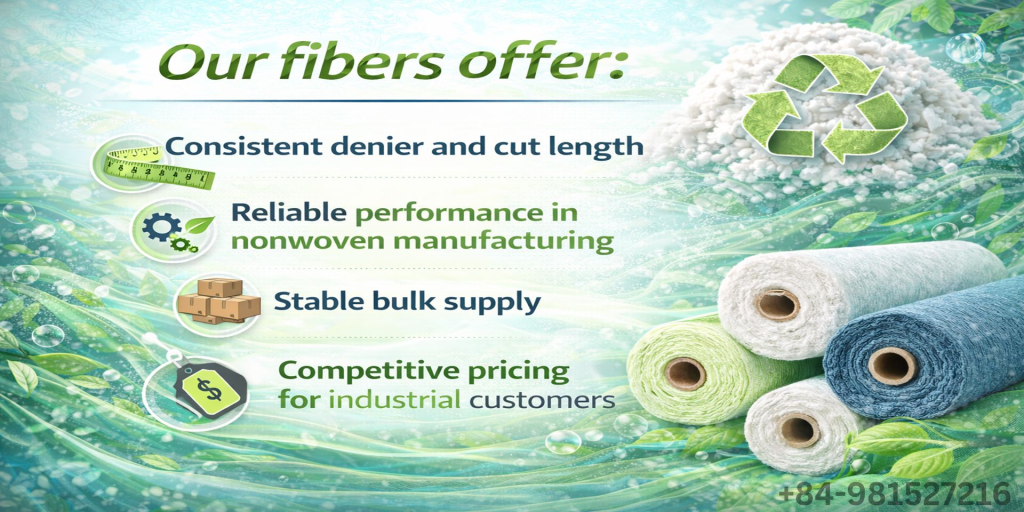
- consistent denier and cut length
- stable fiber quality
- reliable bulk supply
- competitive B2B pricing
- technical support for application matching
We understand that switching materials is a strategic decision, and we are here to support your business at every stage.
If you are looking for a trusted recycled micro fiber supplier, our team is ready to support your production needs.
Contact Us:
Email: [email protected]
Tel/WhatsApp: +84981527216
Contact us today to request technical specifications or product samples.