For textile manufacturers, securing a reliable raw material supply is essential for maintaining production schedules, controlling costs, and meeting customer commitments.
This is particularly important when sourcing recycled polyester staple fiber (RPSF) for continuous industrial applications such as yarn spinning, nonwoven manufacturing, mattress production, automotive textiles, and furniture components.
Unlike occasional purchasing, long-term fiber procurement requires a structured approach to demand forecasting, technical specifications, supplier evaluation, inventory management, and delivery planning.
A competitive price per kilogram is important, but it represents only one part of the purchasing decision.
Unexpected delivery delays, inconsistent fiber properties, and inadequate inventory planning can create additional manufacturing costs.
This guide explains how industrial buyers can develop a practical strategy for long-term recycled polyester staple fiber supply, from estimating monthly consumption to establishing quality requirements and building sustainable supplier relationships.
1. Why Long-Term Fiber Supply Planning Matters
Recycled polyester staple fiber is an important raw material for many industrial textile processes.
Manufacturers often require repeated deliveries of the same fiber grade to maintain stable production conditions.
However, sourcing fiber without a purchasing plan can expose manufacturers to several risks.
These may include:
- Unexpected material shortages
- Production interruptions
- Changes in fiber specifications
- Inconsistent quality between shipments
- Excessive inventory
- Unplanned purchasing costs
- Delayed customer orders
Long-term supply planning helps manufacturers anticipate these challenges and develop appropriate purchasing arrangements.
Supply Reliability vs. Lowest Purchase Price
A supplier offering the lowest price may not necessarily provide the lowest total production cost.
For example, delayed shipments can interrupt manufacturing schedules, while inconsistent fiber quality may increase waste or require equipment adjustments.
Therefore, procurement managers should evaluate supply reliability alongside material price.
The objective is not simply to purchase recycled polyester fiber at a competitive price. It is to maintain a dependable flow of suitable raw materials at an acceptable total cost.
2. Start with Accurate Fiber Consumption Forecasting
The first step in long-term recycled polyester staple fiber procurement is understanding actual material consumption.
Manufacturers should estimate how much fiber they require over a defined planning period.
Review Historical Consumption
Where historical data is available, buyers can examine:
- Monthly fiber consumption
- Production volume
- Seasonal demand changes
- Material waste
- Finished-product demand
- Planned production capacity
- Customer order forecasts
This information helps identify purchasing patterns.
Calculate Monthly Fiber Requirements
A simplified calculation is:
Monthly Fiber Requirement = Planned Production Output × Fiber Consumption per Unit of Output
For example, if a factory plans to produce 300 metric tons of finished material per month and requires 0.85 kg of a particular recycled polyester fiber for each kilogram of finished product, the estimated fiber requirement would be:
300 × 0.85 = 255 metric tons per month
This is an illustrative calculation only.
Actual material requirements depend on product composition, manufacturing yield, process losses, and other production factors.
Include Expected Production Losses
When material consumption is calculated from the net fiber content of finished products, buyers should account for expected processing losses.
For example:
Required Fiber Input = Net Fiber Requirement ÷ Expected Material Yield
If the required net fiber quantity is 100 tons and the expected material yield is 95%:
100 ÷ 0.95 = approximately 105.3 tons.
Manufacturers should use their own production data rather than assuming a standard loss rate.

3. Define Standard Fiber Specifications Before Negotiating Supply
A long-term purchasing agreement should be based on clearly defined material specifications.
Recycled polyester staple fiber is available in different grades, and products with similar commercial names may have different technical characteristics.
Important Fiber Specifications
Buyers should identify the requirements relevant to their manufacturing processes.
| Parameter | Procurement Consideration |
|---|---|
| Fiber denier | Required fiber fineness |
| Cut length | Equipment and process compatibility |
| Color | White, black, or other required shade |
| Fiber structure | Solid, hollow, or specialty structure |
| Tenacity | Required mechanical characteristics |
| Elongation | Fiber behavior during processing |
| Crimp | Cohesion, bulk, and processing |
| Fiber finish | Friction and equipment compatibility |
| Cleanliness | Contamination control |
| Moisture | Material condition and handling |
| Packaging | Storage, handling, and transport |
| Lot identification | Traceability and quality review |
Why Nominal Specifications Are Not Enough
Two suppliers may offer products described as 1.4D × 38mm recycled polyester staple fiber.
However, their products may differ in:
- Actual denier distribution
- Tensile properties
- Crimp characteristics
- Fiber finish
- Cleanliness
- Color consistency
These differences can influence manufacturing performance.
Therefore, buyers should request technical documentation and evaluate representative samples before establishing long-term purchasing arrangements.
Establish Acceptance Criteria
Where appropriate, buyers and suppliers should agree on:
- Nominal specifications
- Permitted tolerances
- Relevant testing methods
- Sampling procedures
- Lot identification
- Inspection requirements
- Procedures for handling nonconforming material
Clear acceptance criteria help reduce misunderstandings during repeat purchasing.
4. Evaluate Suppliers for Long-Term Supply Capability
Supplier selection should extend beyond an initial quotation.
A supplier suitable for one trial shipment may not necessarily meet the requirements of continuous industrial purchasing.
Production and Supply Capability
Buyers should assess whether a potential supplier can support their expected purchasing volume.
Relevant questions include:
- What fiber grades are available?
- What quantities can be supplied?
- What are the typical production or preparation lead times?
- Can the supplier support recurring shipments?
- How are production schedules coordinated?
- What happens when demand increases unexpectedly?
Suppliers should provide information relevant to the proposed commercial arrangement.
Quality Management
Buyers should understand how the supplier manages product quality.
Important considerations include:
- Raw material control
- Production process monitoring
- Fiber testing
- Lot identification
- Quality documentation
- Handling of customer complaints
- Corrective action procedures
Claims about quality systems or certifications should be supported by appropriate evidence.
Export Experience
For international buyers, export-related capabilities are also important.
These may include:
- Export documentation
- Packaging arrangements
- Container loading coordination
- Shipment scheduling
- Communication with freight partners
- Handling of shipping documentation
The specific responsibilities depend on the agreed Incoterms and commercial contract.

5. Develop a Practical Purchasing Schedule
Once demand and supplier capability are understood, buyers can establish a purchasing schedule.
A purchasing plan should consider:
- Monthly consumption
- Supplier lead time
- Transit time
- Customs clearance
- Inventory requirements
- Production schedules
- Expected demand fluctuations
Monthly Purchasing
Monthly orders may be suitable when demand is relatively predictable and suppliers can maintain an appropriate delivery schedule.
Quarterly Planning
Quarterly planning can provide better visibility into expected demand while allowing individual shipments to be scheduled according to actual requirements.
Annual Supply Agreements
Annual agreements may be useful for manufacturers with recurring raw material needs.
However, an annual agreement does not necessarily mean that the buyer must receive all material at once.
A framework agreement may define expected volumes, specifications, commercial terms, and shipment arrangements, with individual purchase orders issued according to an agreed schedule.
Example: Six-Month Fiber Purchasing Plan
| Month | Forecast Demand | Planned Purchase Quantity | Planning Focus |
|---|---|---|---|
| January | 100 MT | 100 MT | Establish baseline demand |
| February | 110 MT | 110 MT | Review consumption |
| March | 120 MT | 120 MT | Confirm supplier capacity |
| April | 120 MT | 120 MT | Monitor inventory |
| May | 130 MT | 130 MT | Review demand growth |
| June | 140 MT | 140 MT | Prepare next forecast |
Illustrative example only. Actual purchase quantities should reflect inventory levels, existing orders, expected losses, and lead times.
6. Calculate Safety Stock and Reorder Points
Inventory planning is essential for manufacturers that depend on continuous fiber supply.
Insufficient inventory may create production interruptions.
Excessive inventory can increase storage costs and tie up working capital.
What Is Safety Stock?
Safety stock is additional inventory maintained to help protect against uncertainty in demand or replenishment lead time.
The appropriate quantity depends on the manufacturer’s risk tolerance and supply conditions.
Simple Safety Stock Planning
A basic approach is to estimate additional coverage in days.
Safety Stock = Average Daily Consumption × Additional Coverage Days
For example:
- Average daily consumption: 5 MT
- Additional coverage: 10 days
Estimated safety stock:
5 × 10 = 50 MT
This example is simplified.
More advanced inventory models may account for variability in demand, lead time, and desired service level.
Establish a Reorder Point
A basic reorder point calculation is:
Reorder Point = Average Daily Consumption × Replenishment Lead Time + Safety Stock
For example:
- Daily consumption: 5 MT
- Replenishment lead time: 20 days
- Safety stock: 50 MT
Reorder point:
(5 × 20) + 50 = 150 MT
Under these assumptions, the buyer should initiate replenishment when the inventory position reaches approximately 150 MT.
Inventory position should account for available inventory, outstanding replenishment orders, and committed demand.
International buyers should also consider possible shipping and customs delays when estimating lead time.
7. Plan Container Shipments and Logistics
For international recycled polyester staple fiber procurement, logistics planning can significantly influence supply reliability.
Confirm Packaging Requirements
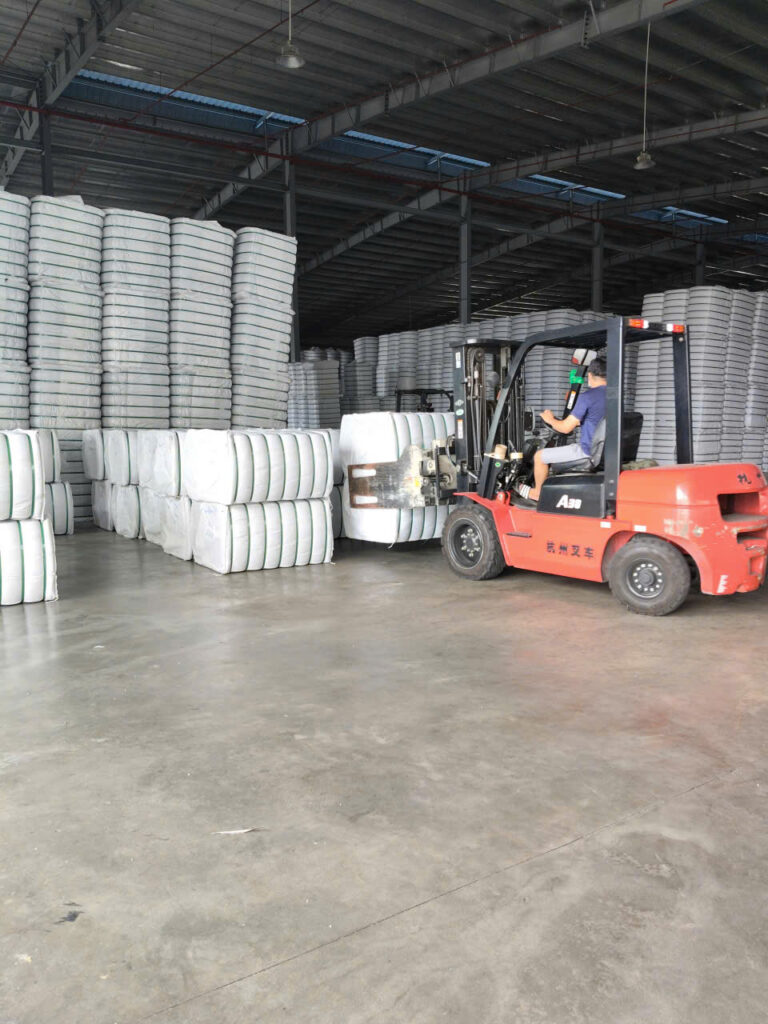
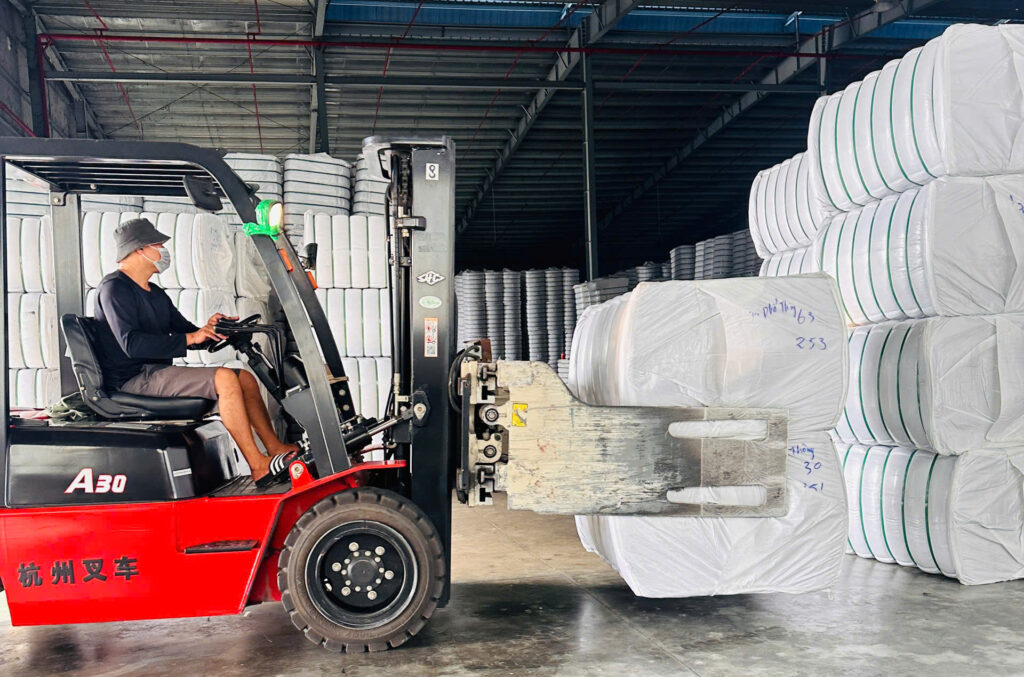
Polyester staple fiber may be supplied in compressed bales or other suitable packaging formats.
Buyers should confirm:
- Bale dimensions
- Net and gross weight
- Packaging materials
- Bale identification
- Container loading arrangements
- Handling requirements
Estimate Container Loading Quantity
Container loading capacity depends on factors such as:
- Fiber bulk density
- Bale compression
- Bale dimensions
- Packaging configuration
- Container specifications
- Applicable weight limits
Buyers should not assume that every recycled polyester staple fiber grade has the same container loading quantity.
Coordinate Shipment Timing
International procurement schedules should consider:
- Order confirmation
- Production or material preparation
- Quality inspection
- Packing and loading
- Export procedures
- Ocean or other transport
- Import customs clearance
- Inland delivery
A delay at any stage can affect the final delivery date.
Clarify Incoterms
Buyers and suppliers should agree on the appropriate Incoterms rule and named place or port.
For example, FOB and CIF arrangements allocate different transportation responsibilities and costs.
The selected terms should be clearly stated in commercial documents.
8. Maintain Consistent Fiber Quality Across Shipments
Long-term purchasing requires attention to quality consistency.
A successful initial trial does not guarantee that every subsequent shipment will perform identically.
Establish a Reference Specification
After approving a fiber grade, buyers should document the agreed technical requirements.
Where practical, a retained reference sample may support future quality comparisons.
Monitor Production Lots
Buyers may review relevant quality information for each shipment or production lot.
This can include:
- Lot identification
- Test results
- Inspection records
- Color evaluation
- Cleanliness assessment
- Packaging condition
The required documentation should be agreed upon with the supplier.
Track Manufacturing Performance
Manufacturers should monitor how incoming fiber performs in actual production.
Relevant indicators may include:
- Processing interruptions
- Material waste
- Machine adjustments
- Finished-product defects
- Fiber opening behavior
- Yarn or nonwoven quality
The most useful indicators depend on the manufacturing process.
Respond to Quality Variations
When a shipment does not meet agreed requirements, buyers and suppliers should have a clear procedure for investigation.
This may involve:
- Identifying the affected lot.
- Recording the observed issue.
- Collecting relevant samples and test results.
- Comparing findings with agreed specifications.
- Determining corrective actions.
- Reviewing future shipments.
A structured process can help prevent repeated quality problems.
9. Understand Price Volatility and Commercial Risk
Recycled polyester staple fiber prices can change over time.
Factors influencing prices may include:
- Recycled polyester feedstock costs
- Energy and manufacturing expenses
- Supply and demand
- Fiber specifications
- Quality requirements
- Currency movements
- Transportation costs
Long-term buyers should understand how these factors may influence their purchasing arrangements.
Fixed-Price Agreements
A fixed-price agreement can provide purchasing cost visibility for an agreed period.
However, suppliers and buyers must evaluate whether the arrangement is commercially sustainable.
Periodic Price Reviews
Some buyers and suppliers may prefer scheduled price reviews.
For example, prices may be reviewed monthly or quarterly according to agreed commercial conditions.
Volume-Based Commercial Arrangements
Larger or recurring purchasing volumes may support discussions about commercial terms.
However, discounts should not be assumed.
Actual pricing depends on the supplier, product grade, order volume, and prevailing market conditions.
Consider Total Landed Cost
For international procurement, buyers should evaluate more than the quoted fiber price.
A simplified landed-cost calculation may include:
Total Landed Cost = Material Cost + Freight + Insurance + Import Duties + Customs-Related Costs + Inland Transport + Other Applicable Charges
The components included depend on the transaction terms.
10. Build a Supplier Communication and Forecasting Process
Long-term supply arrangements benefit from regular communication.
Buyers should provide suppliers with reasonable visibility into expected demand.
Share Rolling Forecasts
A rolling forecast may cover the next three to six months.
For example:
- Month 1: Confirmed purchase quantity
- Month 2: Planned purchase quantity
- Month 3: Forecast quantity
- Months 4–6: Estimated future demand
This approach can support production and shipment planning.
However, buyers should clearly distinguish binding purchase commitments from nonbinding forecasts.
Communicate Demand Changes Early
When production requirements increase or decrease, early communication allows suppliers to evaluate available options.
Establish Regular Supply Reviews
Periodic reviews may cover:
- Forecast accuracy
- Shipment performance
- Quality issues
- Inventory levels
- Pricing arrangements
- Upcoming production requirements
The review frequency should reflect the purchasing volume and operational needs.
11. Should Buyers Use One Supplier or Multiple Suppliers?
There is no universal answer.
The appropriate sourcing strategy depends on demand, quality requirements, supplier capabilities, and risk tolerance.
Single-Supplier Strategy
Potential advantages include:
- Simpler communication
- Easier specification management
- Consolidated purchasing
- Established technical familiarity
However, relying on one supplier may increase exposure to supply interruptions.
Multiple-Supplier Strategy
Potential advantages include:
- Additional sourcing flexibility
- Reduced dependence on one supplier
- Alternative supply options
However, multiple suppliers may introduce differences in fiber properties and processing performance.
Qualify Alternative Suppliers
If a manufacturer uses more than one supplier, each fiber grade should be evaluated against the same application requirements.
Nominally identical fiber specifications do not guarantee identical manufacturing performance.
For critical applications, buyers may consider maintaining an approved alternative supplier.
12. Key Performance Indicators for Long-Term Fiber Procurement
Procurement managers can use measurable indicators to evaluate supplier performance.
| KPI | What It Measures |
|---|---|
| On-time delivery rate | Shipments received according to agreed delivery dates |
| Quantity accuracy | Difference between ordered and received quantities |
| Quality acceptance rate | Material meeting agreed acceptance requirements |
| Lead time consistency | Variation in actual replenishment lead time |
| Production waste | Material losses during manufacturing |
| Complaint resolution time | Time required to address quality or supply issues |
| Forecast accuracy | Difference between forecast and actual demand |
| Inventory coverage | Available supply relative to expected consumption |
Why KPIs Matter
A supplier relationship should be evaluated based on actual performance rather than general claims.
For example, a competitive material price may be less attractive if deliveries are frequently delayed.
Similarly, a supplier with consistent material quality may help reduce production adjustments.
Buyers should select KPIs that reflect their operational priorities.
13. Common Mistakes in Long-Term Polyester Fiber Procurement
Mistake 1: Purchasing Without a Demand Forecast
Poor forecasting can lead to shortages or excessive inventory.
Mistake 2: Selecting Suppliers Based Only on Price
A low purchase price may not compensate for quality or delivery problems.
Mistake 3: Using Incomplete Fiber Specifications
Nominal denier and cut length alone may not adequately define the required material.
Mistake 4: Ignoring Transit and Customs Lead Times
International shipping schedules may vary.
Mistake 5: Failing to Monitor Batch Consistency
Material variations can affect manufacturing performance.
Mistake 6: Treating Forecasts as Confirmed Orders
Unclear purchasing commitments can create misunderstandings.
Mistake 7: Failing to Establish Quality Claim Procedures
Without an agreed process, quality disputes may become difficult to resolve.
Mistake 8: Overlooking Working Capital
Excessive inventory can increase financial pressure even when raw material prices appear attractive.
14. A Practical 90-Day Supply Planning Framework
Manufacturers developing a long-term recycled polyester staple fiber sourcing strategy can use a phased approach.
Days 1–30: Technical and Supplier Evaluation
Main objectives:
- Review historical consumption.
- Identify required fiber specifications.
- Establish quality acceptance criteria.
- Evaluate potential suppliers.
- Request technical documentation.
- Obtain representative samples.
Expected outcome: A shortlist of technically relevant suppliers and clearly defined purchasing requirements.
Days 31–60: Production Trial and Commercial Evaluation
Main objectives:
- Conduct production trials.
- Evaluate fiber processing performance.
- Compare material and production costs.
- Review logistics arrangements.
- Discuss proposed purchasing volumes.
- Establish preliminary delivery schedules.
Expected outcome: Technical evaluation results and a proposed commercial purchasing arrangement.
Days 61–90: Supply Agreement and Implementation
Main objectives:
- Confirm approved fiber specifications.
- Agree on commercial terms.
- Establish purchasing and shipment schedules.
- Define quality documentation requirements.
- Set inventory planning parameters.
- Establish supplier performance reviews.
Expected outcome: A structured supply plan that can support recurring purchasing.
The actual timeline may be longer depending on trial requirements, supplier qualification procedures, and international shipping conditions.
15. Planning Long-Term Recycled Polyester Fiber Supply with GDI Textile
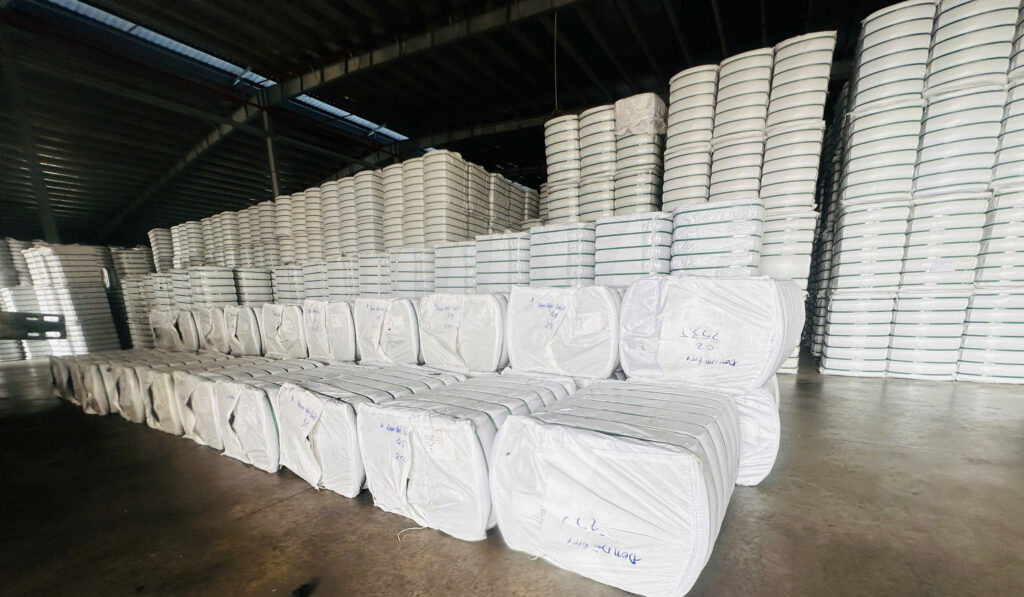
GDI Textile supplies recycled polyester staple fiber for industrial textile applications.
International buyers evaluating recurring supply arrangements can discuss available fiber specifications and purchasing requirements with the GDI team.
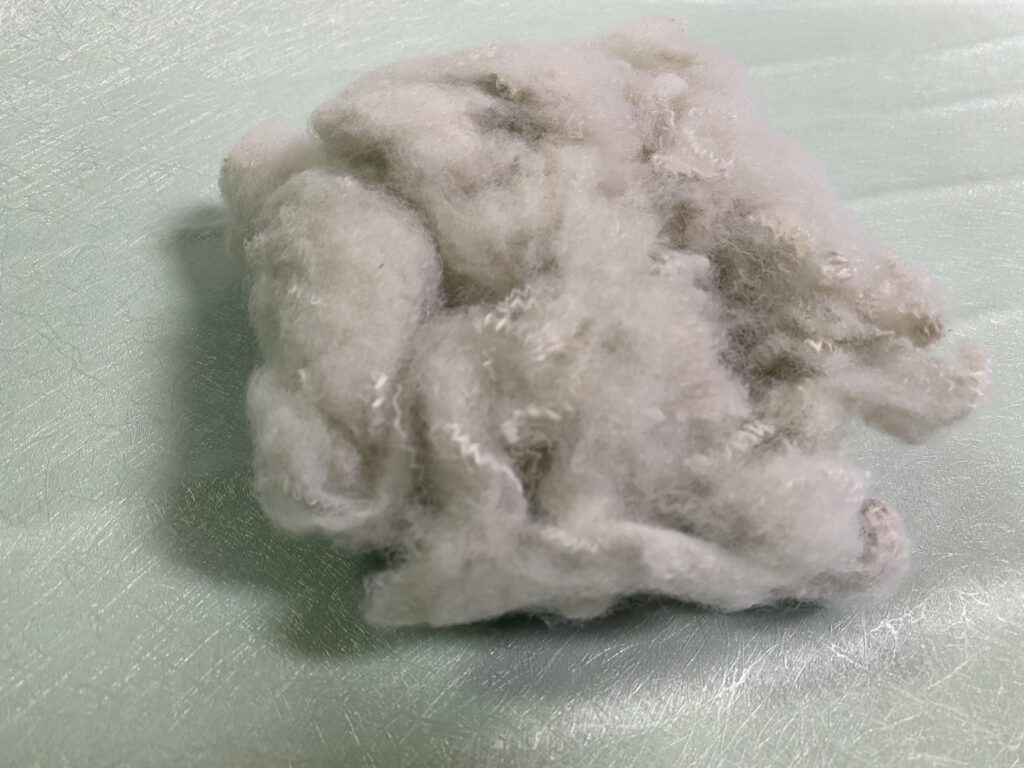
Examples of recycled polyester staple fiber grades include:
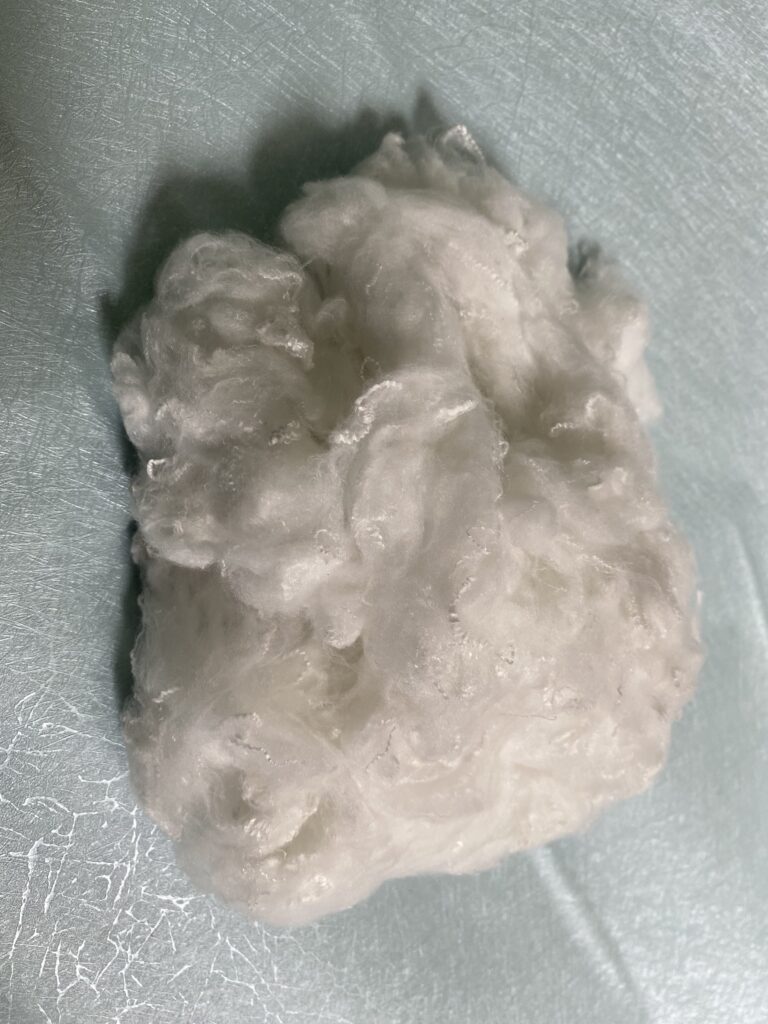
- 1.4D × 38mm – White
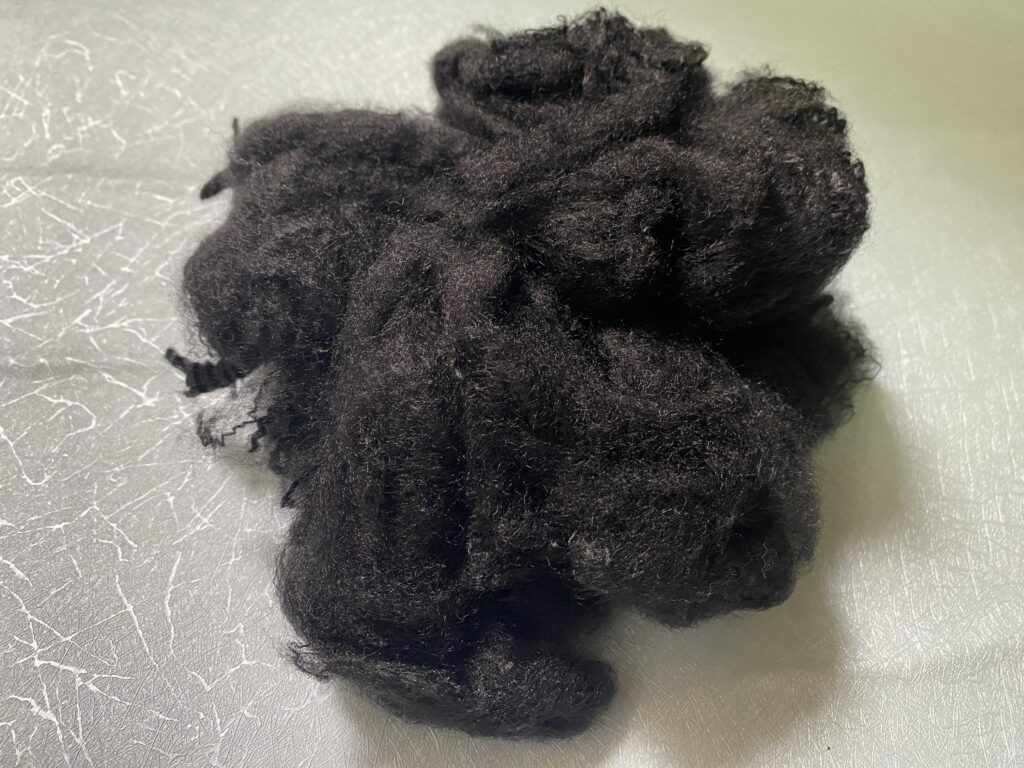
- 1.4D × 38mm – Black
- 2.5D × 51mm – White
- 3D × 51mm – White
- 6D × 64mm – White
- 6D × 64mm – Black
- 15D × 76mm – White
- 15D × 76mm – Black
Product availability, technical suitability, and supply arrangements should be confirmed before ordering.
Information Buyers Should Prepare
For a productive supply discussion, buyers should provide:
- Required fiber grade
- Intended manufacturing application
- Technical specifications
- Estimated monthly consumption
- Expected purchasing frequency
- Current material specification or reference sample
- Destination country or port
- Required delivery schedule
- Quality acceptance requirements
This information can help establish whether the proposed supply arrangement matches the buyer’s operational needs.
Looking for a Long-Term Recycled Polyester Staple Fiber Supplier?
GDI Textile welcomes inquiries from spinning mills, nonwoven manufacturers, mattress producers, automotive textile manufacturers, furniture manufacturers, and international importers.
Contact our team to discuss available recycled polyester staple fiber grades, technical requirements, sample evaluation, and recurring purchasing arrangements.
Request Fiber Specifications & Quotation
Frequently Asked Questions
How can manufacturers plan long-term recycled polyester staple fiber supply?
Manufacturers should estimate demand, define fiber specifications, evaluate suppliers, establish purchasing schedules, calculate inventory requirements, and monitor quality and delivery performance.
What is the best purchasing frequency for recycled polyester staple fiber?
The appropriate frequency depends on consumption, supplier lead time, inventory capacity, and logistics arrangements. Monthly shipments or scheduled releases under longer-term agreements may be suitable for some manufacturers.
How much safety stock should a textile factory maintain?
Safety stock depends on consumption, demand variability, replenishment lead time, and acceptable supply risk. Manufacturers should calculate requirements using their own operational data.
Can recycled polyester fiber prices be fixed under a long-term contract?
Fixed-price arrangements may be possible if both parties agree. Other arrangements may include periodic price reviews or negotiated pricing for individual shipments.
How can buyers maintain consistent fiber quality across shipments?
Buyers should establish technical acceptance criteria, evaluate representative samples, monitor production lots, and maintain clear procedures for handling quality variations.
Should manufacturers purchase recycled polyester fiber from multiple suppliers?
Multiple suppliers can provide sourcing flexibility, but each material should be technically qualified. The appropriate strategy depends on operational requirements and risk tolerance.
What information should buyers provide for a long-term supply quotation?
Buyers should provide fiber specifications, intended applications, expected purchasing volumes, delivery requirements, destination details, and relevant quality requirements.
Why is a production trial important before long-term purchasing?
Production trials help manufacturers evaluate whether a proposed fiber grade performs appropriately in their equipment and meets finished-product requirements.

Conclusion
Long-term recycled polyester staple fiber supply planning requires more than selecting a supplier and negotiating a price.
Manufacturers should develop a coordinated approach covering demand forecasting, technical specifications, supplier qualification, inventory planning, logistics, quality monitoring, and commercial risk management.
Clear communication and measurable performance indicators can help buyers identify potential problems before they disrupt production.
For international textile manufacturers, the goal is to establish a purchasing system that supports reliable material availability, consistent manufacturing performance, and manageable total costs.
A successful long-term fiber supply strategy is built on the right specifications, realistic forecasts, clear commercial agreements, and continuous supplier performance evaluation.
GDI Textile welcomes discussions with industrial buyers seeking recycled polyester staple fiber for recurring manufacturing requirements.