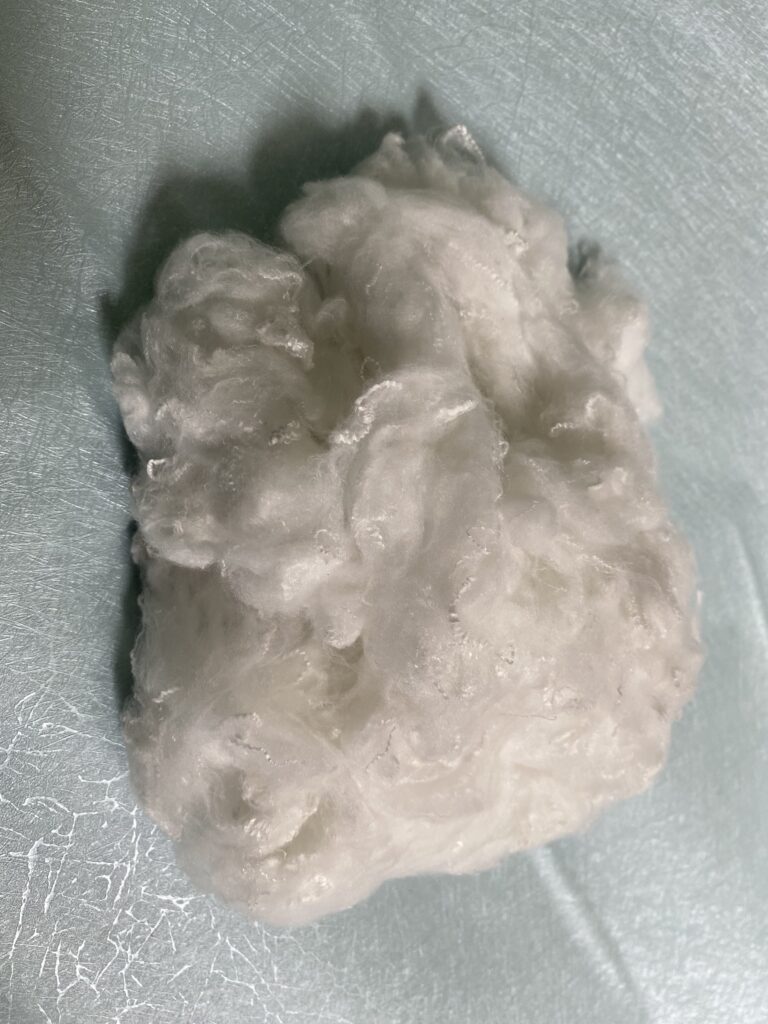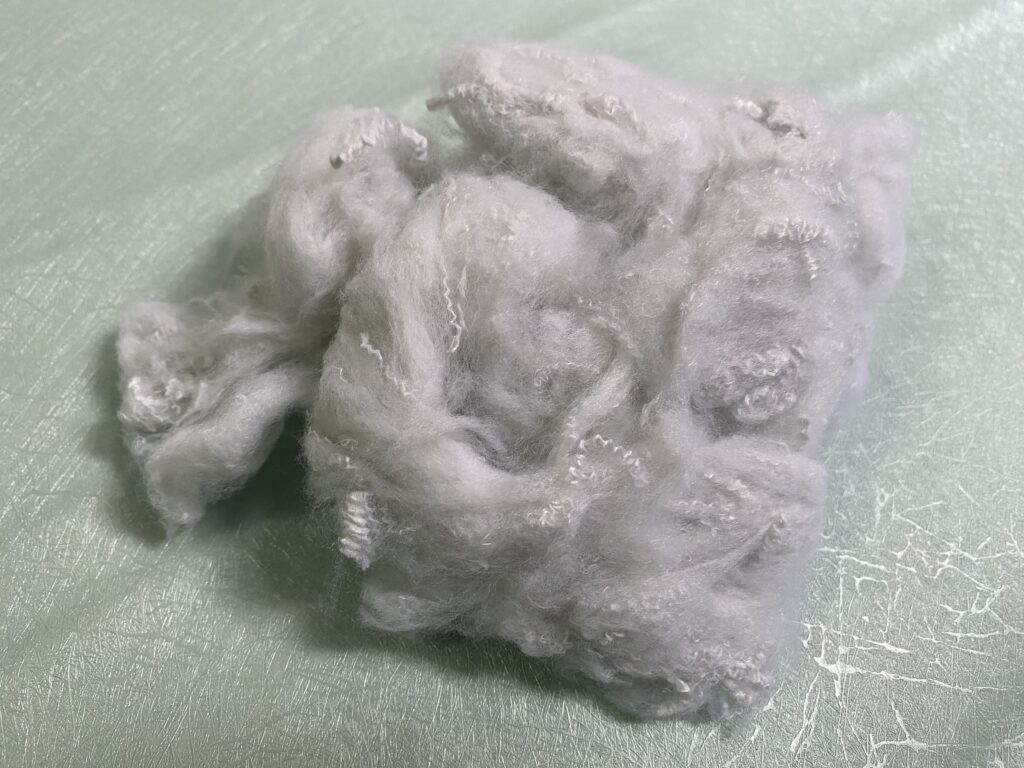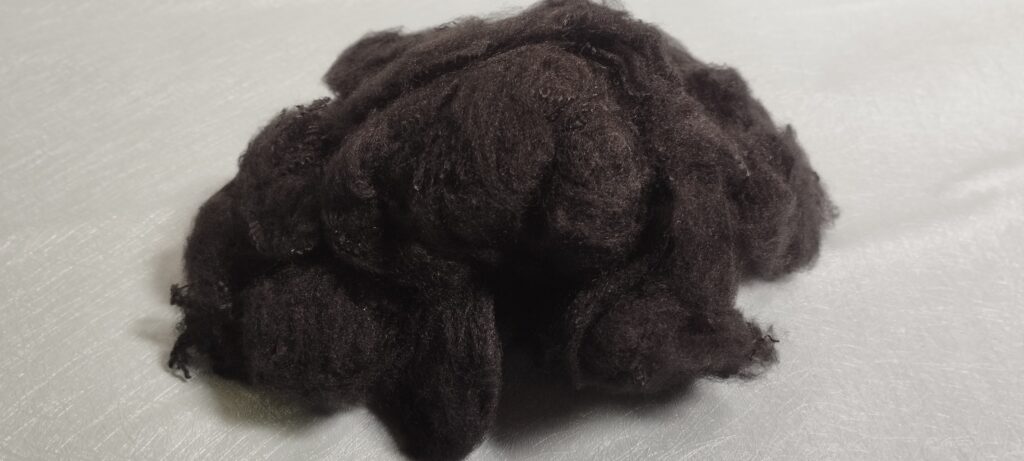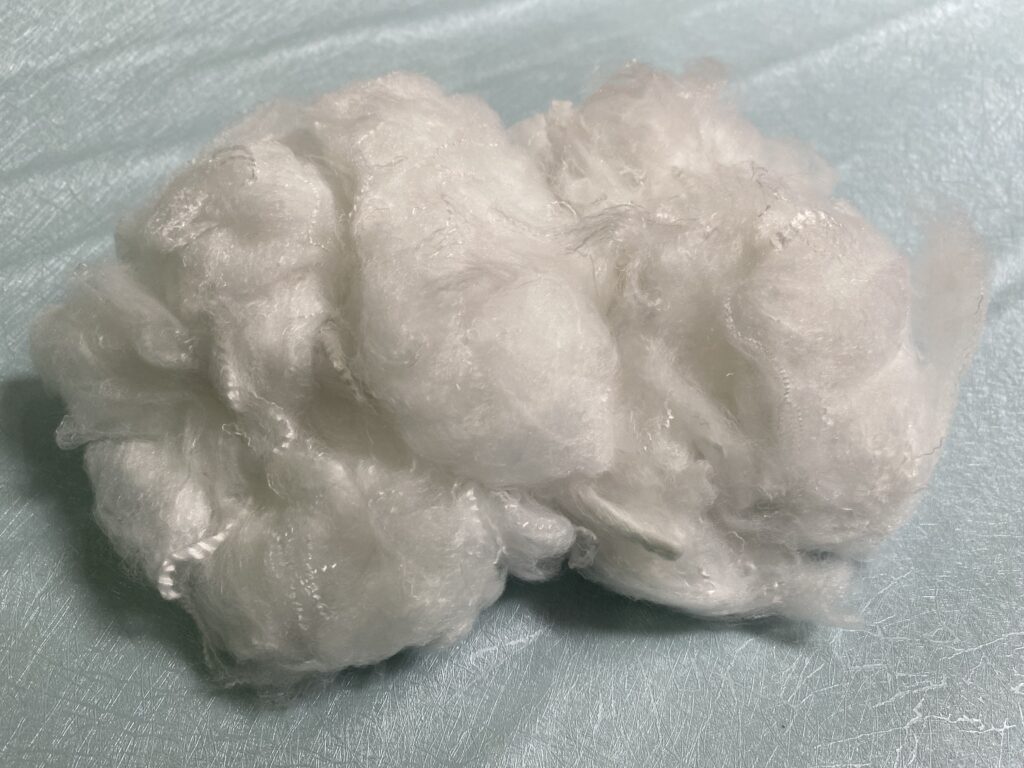
When sourcing recycled polyester microfiber for industrial production, buyers need to look beyond the product name and price per kilogram. Fiber fineness, cut length, color, surface finish, mechanical properties and consistency can all influence whether a material is suitable for a particular manufacturing process.
A specification that works for one application may not be suitable for another. A spinning mill, a nonwoven manufacturer and a cleaning-textile producer can have very different requirements, even when all three purchase polyester-based fibers.
For procurement managers, textile engineers and international buyers, the objective is to identify the right fiber specification, confirm the relevant quality requirements and make sure the material can be evaluated against the intended application.
This guide explains the key specifications to consider when purchasing recycled polyester microfiber, the questions to ask a supplier and the information to include in a request for quotation (RFQ).
What Is Recycled Polyester Microfiber?
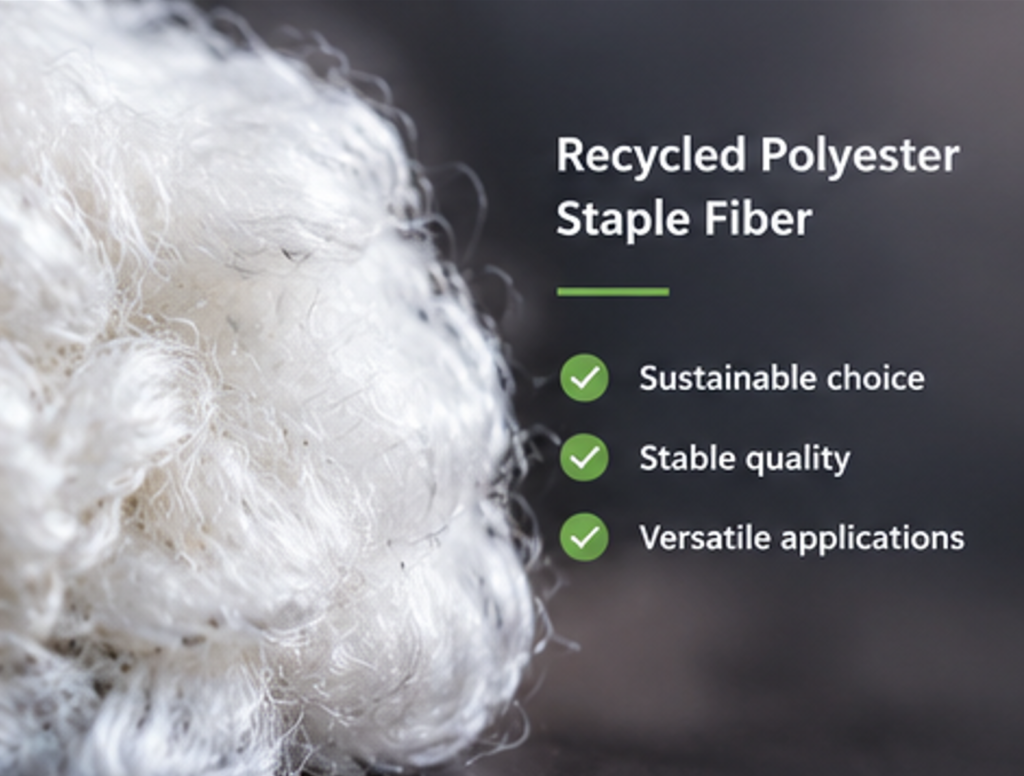
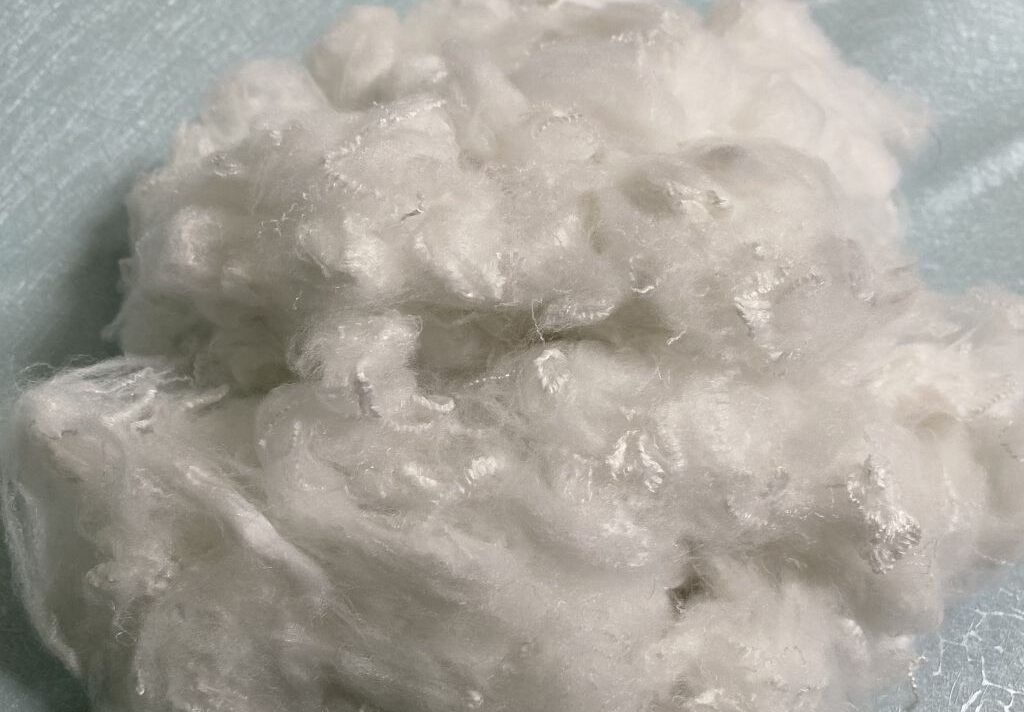
Recycled polyester microfiber is a fine polyester fiber made from recycled polyester raw material. Its exact characteristics depend on the fiber grade, manufacturing process and intended end use.
The term microfiber describes fiber fineness, but it does not define every technical property of the material. Buyers should therefore confirm the actual denier, cut length, fiber structure, color and other relevant parameters instead of relying on the product name alone.
Recycled polyester microfiber and conventional recycled polyester staple fiber are related categories, but not every recycled polyester staple fiber qualifies as microfiber. The distinction matters when a production process requires a specific level of fineness.
Before requesting a quotation, identify the finished product you manufacture and the processing method you use. This gives the supplier a practical basis for discussing a suitable grade.
1. Denier: Understand Fiber Fineness
Denier is one of the first parameters to check when purchasing polyester microfiber.
Denier expresses the mass in grams of 9,000 meters of fiber. A lower denier generally indicates a finer fiber, while a higher denier indicates a coarser fiber.
For example, 1.4D identifies a nominal fineness of 1.4 denier. However, denier alone does not establish the fiber’s strength, softness, absorption characteristics or suitability for a particular production line.
Why Denier Matters
Fiber fineness can influence:
- The feel and surface characteristics of the final textile.
- Fiber coverage and the structure of the resulting material.
- Processing behavior during opening, carding or spinning.
- The characteristics of the yarn, web or finished product.
- The amount of fiber required to achieve a defined product construction.
The actual effect depends on the complete material specification and the manufacturing process.
For example, a buyer producing a fine textile may need to evaluate a different denier from a manufacturer producing a more robust industrial material. Neither the finest nor the coarsest option is automatically the best choice.
What Buyers Should Confirm
Ask the supplier to state:
- Nominal denier.
- Applicable tolerance, if defined.
- The method used to verify fineness, where required.
- Whether the offered grade matches the requested specification.
- Whether a representative sample is available for evaluation.
If your factory already uses an approved material, share its specification or reference sample where possible. This can help establish a more useful comparison than a general description such as “fine microfiber.”
2. Cut Length: Match the Fiber to Your Process
Cut length is the nominal length of an individual staple fiber, usually expressed in millimeters.
It is a key consideration because downstream equipment is designed to handle fibers within particular processing requirements.
A fiber may have the correct denier but still be unsuitable if its length does not match the intended process.
Cut Length for Yarn Spinning
Spinning mills need staple fibers compatible with their spinning system, machinery settings and yarn construction.
When evaluating a grade for spinning, consider:
- The cut length required by the spinning system.
- Compatibility with the existing fiber blend.
- Fiber control during drafting and spinning.
- The yarn properties required by the customer.
- Any length tolerances specified in the purchasing agreement.
Do not assume that a cut length suitable for one yarn or spinning system will work equally well in another.
Cut Length for Nonwoven and Cleaning Textiles
Nonwoven manufacturing can involve different web-forming and bonding processes. The appropriate fiber length depends on the equipment, web structure and final product requirements.
For cleaning textiles, the fiber specification must also be considered in relation to the fabric construction and the intended cleaning application. The performance of a finished cleaning cloth cannot be predicted from cut length alone.
Questions to Ask
Before placing an order, confirm the nominal cut length, any agreed tolerance and whether the supplier’s grade has been evaluated for your intended process.
If you need a custom or non-standard specification, ask the supplier to confirm feasibility and availability rather than assuming that every combination of denier and cut length can be supplied.
3. Color: Define the Requirement Clearly
Color can be a critical purchasing parameter when the fiber is used in visible textiles, light-colored products or applications with defined appearance requirements.
Depending on the grade, buyers may be looking for white, black or another specified color. The exact options must be confirmed for the product being quoted.
White Microfiber
For white fiber, buyers should define the required appearance and any applicable acceptance criteria.
Depending on the end use, relevant considerations may include color consistency, visible contamination and compatibility with the intended dyeing or finishing process.
Do not assume that all white grades have the same shade or appearance.
Black Microfiber
For black fiber, buyers may need to consider shade consistency, visible foreign material and compatibility with the finished product.
If the final product has a defined color requirement, establish how the sample will be compared with the approved reference and how acceptance will be determined.
What to Include in the Specification
Clearly state:
- Required color.
- Any reference sample or appearance standard.
- Relevant contamination or visual inspection criteria.
- Whether color consistency between lots is important.
- Any downstream dyeing or finishing requirements.
These details help both parties evaluate the material against the same expectations.
4. Fiber Structure: Confirm What You Are Buying
The term microfiber does not tell a buyer whether a fiber has a solid or hollow cross-section, or whether another specialized structure is required.
Fiber structure should be specified separately whenever it matters to the application.
For example, some manufacturing processes require solid fiber, while other applications may be designed around hollow or specially engineered fibers. These structures should not be treated as interchangeable without technical evaluation.
When discussing a recycled polyester microfiber grade, confirm:
- The required fiber structure.
- Whether the specification is solid, hollow or another defined type.
- Any additional structural characteristics required by the process.
- Whether the sample and commercial offer refer to the same structure.
For buyers who specifically require solid fiber, see the Solid Recycled Polyester Fiber product page.
5. Mechanical Properties: Evaluate the Parameters That Matter
Denier and cut length are important, but they do not describe every aspect of fiber behavior.
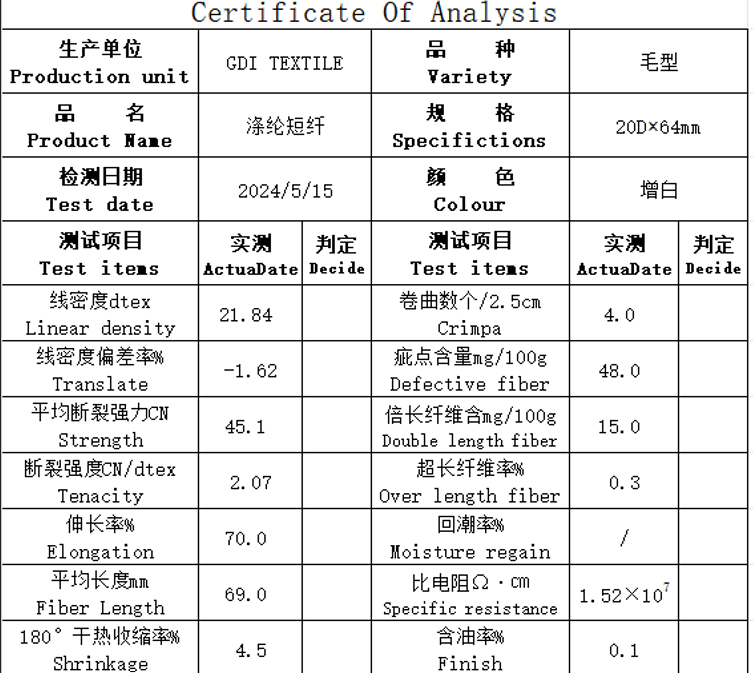
Depending on the application, buyers may also need to consider tensile strength, elongation and crimp.
Tensile Strength
Tensile strength describes the fiber’s resistance to breaking under an applied force. The relevant test method and reported value should be confirmed when this property is part of the specification.
For applications involving mechanical processing, buyers may need to understand how the fiber behaves under the stresses encountered on their production equipment.
Elongation
Elongation describes the extent to which a fiber stretches before breaking under a defined test.
Its significance depends on the application and on how the fiber is processed. Buyers should evaluate elongation alongside other relevant properties rather than using it as an isolated indicator of quality.
Crimp
Crimp refers to the waviness or repeated bends in a staple fiber.
Depending on the fiber and process, crimp can influence fiber cohesion, handling, web formation and bulk. The required characteristics differ across spinning, nonwoven and filling applications.
How to Use These Parameters
Do not request numerical targets simply because they appear on another supplier’s data sheet. First determine which parameters matter to your process, then establish the required values, test methods and acceptance limits with your technical team.
A meaningful comparison requires comparable methods and clearly identified specifications.
6. Surface Finish: Clarify Processing Requirements
The surface finish applied to a fiber can affect how it behaves during downstream processing.
Depending on the product, relevant considerations may include friction, static behavior, fiber handling and compatibility with the next manufacturing stage.
Buyers should identify any specific finish requirements instead of assuming that all recycled polyester microfiber grades have the same surface treatment.
Questions to discuss with the supplier include:
- Is a particular finish required for the application?
- Does the process require a siliconized or non-siliconized grade?
- Are there defined requirements for finish level or related testing?
- Should the sample be tested on the buyer’s own equipment?
Not every finish option applies to every grade. The supplier should confirm which characteristics are relevant and available for the product under discussion.
7. Impurities and Appearance: Define Acceptance Criteria
Visible foreign material, inconsistent appearance or contamination may be important concerns for buyers, especially when the fiber will be used in products with defined visual or technical requirements.
However, a general claim such as “clean fiber” is not a substitute for an agreed inspection method.
Before purchasing, establish:
- What types of visible contamination are unacceptable.
- Whether an inspection or testing procedure is required.
- How samples will be examined.
- Whether the requirement applies to each lot or to a defined sampling plan.
- How a potential deviation will be reported and resolved.
Where the buyer has strict requirements, these should be documented before the commercial order rather than introduced after delivery.
8. Consistency Between Samples and Production Lots
A sample can help determine whether a material is suitable for an application, but it does not by itself prove that every future lot will be identical.
For repeat purchasing, buyers should consider how the agreed specification will be referenced and verified across orders.
What to Check
Confirm that the sample, technical data sheet, quotation and purchase order identify the same grade.
Where applicable, agree on:
- Critical product parameters.
- Relevant tolerances and test methods.
- Sample identification.
- Lot identification and traceability requirements.
- Inspection and acceptance procedures.
- How proposed specification changes must be communicated.
If consistency is essential to your manufacturing process, document the approved specification and use it as the reference for subsequent orders.

9. Technical Data Sheet: What Should Buyers Request?
A technical data sheet (TDS) helps the buyer understand the product being offered. The information included will vary by grade and supplier.
For recycled polyester microfiber, request the parameters relevant to your application and verify that the document clearly identifies the material.
A useful specification review may cover:
| Parameter | What the Buyer Should Confirm |
|---|---|
| Fiber type | The exact product category and grade |
| Denier | Nominal fineness and applicable tolerance |
| Cut length | Nominal length and applicable tolerance |
| Color | Defined color requirement and acceptance criteria |
| Fiber structure | Solid, hollow or another specified structure |
| Tensile strength | Required value and applicable test method, if relevant |
| Elongation | Required value and applicable test method, if relevant |
| Crimp | Relevant characteristics and method, if specified |
| Surface finish | Required finish and related acceptance criteria |
| Appearance | Relevant inspection and contamination requirements |
| Packaging | Format and labeling requirements for the order |
Not every parameter needs a numerical target for every product. The aim is to identify the properties that matter to the intended application and document them clearly.
If a particular test report or certification is required, ask for the relevant evidence and confirm that it applies to the supplier, facility, product and transaction concerned.
10. Match the Specification to the Application
There is no single recycled polyester microfiber specification that suits every manufacturing process.
Use the intended application as the starting point for selecting the relevant parameters.
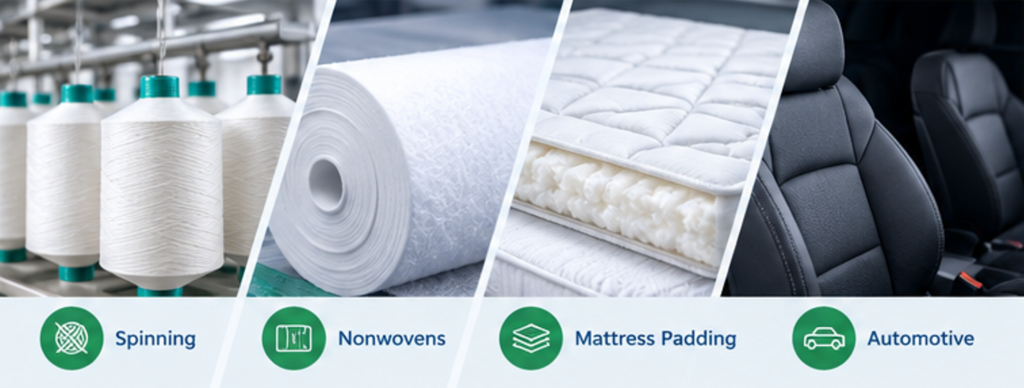
Yarn Spinning
Priorities may include suitable denier and cut length, fiber handling, mechanical properties and compatibility with the spinning system.
The required grade should be evaluated against the intended yarn construction and production process.
Nonwoven Manufacturing
Relevant considerations may include fiber length, denier, crimp, surface finish and the requirements of the selected web-forming and bonding process.
The appropriate specification depends on the type of nonwoven and the finished product’s requirements.
Cleaning Textiles
For microfiber cleaning products, buyers should consider fineness, fiber construction, fabric design and the intended cleaning application.
Absorption and cleaning performance depend on more than the fiber name alone. They can also be influenced by yarn or fabric construction, finishing and the way the finished product is used.
Automotive and Other Industrial Textiles
Industrial applications may have defined requirements for appearance, strength, processing compatibility and consistency.
The buyer should identify the relevant performance requirements and confirm how the proposed material will be evaluated.
For all these applications, the most appropriate grade is the one that meets the documented requirements and performs acceptably in the intended process—not simply the grade with the lowest denier.
11. Sample Evaluation Before a Bulk Order
Where practical, evaluate a representative sample before committing to a large order.
A structured evaluation can help identify differences that may not be apparent from a product description.
Step 1: Check the Sample Identification
Confirm the grade, denier, cut length, color and structure. Compare the sample information with the technical data sheet and quotation.
Step 2: Inspect Relevant Characteristics
Review the parameters that matter to your application, using suitable methods and agreed criteria.
Step 3: Run a Production Trial if Necessary
If process compatibility is critical, test the material under representative production conditions.
Define the trial objectives before starting. These may include processing behavior, finished-product requirements or other measurable acceptance criteria.
Step 4: Record the Result
Document the tested grade, evaluation method, observations and approval decision.
Step 5: Confirm the Order Specification
Before ordering, make sure that the commercial offer identifies the same grade and the requirements used during sample approval.
12. What to Include in Your RFQ
A complete request for quotation helps suppliers understand what you need and reduces avoidable clarification.
When sourcing recycled polyester microfiber, include the following information where available:
Product requirements
- Intended application and manufacturing process.
- Required denier.
- Required cut length.
- Color.
- Fiber structure.
- Surface finish or other special requirements.
Quality requirements
- Relevant mechanical or physical properties.
- Required tolerances and test methods.
- Sample approval requirements.
- Applicable inspection criteria.
- Required technical documents or certifications, if any.
Order requirements
- Estimated quantity.
- Destination country or port.
- Packaging and labeling requirements.
- Requested delivery schedule.
- Preferred shipping terms and payment conditions, if known.
If you do not yet have a complete specification, explain the application and describe the material currently used. The supplier can then identify which details need clarification before quoting a particular grade.
Recycled Polyester Microfiber Buying Checklist
Before approving a supplier or placing an order, review the following checklist.
- The intended application is clearly defined.
- Denier and cut length match the requirement.
- Color and fiber structure are specified.
- Relevant mechanical properties have been identified.
- Surface finish requirements are clarified.
- Appearance and contamination criteria are documented where needed.
- The technical data sheet identifies the offered grade.
- Sample evaluation has been completed where appropriate.
- Any required testing or certification evidence has been reviewed.
- Sample and order specifications match.
- Quantity, packaging, destination and delivery requirements are clear.
- The quotation and commercial terms have been reviewed.
This checklist can be adapted to your company’s quality procedures and the technical requirements of the final product.
Request Recycled Polyester Microfiber Information from Eco Micro Fiber
Looking for recycled polyester microfiber for spinning, nonwoven production or another industrial textile application?
Eco Micro Fiber welcomes inquiries from international buyers who want to discuss their fiber specifications and sourcing requirements.
To help us review your inquiry, please provide your intended application, required denier and cut length, color, fiber structure, estimated quantity, destination and any relevant quality or documentation requirements.
If you have an existing specification sheet or reference material, include those details in your inquiry so that the requested grade can be identified more clearly.
Contact Eco Micro Fiber to discuss your requirements and request a quotation.
Email: [email protected]
Product availability, specifications, tolerances, quality documentation and commercial terms should be confirmed for the specific grade and order before purchase.