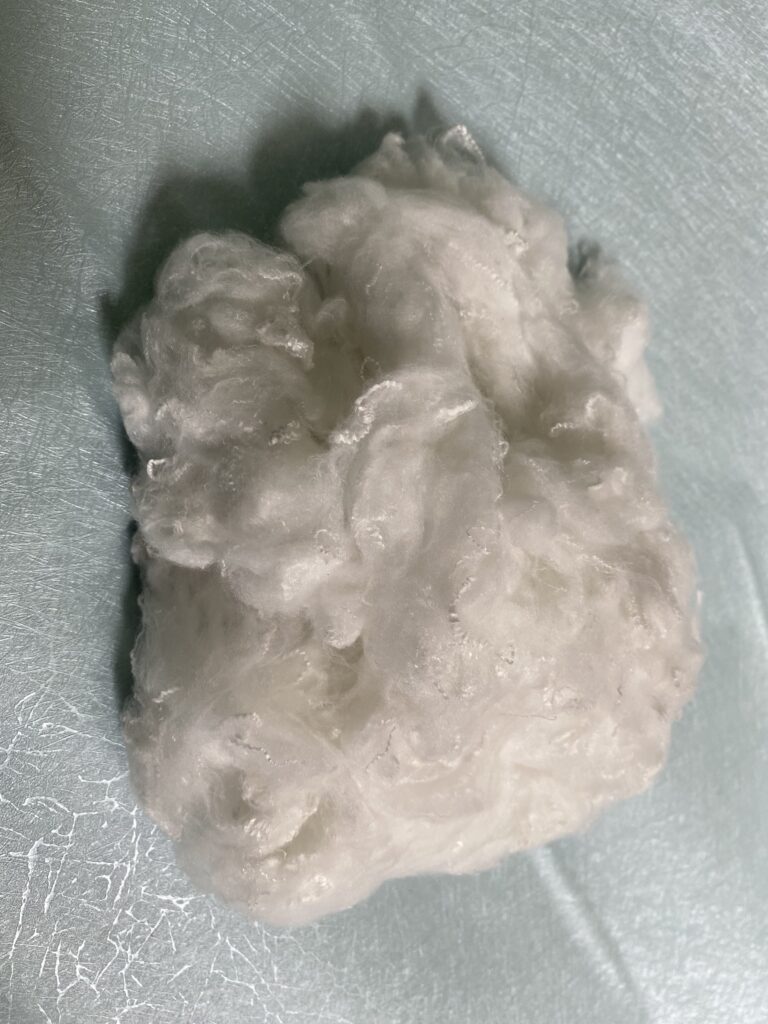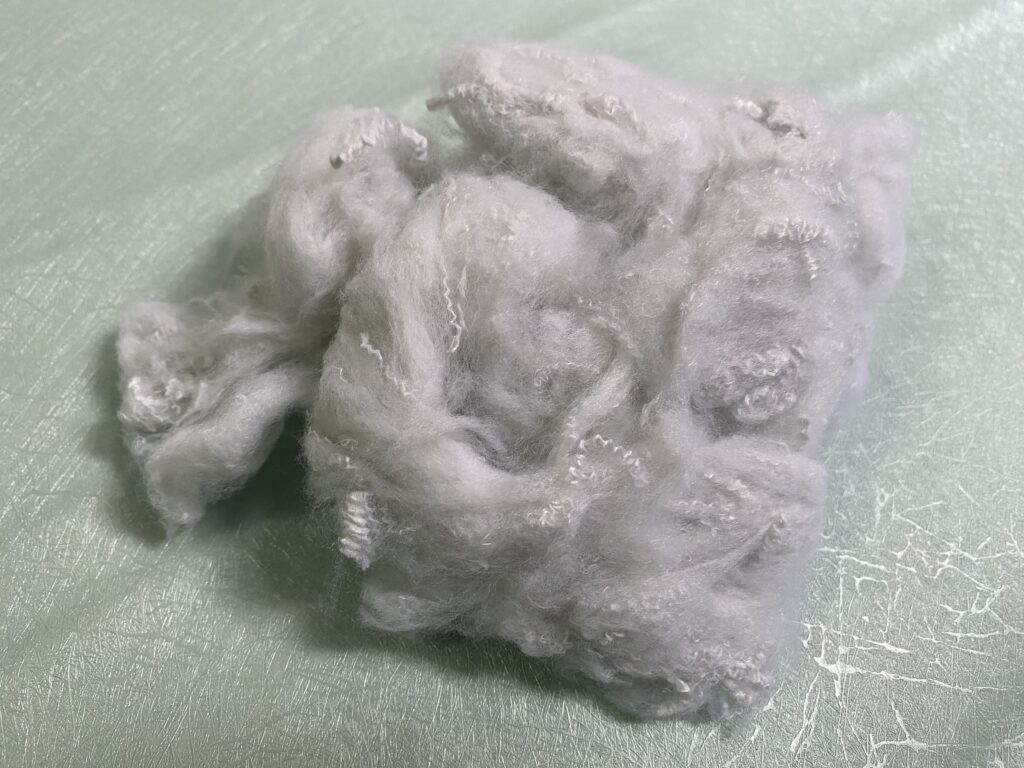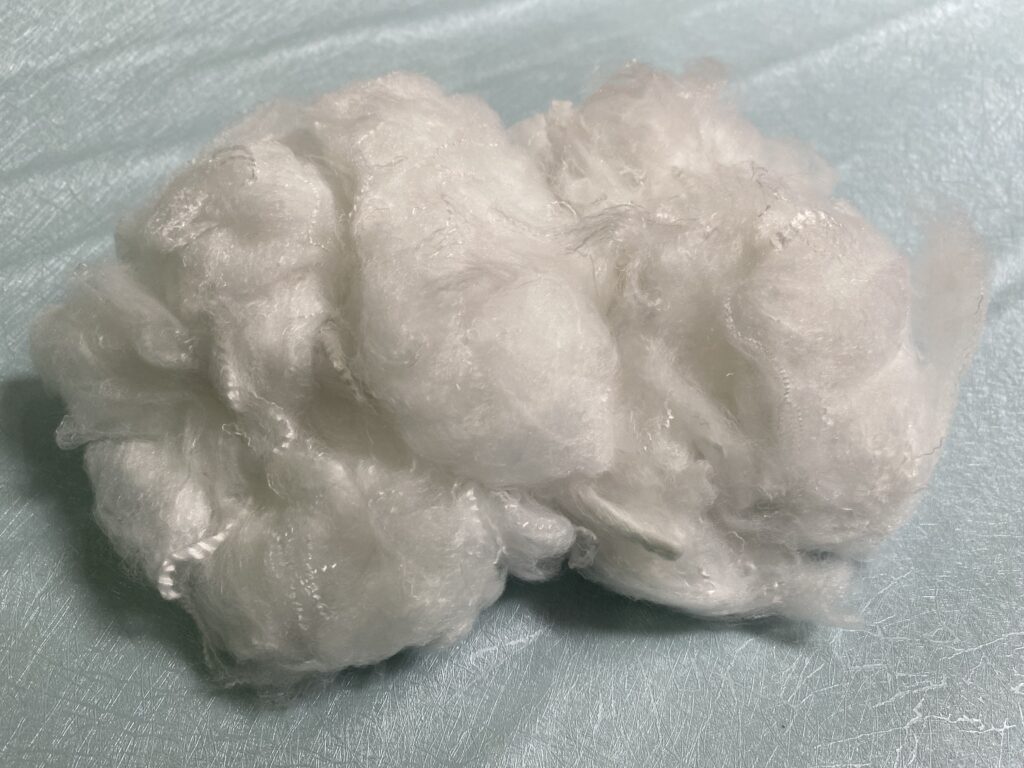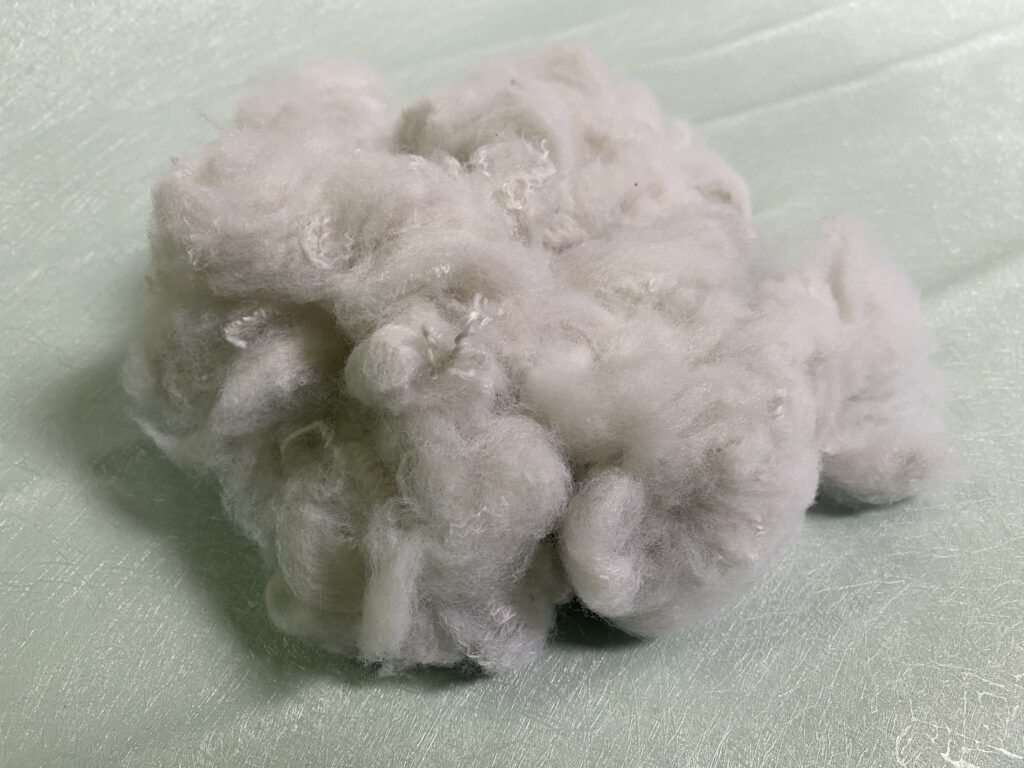
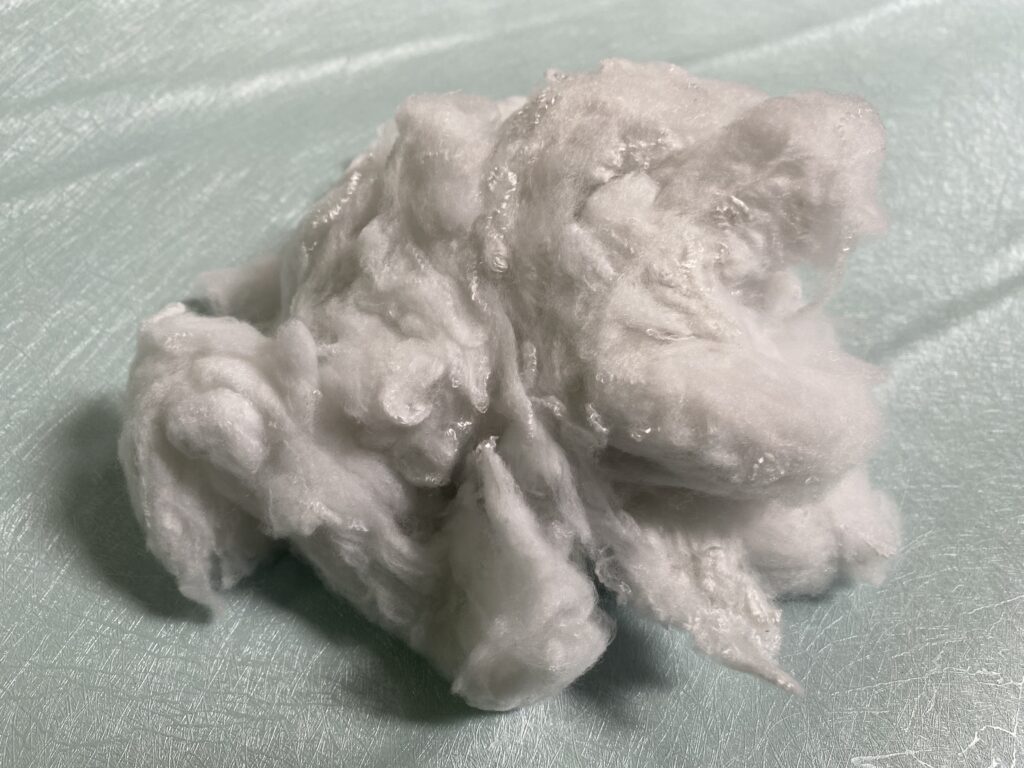
Blended yarn production allows textile manufacturers to combine different fibers to achieve a balance of properties, processing characteristics, appearance, and cost. Recycled polyester staple fiber (RPSF) can be considered as one component of a blended yarn, depending on the target yarn specification, spinning system, and end-use requirements.
For spinning mills, selecting recycled polyester staple fiber for blending involves more than choosing a suitable denier and cut length. Buyers also need to consider the other fiber in the blend, the intended mixing ratio, fiber consistency, processing compatibility, and the performance requirements of the finished yarn.
This guide explains how international textile manufacturers and procurement teams can evaluate recycled polyester staple fiber for blended yarn production, prepare a practical purchasing specification, and work with suppliers to assess a suitable grade.
What Is Blended Yarn?
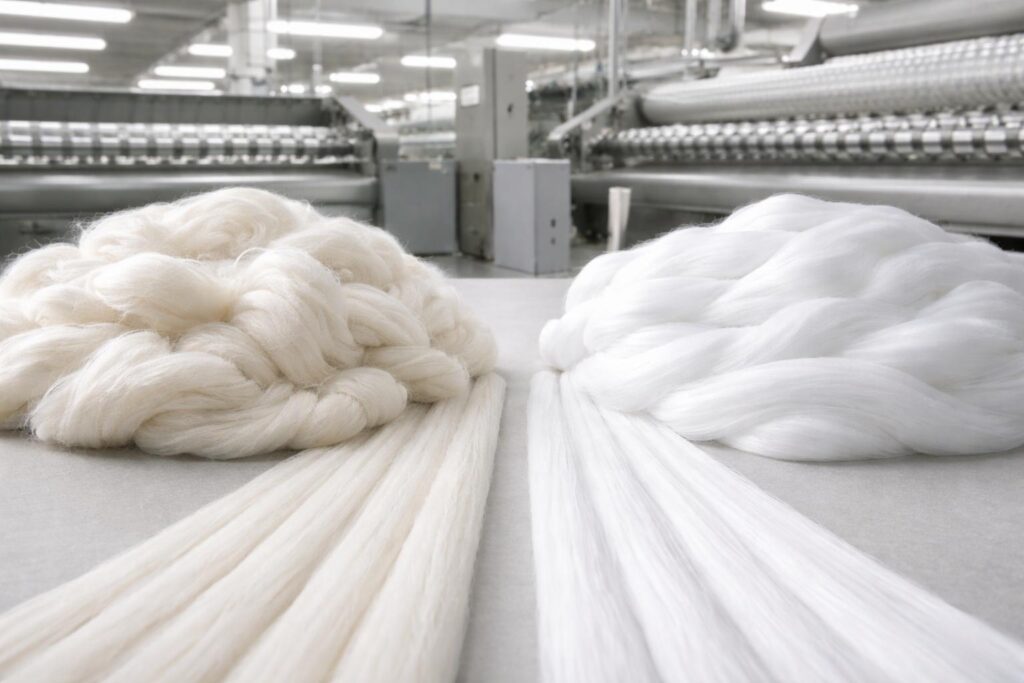
Blended yarn is yarn produced by combining two or more fiber types. The fibers may differ in chemical composition, physical properties, origin, or manufacturing characteristics.
Common examples include:
- Polyester-cotton blended yarn
- Recycled polyester-cotton blended yarn
- Polyester-viscose blended yarn
- Polyester blended with other suitable staple fibers
- Blends of recycled and virgin polyester, where appropriate for the product specification
The purpose of blending depends on the final application. A manufacturer may want to balance strength, comfort, appearance, moisture management, durability, processability, or raw material cost.
The actual outcome depends on the properties of the fibers, the blend ratio, yarn construction, spinning technology, and downstream finishing. A particular blend should therefore be evaluated against the requirements of the finished textile product rather than assumed to deliver a specific result.
Why Consider Recycled Polyester Fiber for Blended Yarn?
1. Incorporating Recycled Content
Recycled polyester staple fiber provides manufacturers with an option for incorporating recycled polyester for yarn spinning production.
For textile mills supplying customers with recycled-content requirements, the suitability of a recycled fiber grade depends on the required material specification and supporting documentation.
Buyers should confirm the origin of the material, the applicable recycled-content evidence, and any customer-specific certification requirements before approving a grade. Recycled content or certification should never assumed from the product name alone.
2. Flexibility in Blend Development
Recycled polyester staple fiber evaluated for use in different blending systems, including polyester-cotton and polyester-viscose blends, where the fiber properties are suitable for the intended spinning process.
The correct choice depends on the partner fiber, blend ratio, yarn count, spinning system, and target product.
A grade that works in one blend may not perform identically when the partner fiber or spinning conditions change. Production trials are an important step when developing or modifying a blend.
3. Supporting Commercial and Production Planning
For B2B manufacturers, raw material sourcing must balance price, specification, availability, quality consistency, and production requirements.
A fiber that is competitively priced but unsuitable for the existing spinning line may create additional waste, interruptions, or yarn-quality issues. Buyers should evaluate the full technical and commercial proposal rather than comparing quotations by price per kilogram alone.
Common Blended Yarn Applications
The appropriate recycled polyester fiber depends on the type of yarn and the finished product.
Polyester-Cotton Blended Yarn
Polyester-cotton yarn is used in a range of textile products, including apparel fabrics, workwear, home textiles, and other woven or knitted materials.
When evaluating recycled polyester staple fiber for a polyester-cotton blend, buyers should consider:
- Compatibility between polyester fiber and cotton in the intended process
- Fiber length and fineness requirements
- The specified polyester-to-cotton ratio
- The spinning system and target yarn count
- Yarn strength, evenness, and other buyer-defined quality criteria
- Requirements for dyeing, finishing, and final fabric appearance
The appropriate recycled polyester grade must be confirmed for the specific spinning process. A sample trial can help determine whether the fiber is suitable for the proposed blend.
Polyester-Viscose Blended Yarn
Polyester-viscose blends are used in selected apparel, lining, home textile, and other fabric applications.
The two fiber types have different physical characteristics, so the spinning mill should evaluate their compatibility in the intended blend and process.
Important considerations include fiber fineness, cut length, blend ratio, drafting behavior, and the quality requirements of the finished yarn. The blend should be tested under representative manufacturing conditions before bulk adoption.
Recycled and Virgin Polyester Blends
Some manufacturers may consider combining recycled polyester fiber with virgin polyester staple fiber.
The feasibility of this approach depends on the product specification, fiber characteristics, customer requirements, and the intended recycled-content claim.
Where recycled content is declared for the finished yarn, buyers should establish how the percentage is calculated and what documentation is required. Blending recycled and virgin polyester does not make the entire yarn 100% recycled.
Other Fiber Blends
Recycled polyester staple fiber may also be assessed for other blending systems when its properties are compatible with the partner fiber and production process.
Before selecting a grade, the spinning mill should identify the partner fiber, target blend ratio, yarn construction, and intended end use. Compatibility should be established through technical evaluation rather than assumed from general application descriptions.
How to Choose the Right Recycled Polyester Fiber Grade
1. Define the Final Yarn Application
Start with the product that the yarn will be used to manufacture.
For example, yarn for workwear may have different requirements from yarn for bed linen, knitted fabrics, or cleaning textiles.
Define the target yarn count, construction, appearance, and performance criteria before selecting the fiber.
2. Confirm the Partner Fiber
Identify the fiber that will be blended with recycled polyester, such as cotton, viscose, or another polyester grade.
The partner fiber influences the requirements for fiber length, fineness, processing behavior, and blend preparation. The supplier should receive this information before recommending a grade.
3. Establish the Blend Ratio
Specify the target ratio of recycled polyester to the other fiber or fibers.
For example, a buyer may investigate a polyester-cotton blend at a selected ratio during product development. The final ratio should be determined by the yarn specification, manufacturing trials, and customer requirements rather than by a universal recommendation.
The ratio also matters when documenting recycled content. Buyers should confirm the calculation method and supporting evidence required for their finished product.
4. Match Denier and Cut Length to the Spinning Process
Denier describes the linear density of the fiber, while cut length describes the length of each staple.
Both parameters affect fiber handling and compatibility with the spinning process. Their suitability depends on the partner fiber, spinning system, target yarn count, and equipment settings.
Do not select a grade based on denier or cut length alone. Confirm the complete specification and its suitability for the intended process.
5. Review Mechanical Properties and Fiber Consistency
Depending on the application, the buyer may need to review:
- Tenacity and elongation
- Cut-length consistency
- Denier consistency
- Crimp characteristics, where relevant
- Color and visible cleanliness
- Finish and processing compatibility
- Lot-to-lot variation
The required values and tolerances should be agreed with the supplier. Buyers should request available technical data and test results rather than assume that all recycled polyester fiber grades share the same properties.
6. Evaluate the Fiber in a Spinning Trial
A representative sample should be assessed under suitable production conditions.
The trial can help the spinning mill evaluate fiber opening, blending uniformity, drafting behavior, yarn formation, waste, and the quality characteristics relevant to the finished yarn.
Results should be recorded against agreed acceptance criteria. If the grade is modified, the mill may need to repeat the evaluation before approving bulk production.
How Does Fiber Quality Affect Blended Yarn Production?
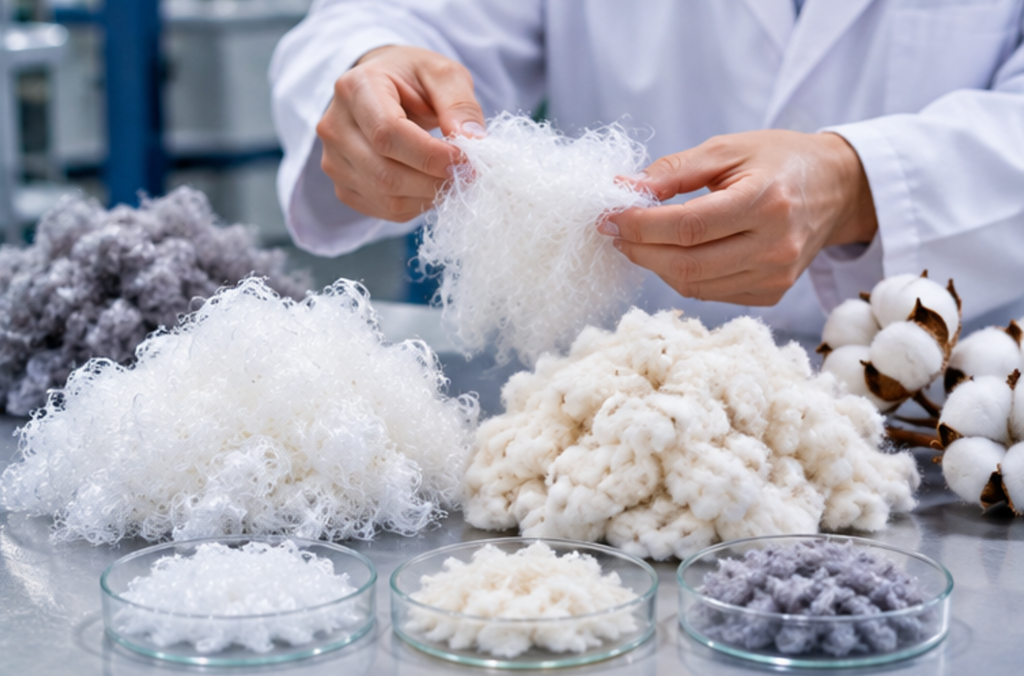
Fiber quality is one part of the overall yarn-making process. Its impact depends on the interaction between the fiber, the partner material, machine settings, and production conditions.
Blend Uniformity
A consistent blend helps the mill control the composition of the yarn. Fiber differences and mixing conditions can influence blend uniformity.
Buyers and production teams should agree on the required blend ratio and the method used to verify it.
Spinning Stability
Fiber characteristics and their compatibility with the spinning system can affect processing behavior.
A grade that is unsuitable for the equipment or target yarn count may require process adjustments or additional trials. The mill should evaluate actual production results before confirming suitability.
Yarn Quality
The finished yarn assessed for properties such as count, evenness, strength, elongation, appearance, and other customer-defined parameters.
The relevant tests and acceptance limits depend on the product. Buyers should establish them with their yarn development or quality team before approving the raw material.
Production Waste and Cost
Waste, downtime, and reprocessing can influence the total cost of production.
For this reason, procurement teams should compare both the quoted fiber price and the results of the technical evaluation. A representative trial provides useful evidence for determining whether a proposed grade is commercially suitable.
Recycled Polyester Fiber vs. Virgin Polyester Fiber for Blending
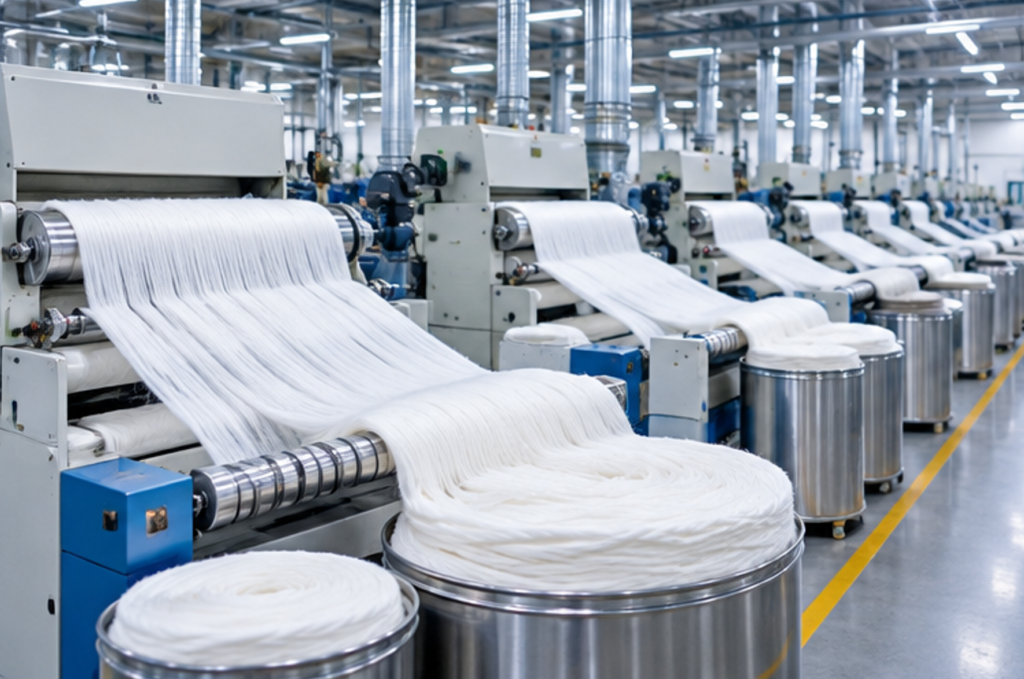
Recycled and virgin polyester staple fiber can differ in raw material origin and in their available specifications. Their actual processing and performance characteristics depend on the individual grade and production controls.
| Evaluation factor | Recycled polyester staple fiber | Virgin polyester staple fiber |
|---|---|---|
| Raw material origin | Produced from recycled polyester feedstock | Produced from virgin polyester raw materials |
| Recycled-content claims | Require appropriate supporting evidence | Not classified as recycled content unless the product specification states otherwise |
| Available specifications | Depend on the supplier and product range | Depend on the supplier and product range |
| Processing suitability | Must be evaluated for the intended blend and spinning system | Must also be evaluated for the intended blend and spinning system |
| Quality requirements | Should be defined through specifications, tolerances, and agreed tests | Should be defined through specifications, tolerances, and agreed tests |
| Purchasing decision | Based on technical suitability, documentation, supply requirements, and total cost | Based on technical suitability, supply requirements, and total cost |
Neither category should assumed to be automatically better for every application. The buyer should compare the specific grades offered and evaluate them against the same requirements.
What Should Buyers Ask a Recycled Polyester Fiber Supplier?
When requesting a quotation, spinning mills and textile manufacturers should provide a clear technical brief.
Useful questions include:
- What recycled polyester staple fiber grades are available for the intended spinning process?
- Can you provide the technical data sheet for the proposed grade?
- What denier and cut length are specified, and what tolerances can be agreed?
- Which mechanical properties and test results are available?
- Is the fiber suitable for evaluation in the proposed blend and target yarn count?
- What samples can be provided for a spinning trial?
- What quality checks or lot-specific documents are available?
- If recycled-content certification is required, can the applicable documentation be verified?
- What packaging, order quantity, production schedule, and shipment terms can be offered?
A reliable purchasing decision should be based on documented requirements and evidence relevant to the specific product, not only general supplier claims.
Common Mistakes When Sourcing Fiber for Blended Yarn
Selecting a Grade Without Confirming the Partner Fiber
Fiber fineness and length consider in relation to the other fiber in the blend. A grade suitable for one partner fiber may not be the best choice for another.
Assuming One Blend Ratio Fits Every Product
The appropriate ratio depends on the target yarn and fabric requirements. It develop and confirm through technical evaluation.
Comparing Suppliers by Price Alone
A lower unit price may not compensate for processing difficulties, inconsistent quality, or additional waste. Compare the complete specification and trial results.
Skipping Sample Approval
A sample should be test under conditions representative of the intended production process whenever practical. Visual inspection alone may not establish spinning suitability.
Making Unverified Recycled-Content Claims
Buyers should verify the applicable documents and calculate recycled content according to the relevant requirements. Claims must accurately reflect the materials and process used.
Buyer Checklist for a Blended Yarn Fiber RFQ
Include the following information when contacting a supplier:
- End application: apparel, home textiles, workwear, cleaning textiles, or another product
- Spinning system: the intended process and relevant equipment details
- Target yarn count: required count and yarn construction
- Partner fiber: cotton, viscose, polyester, or another material
- Blend ratio: target composition of the finished yarn
- Fiber specification: required denier, cut length, and other relevant properties
- Color and appearance: required fiber color and any visual requirements
- Quality criteria: relevant yarn and fiber tests, tolerances, and acceptance limits
- Recycled-content requirements: target percentage and applicable documentation
- Order quantity: sample, trial quantity, or expected bulk volume
- Destination: delivery country or port and preferred shipping terms
- Delivery schedule: required timing for sample and bulk orders
The more complete the RFQ, the easier it is to assess whether a proposed fiber grade is suitable for the intended blend.
Source Recycled Polyester Staple Fiber for Your Yarn Production
Eco Micro Fiber supports B2B enquiries for recycled polyester staple fiber for textile and industrial applications.
If your spinning mill is evaluating recycled polyester fiber for blended yarn production, share the intended yarn application, partner fiber, blend ratio, target yarn count, and required fiber specifications.
These details help establish the requirements for a technical review and quotation.
For enquiries, please contact [email protected].
The objective is to identify a fiber grade that meets your documented requirements and evaluated under your actual production conditions.

Frequently Asked Questions
Can recycled polyester staple fiber be used in polyester-cotton blended yarn?
It may be suitable, depending on the fiber specification, cotton grade, blend ratio, spinning system, and yarn requirements. The proposed combination should be evaluated through technical review and an appropriate production trial.
What is the best recycled polyester fiber denier for blended yarn?
There is no single best denier for every blended yarn. The appropriate fineness depends on the partner fiber, target yarn count, spinning process, and finished-product requirements.
Can recycled polyester fiber be blended with viscose?
Recycled polyester may be considered for polyester-viscose blends when the selected grades are compatible with the intended process. A spinning trial can help establish suitability for the target yarn.
Does blending recycled polyester with virgin polyester produce 100% recycled yarn?
No. When recycled and virgin polyester are combined, the finished yarn contains both material types. Any recycled-content claim should reflect the actual composition and applicable calculation and documentation requirements.
What information should I send when requesting a quotation?
Provide the application, partner fiber, blend ratio, target yarn count, required denier and cut length, quality criteria, order quantity, destination, and any recycled-content documentation requirements.
Conclusion
Recycled polyester staple fiber can be evaluated for blended yarn production across a range of textile applications. The right grade depends on the partner fiber, blend ratio, target yarn count, spinning process, and finished-product requirements.
For international B2B buyers, a clear RFQ, a complete technical specification, appropriate sample trials, and verified documentation provide a practical foundation for selecting a suitable supplier.
Rather than choosing fiber based on price or product name alone, evaluate the proposed grade against your manufacturing process and the quality requirements of the finished yarn.