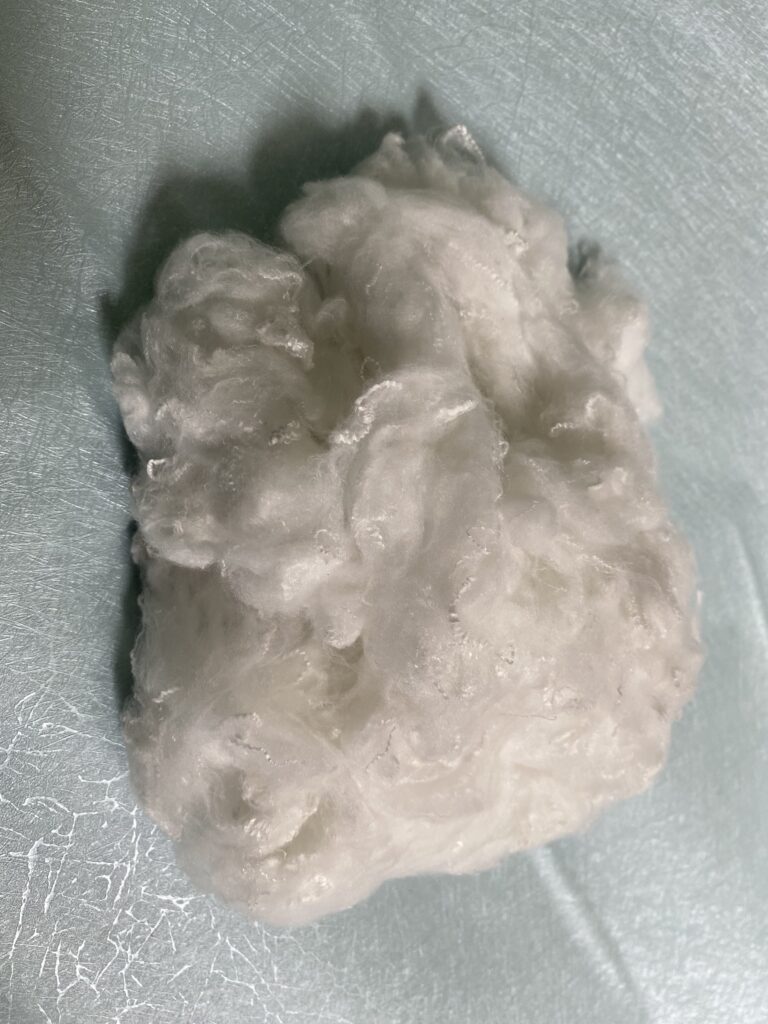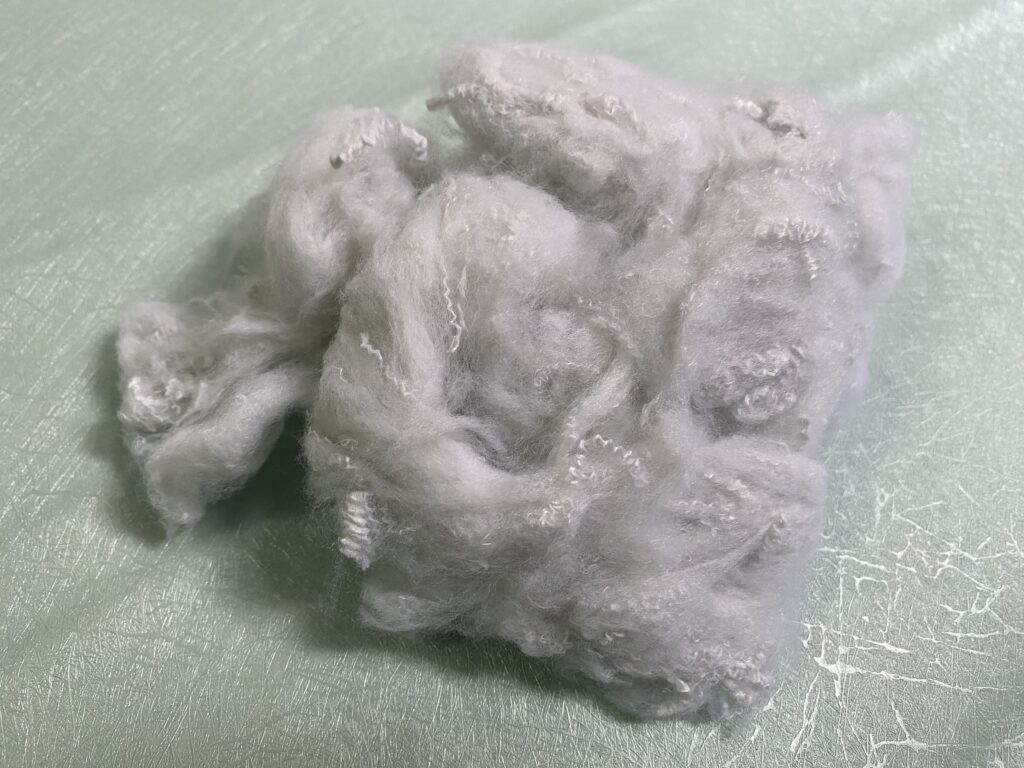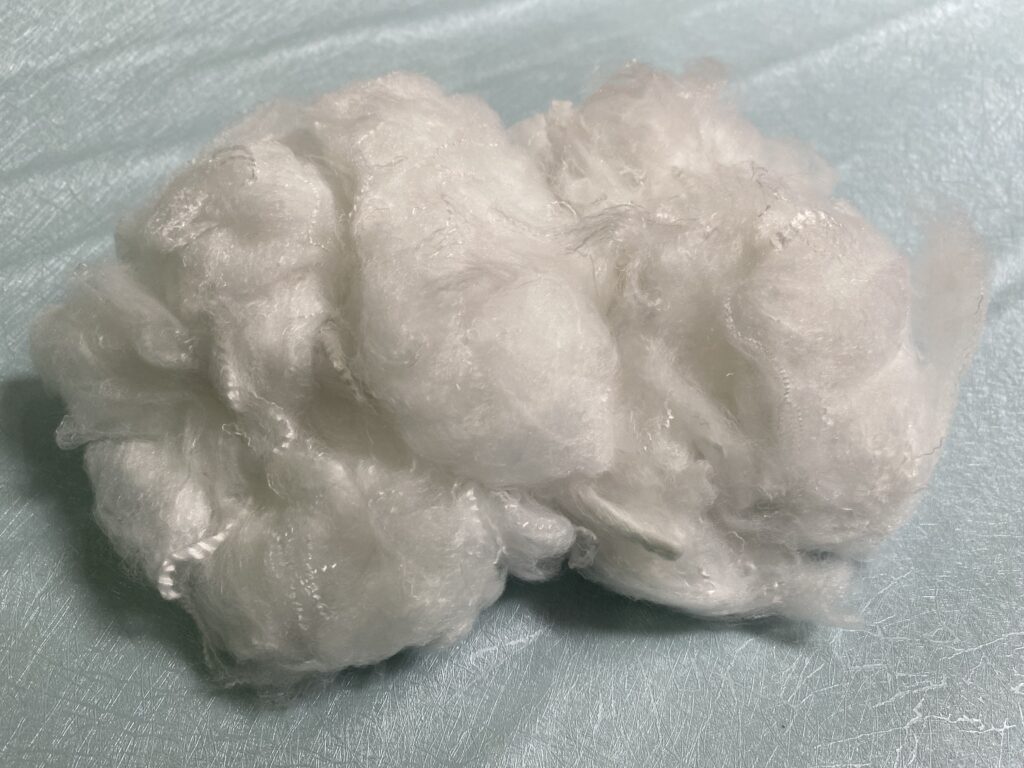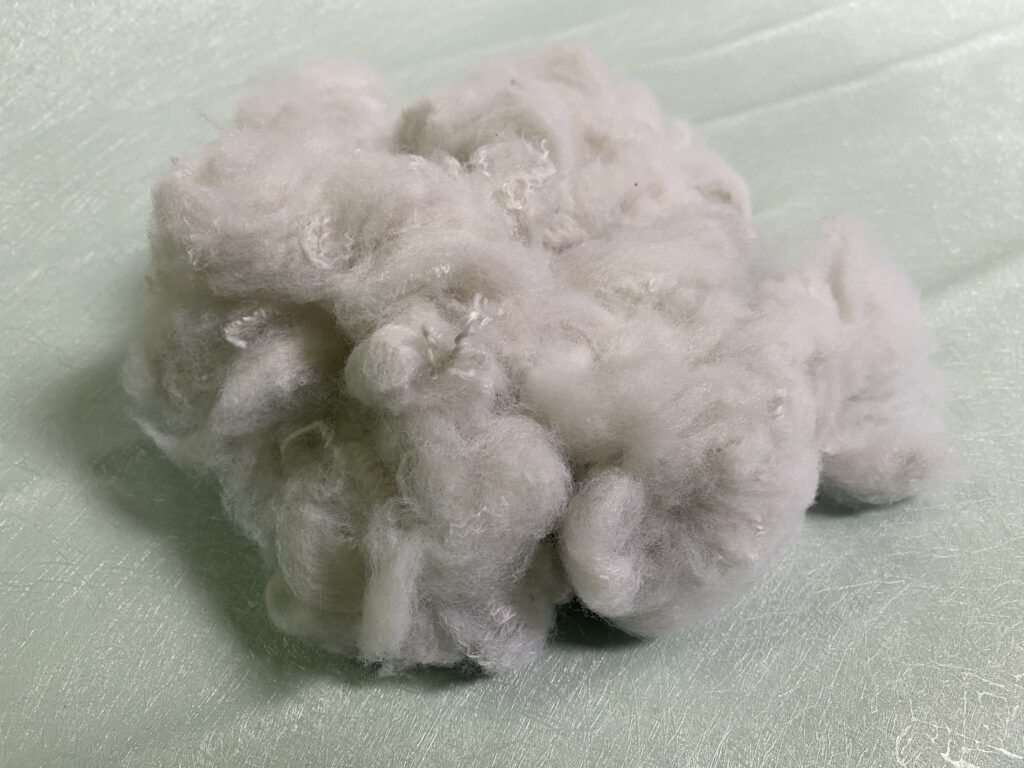
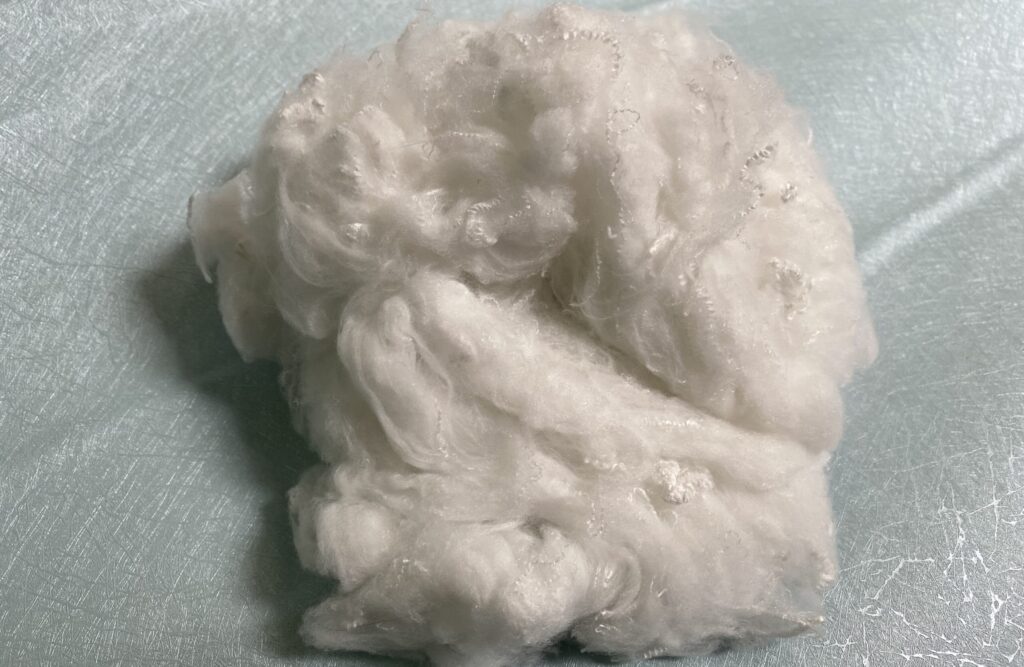
Selecting the right polyester staple fiber (PSF) is an important step in achieving stable yarn quality, efficient spinning performance, and consistent textile production.
For spinning mills, fiber selection should not be based on price or denier alone. The relationship between fiber fineness, cut length, yarn count, spinning technology, and end-use requirements determines whether a particular polyester fiber grade is suitable for production.
A fiber that performs well in coarse yarn production may not deliver the same results when used for finer yarn counts. Similarly, selecting excessively fine fibers without considering spinning conditions may increase processing challenges rather than improve yarn quality.
This guide explains how to evaluate polyester staple fiber for different yarn counts, including coarse, medium, and fine yarn applications, with practical considerations for recycled polyester staple fiber buyers.
1. Understanding Yarn Count in Polyester Spinning
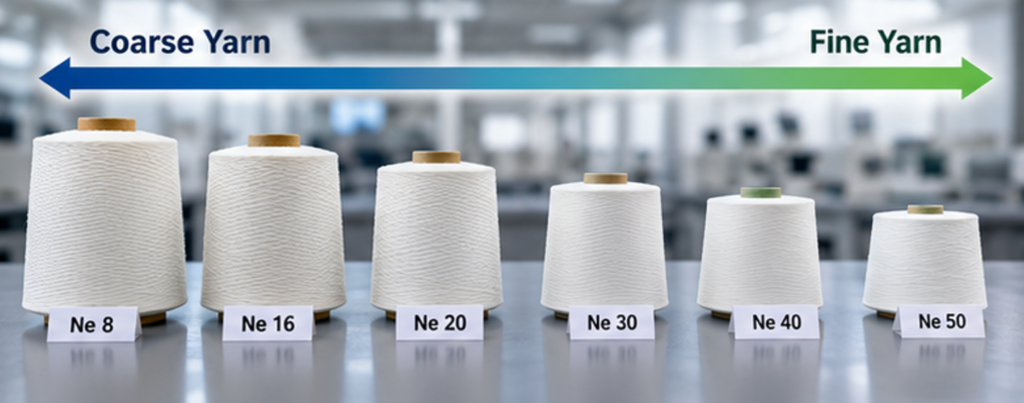
Yarn count describes the linear density or fineness of a yarn.
One commonly used system in staple yarn spinning is the English cotton count system, expressed as Ne.
Under this system:
- Ne 8 represents a relatively coarse yarn.
- Ne 16 represents a medium-coarse yarn.
- Ne 20 and Ne 30 represent commonly used medium to finer yarn counts.
- Ne 40 and Ne 50 represent finer yarns that generally require greater control over fiber characteristics and spinning conditions.
A higher Ne value indicates a finer yarn.
The relationship between yarn count and fiber selection is important because finer yarns have less fiber mass per unit length.
As yarn becomes finer, the number of fibers in its cross-section can decrease if the same fiber denier is maintained.
This may affect yarn strength, evenness, hairiness, and spinning stability.
Therefore, selecting polyester staple fiber requires consideration of both the target yarn count and the physical characteristics of the fiber.
2. Why Fiber Denier Matters for Different Yarn Counts
Fiber denier describes the linear density of an individual fiber.
One denier represents one gram per 9,000 meters of fiber.
Lower-denier fibers are finer, while higher-denier fibers are coarser.
For example:
- 1.2D polyester fiber is finer than 1.4D.
- 1.4D polyester fiber is finer than 2.5D.
- 3D polyester fiber is considerably coarser than 1.4D.
For a given yarn count, finer fibers generally allow a greater number of fibers to be present in the yarn cross-section.
This can support improved fiber distribution and yarn uniformity when the fiber quality and spinning conditions are appropriate.
However, finer fibers are not automatically the best choice for every yarn.
Fiber cohesion, tensile properties, crimp, friction, cleanliness, and compatibility with spinning equipment must also be evaluated.
Fiber Denier and Yarn Cross-Section
A useful preliminary calculation is:
Approximate fibers per yarn cross-section = Yarn linear density (denier) ÷ Individual fiber denier
For the English cotton count system:
Yarn denier ≈ 5315 ÷ Ne
For example, consider a Ne 30 polyester yarn.
Its approximate linear density is:
5315 ÷ 30 = 177.2 denier.
If the yarn is produced from 1.4D polyester fibers:
177.2 ÷ 1.4 ≈ 127 fibers per cross-section.
If 2.5D polyester fibers are used:
177.2 ÷ 2.5 ≈ 71 fibers per cross-section.
This simplified comparison demonstrates why finer fibers are often considered for finer yarn production.
Actual fiber distribution varies along the yarn, and this calculation does not predict final yarn strength or spinning performance.
For blended yarns, the calculation should also account for the proportions and linear densities of the different fiber components.
3. Selecting Polyester Staple Fiber for Coarse Yarn Counts (Ne 8–Ne 16)
Coarse yarns are commonly associated with applications such as industrial textiles, certain woven fabrics, and heavier textile constructions.
In this yarn count range, spinning mills may have greater flexibility when evaluating fiber fineness compared with finer yarn production.
Important Fiber Selection Factors
Denier: Depending on the spinning system and yarn requirements, mills may evaluate relatively coarser polyester fibers alongside conventional fine staple grades.
Cut length: The selected cut length must match the drafting system, machine settings, and processing requirements.
Fiber strength: Adequate tenacity is important for maintaining yarn strength during spinning and subsequent textile processing.
Fiber cleanliness: Contamination, hard particles, and irregular fiber masses can cause production interruptions even in coarse yarn applications.
Recommended Purchasing Approach
For Ne 8–Ne 16 yarn production, buyers should first confirm:
- Whether the spinning system is ring, rotor, or another technology.
- Whether the yarn is 100% polyester or blended.
- The required yarn strength and end-use application.
- The fiber specifications currently used successfully by the mill.
Coarse yarn production should not be treated as an automatic justification for using low-quality or contaminated recycled polyester fiber.
Stable raw material quality remains essential.
4. Selecting Polyester Staple Fiber for Medium Yarn Counts (Ne 20–Ne 30)
Medium yarn counts are relevant to many apparel, woven fabric, knitted fabric, and polyester-blend applications.
For these yarns, fiber fineness and uniformity become increasingly important.
Why 1.4D Polyester Fiber Is Worth Evaluating
A 1.4D polyester staple fiber is a practical candidate for evaluation in many conventional staple spinning applications.
For example, 1.4D × 38mm polyester staple fiber may be considered for compatible cotton-system spinning processes.
However, suitability depends on the machine configuration, target yarn properties, and fiber performance.
A spinning mill producing Ne 20 or Ne 30 yarn should assess:
Fiber fineness consistency
Variation in fiber denier may affect yarn uniformity and processing behavior.
Cut length uniformity
Excessive variation in fiber length can contribute to drafting irregularities.
Fiber tensile properties
Consistent tensile properties help support predictable processing and yarn performance.
Crimp characteristics
Crimp affects fiber handling, cohesion, and drafting behavior.
Impurity control
Unwanted particles and contamination can lead to yarn defects, machine cleaning requirements, and quality complaints.
Practical Buyer Consideration
When selecting recycled polyester staple fiber for Ne 20–Ne 30 yarn, buyers should request representative samples and evaluate them under actual mill conditions.
A trial should examine both spinning efficiency and finished yarn properties.
5. Selecting Polyester Staple Fiber for Fine Yarn Counts (Ne 40–Ne 50 and Above)
Fine yarn production generally places greater demands on fiber quality, uniformity, and process control.
As yarn count increases, the available fiber mass within the yarn cross-section decreases.
This makes individual fiber characteristics increasingly significant.
Key Requirements for Fine Yarn Production
1. Appropriate fiber fineness
Finer polyester staple fibers may be evaluated to maintain a suitable number of fibers within the yarn cross-section.
Depending on the spinning process and product requirements, grades around 1.0D–1.4D may be candidates for testing rather than universal specifications.
2. Controlled fiber length
Fiber length must be compatible with the drafting equipment and intended spinning process.
3. Consistent tensile properties
Unexpected variation in fiber strength or elongation can contribute to unstable processing.
4. Low contamination
Fine yarn production can be particularly sensitive to unwanted particles, hard fibers, and foreign material.
5. Stable batch quality
A fiber grade that performs well in one trial should be evaluated for repeatability across subsequent production lots.
Can Recycled Polyester Fiber Be Used for Fine Yarn?
Yes, recycled polyester staple fiber can be evaluated for fine yarn applications.
However, not every recycled fiber grade is suitable for fine-count spinning.
The actual suitability depends on the recycling process, fiber characteristics, contamination control, and spinning technology.
Buyers should not assume that all recycled polyester fibers with the same nominal denier will deliver identical spinning results.
For demanding fine-count applications, a controlled production trial is particularly important.
6. Polyester Staple Fiber Selection by Yarn Count: Practical Comparison
The following table provides an initial selection framework for spinning mills.
| Yarn Count | Yarn Category | Fiber Selection Considerations |
|---|---|---|
| Ne 8–Ne 16 | Coarse | Evaluate appropriate fiber fineness, strength, cleanliness, and system compatibility |
| Ne 20–Ne 30 | Medium | Consider fine staple grades such as 1.4D, subject to spinning trials |
| Ne 40–Ne 50 | Fine | Evaluate finer and highly consistent fibers with strict quality control |
| Above Ne 50 | Very fine | Require application-specific fiber evaluation and close process control |
Important: These are general evaluation guidelines, not guaranteed fiber specifications. The appropriate denier and cut length depend on spinning technology, blend composition, equipment, and final yarn requirements.
7. Choosing the Right Fiber Cut Length
Fiber cut length is another important parameter in polyester staple fiber selection.
Common commercial polyester staple fiber cut lengths include 38mm, 51mm, and 64mm, among others.
However, different cut lengths are not interchangeable across spinning systems.
38mm Polyester Staple Fiber
A 38mm cut length is frequently considered for cotton-system spinning applications, particularly where the machinery and drafting arrangements are designed for short staple fibers.
For example, 1.4D × 38mm polyester fiber may be evaluated for polyester and polyester-blended yarns.
51mm Polyester Staple Fiber
A 51mm cut length may be suitable for selected spinning configurations designed to handle longer staple fibers.
Machine compatibility should be verified before changing from a shorter cut length.
64mm Polyester Staple Fiber
A 64mm cut length requires appropriate processing equipment and is not automatically suitable for conventional short-staple cotton spinning lines.
The best cut length is determined by the spinning system and processing configuration, not yarn count alone.
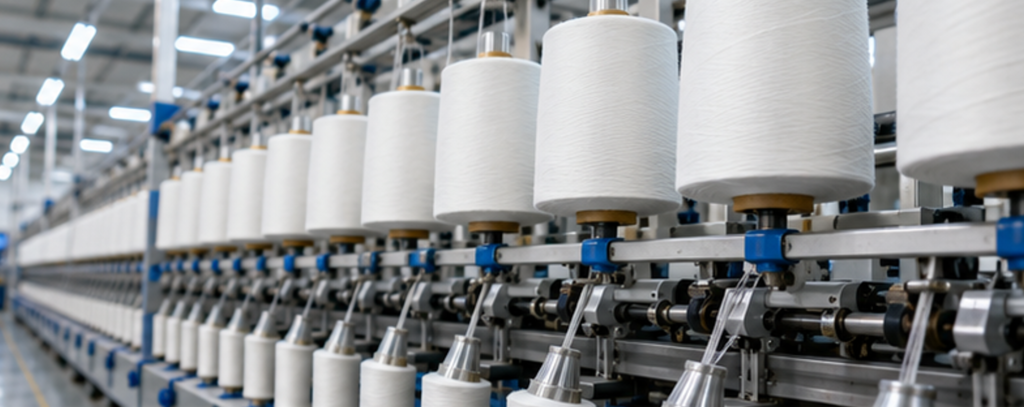
8. Ring Spinning vs. Rotor Spinning vs. Vortex Spinning
Different spinning technologies can respond differently to the same polyester staple fiber.
Ring Spinning
Ring spinning is widely used for staple yarn production and can produce a broad range of yarn counts.
Important fiber considerations include:
- Fineness and length consistency.
- Drafting behavior.
- Fiber cohesion.
- Tensile properties.
- Contamination control.
Fine-count ring spinning may require particularly careful fiber selection.
Rotor Spinning
Rotor spinning has different fiber transport, opening, and yarn formation mechanisms.
Fiber cleanliness, opening behavior, and compatibility with the rotor system are important.
A fiber grade that works successfully in ring spinning should not automatically be assumed suitable for rotor spinning.
Vortex Spinning
Vortex spinning uses air-based yarn formation and has specific requirements for fiber length, fineness, and processing behavior.
The suitability of recycled polyester staple fiber should be confirmed through machine-specific trials.
What Buyers Should Remember
The same nominal polyester fiber specification may behave differently across ring, rotor, and vortex spinning systems.
Spinning technology should always be confirmed before selecting a fiber grade.
9. Selecting Polyester Fiber for Blended Yarn Production
Many spinning mills manufacture polyester-blended yarns rather than 100% polyester yarns.
Common examples include:
- Polyester/cotton blends.
- Polyester/viscose blends.
- Other polyester-based textile blends.
For blended yarn production, fiber compatibility becomes especially important.
Polyester/Cotton Blended Yarn
When blending polyester with cotton, buyers should consider:
- Fiber length compatibility.
- Relative fiber fineness.
- Mixing and blending uniformity.
- Static behavior and processing conditions.
- Target yarn count and blend ratio.
Polyester/Viscose Blended Yarn
For polyester/viscose blends, important considerations include fiber fineness, length distribution, cohesion, and process compatibility.
The polyester fiber should be evaluated together with the actual viscose grade used in production.
Why Blend Ratio Matters
A 65/35 polyester/cotton yarn and a 50/50 polyester/cotton yarn may require different process adjustments even when the target yarn count is identical.
Therefore, a buyer should provide both the yarn count and blend composition when requesting recycled polyester staple fiber.
10. Common Mistakes When Selecting Polyester Staple Fiber
Mistake 1: Choosing Fiber Based Only on Denier
Two polyester fibers with the same denier may differ in tensile properties, elongation, crimp, contamination, and processing behavior.
Mistake 2: Assuming One Fiber Grade Fits Every Yarn Count
A fiber that performs acceptably in Ne 16 yarn may not provide the required performance in Ne 40 yarn.
Mistake 3: Ignoring Spinning Technology
Ring, rotor, and vortex spinning have different process requirements.
Mistake 4: Selecting Fiber Only by Price
Lower raw material prices do not necessarily result in lower production costs.
Processing waste, yarn breaks, downtime, and quality defects can influence the overall cost of yarn manufacturing.
Mistake 5: Skipping Production Trials
Laboratory data and nominal specifications are useful, but they cannot fully replace a spinning trial under actual production conditions.
11. Quality Checklist for Polyester Staple Fiber Buyers
Before approving a polyester staple fiber supplier, spinning mills should evaluate several key factors.
| Quality Parameter | Why It Matters |
|---|---|
| Fiber denier | Influences the number of fibers in the yarn cross-section |
| Cut length | Affects drafting and machine compatibility |
| Length uniformity | Helps support consistent fiber processing |
| Tenacity | Contributes to fiber strength during processing |
| Elongation | Influences fiber behavior under tension |
| Crimp | Affects cohesion, opening, and drafting |
| Cleanliness | Helps reduce contamination-related problems |
| Batch consistency | Supports repeatable spinning performance |
| Finish and static behavior | Can affect fiber handling and processing stability |
Buyers should also consider whether the supplier can provide representative samples, relevant technical information, and traceable production-lot details where available.
12. How to Evaluate Recycled Polyester Staple Fiber Before Bulk Purchasing
A structured evaluation process can help reduce purchasing risk.
Step 1: Define the Target Yarn
Confirm:
- Target yarn count.
- Yarn composition.
- Spinning system.
- End-use application.
- Required yarn quality standards.
Step 2: Review the Fiber Specification
Check the proposed fiber denier, cut length, tensile properties, crimp, cleanliness, and other relevant characteristics.
Step 3: Request a Representative Sample
Whenever possible, the sample should represent the grade and production quality intended for commercial supply.
Step 4: Conduct a Spinning Trial
Evaluate processing stability, yarn breaks, machine behavior, waste, and finished yarn quality.
Step 5: Review Commercial and Quality Consistency
Before placing a bulk order, discuss the agreed fiber specification, acceptable quality tolerances, lot identification, and repeat-order requirements.
This approach helps buyers evaluate not only fiber price but also production suitability and long-term supply reliability.
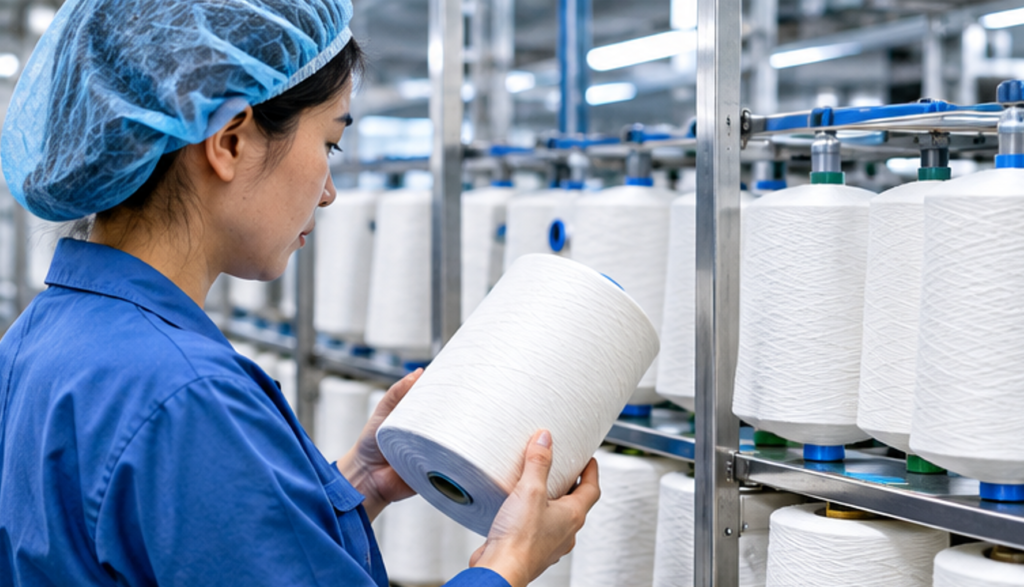
13. Recycled Polyester Staple Fiber Supply from GDI Textile
GDI Textile supplies recycled polyester staple fiber from Vietnam for industrial textile applications.
For spinning mill inquiries, fiber selection should begin with an understanding of the customer’s actual yarn production requirements.
Buyers evaluating recycled polyester staple fiber can discuss relevant product options, including 1.4D × 38mm recycled polyester staple fiber, subject to grade availability and technical suitability.
Rather than selecting fiber based solely on nominal specifications, spinning mills are encouraged to confirm their requirements and evaluate representative samples before commercial purchasing.
Information to Include in Your Fiber Inquiry
To help identify an appropriate fiber option, please share:
- Target yarn count, such as Ne 16, Ne 20, Ne 30, or Ne 40.
- Spinning system: ring, rotor, or vortex.
- Yarn composition: 100% polyester or blended yarn.
- Required fiber denier and cut length, if already established.
- Current fiber specification or reference sample.
- Estimated monthly fiber consumption.
- Destination country or port.
These details help support a more focused technical and commercial discussion.
Looking for Recycled Polyester Staple Fiber for Yarn Spinning?
Contact GDI Textile to discuss your yarn production requirements, available fiber grades, sample evaluation, and export supply options.
Website: https://ecomicrofiber.com/
Frequently Asked Questions
What polyester fiber denier is suitable for Ne 30 yarn?
A 1.4D polyester staple fiber may be a candidate for Ne 30 yarn production in compatible spinning systems. However, the final selection should consider cut length, fiber properties, spinning technology, and the required yarn quality.
Can 1.4D × 38mm polyester fiber be used for Ne 40 yarn?
It may be possible in suitable spinning configurations, but successful production depends on fiber quality, machine capability, and yarn performance requirements. A spinning trial is recommended before bulk purchasing.
Is finer polyester fiber always better for higher yarn counts?
Not necessarily. Finer fibers can increase the number of fibers in the yarn cross-section, but other characteristics such as strength, crimp, length consistency, and processing behavior remain important.
What is the difference between Ne 20 and Ne 40 yarn?
Under the English cotton count system, Ne 40 yarn has approximately half the linear density of Ne 20 yarn. Producing finer yarn generally requires closer control of fiber selection and spinning conditions.
Can recycled polyester staple fiber be used for ring spinning?
Yes, suitable recycled polyester staple fiber grades can be evaluated for ring spinning. Compatibility depends on the fiber specification, yarn count, and machine configuration.
How should spinning mills choose between 38mm and 51mm polyester fiber?
The choice should primarily depend on the spinning equipment, drafting system, fiber processing requirements, and intended yarn characteristics. The two cut lengths should not be treated as universally interchangeable.

Conclusion
Selecting polyester staple fiber for different yarn counts requires more than matching a fiber denier to a yarn number.
Spinning mills should evaluate fiber fineness, cut length, tensile properties, crimp, cleanliness, spinning technology, and yarn composition together.
For coarse yarns, the mill may have greater flexibility in fiber selection. For finer yarns, consistency and control of fiber characteristics generally become more critical.
With recycled polyester staple fiber, representative sampling and production trials are especially valuable when assessing suitability for a specific yarn application.
The most reliable fiber selection is one based on actual spinning requirements, measurable quality performance, and repeatable supply conditions.