
A Practical Quality Control Guide for Bedding Manufacturers and International Fiber Buyers
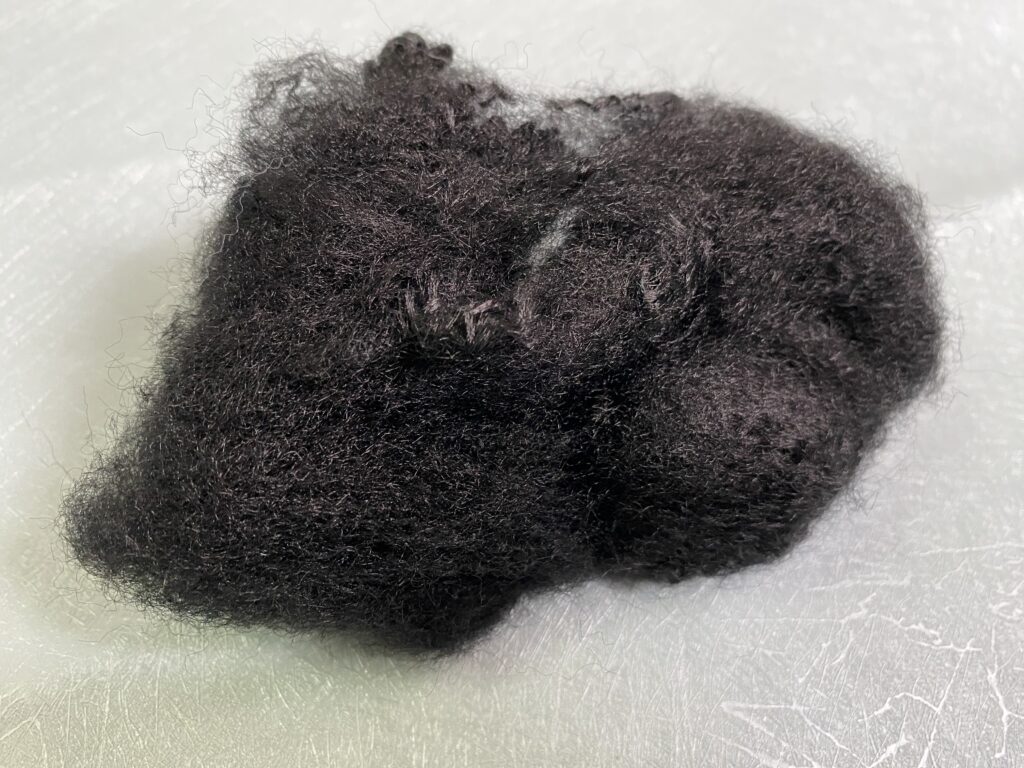
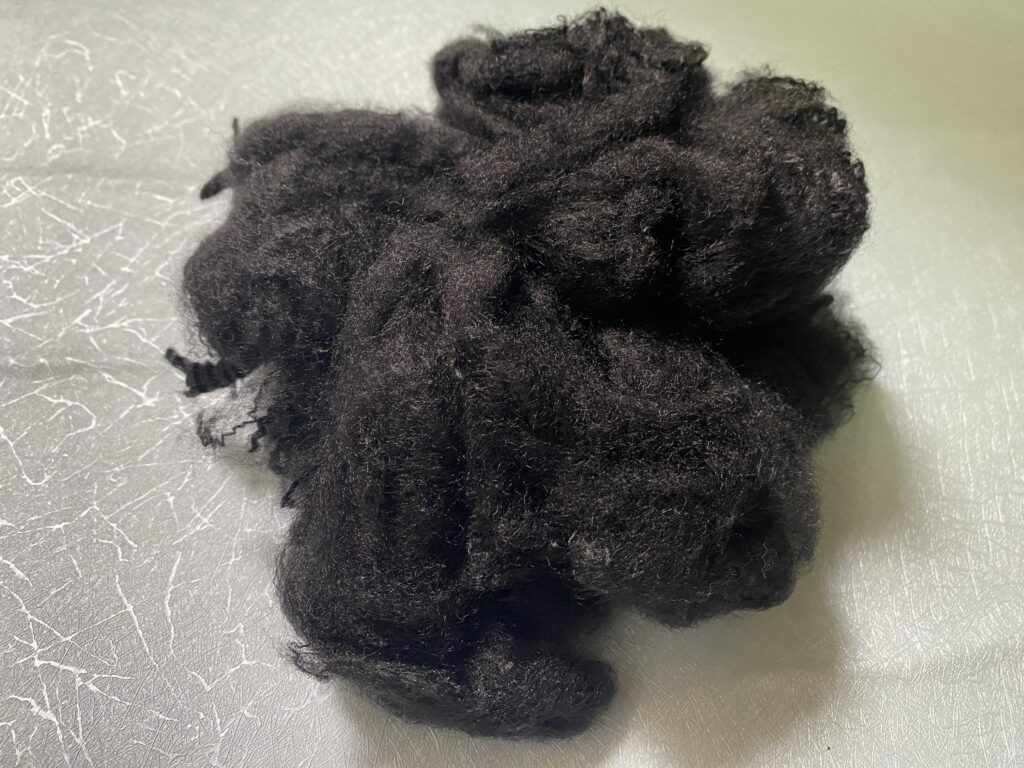
Recycled polyester staple fiber is used in a wide range of bedding applications, including mattress padding, quilted layers, comforters, pillows, and nonwoven cushioning materials.
For bedding manufacturers, however, purchasing recycled polyester fiber involves more than selecting a denier, cut length, or competitive price.
The quality of the incoming fiber can influence production efficiency, material uniformity, product comfort, and consistency between finished batches.
A fiber that performs well during a small trial may behave differently when delivered in larger quantities if its specifications or processing characteristics vary between production lots.
This is why a structured quality control process is essential when sourcing recycled polyester fiber for bedding manufacturing.
In this guide, we explain the most important quality checks, how they relate to bedding applications, and what international buyers should verify before approving a supplier or placing a bulk order.
Why Fiber Quality Matters in Bedding Manufacturing
Bedding products are designed to provide comfort, support, insulation, or cushioning, depending on their construction.
The performance of recycled polyester fiber depends on how the material is processed and where it is used.
For example:
- Mattress padding may require consistent web formation, thickness, and compression behavior.
- Quilted bedding layers may prioritize uniform fiber distribution and a soft, even surface.
- Pillow filling may require suitable bulk, softness, and recovery after compression.
- Comforter filling may require controlled loft and consistent distribution.
- Bonded or needle-punched bedding materials may require reliable fiber processing and structural uniformity.
These applications do not necessarily require the same fiber grade.
A fiber suitable for a dense mattress padding layer may not provide the desired loft for a soft pillow.
For procurement teams, quality control should therefore begin with the intended application rather than a generic definition of premium-quality polyester fiber.

1. Confirm Fiber Type and Structure
The first quality check is to confirm that the delivered material matches the fiber type specified in the purchase order.
Recycled polyester staple fiber can be supplied in different structures and finishes.
Common distinctions include:
- Solid polyester staple fiber
- Hollow polyester staple fiber
- Siliconized polyester fiber
- Non-siliconized polyester fiber
- Specialty or bonding fibers
These categories are not interchangeable.
Solid recycled polyester fiber may be selected for certain padding and nonwoven applications, while hollow or siliconized fibers may be preferred for some filling products where loft and softness are priorities.
The appropriate choice depends on the finished bedding product and the manufacturer’s production method.
Buyer quality check:
Confirm the fiber structure, surface finish, intended application, and agreed product description before approving the shipment.
Where fiber structure is critical, request supporting technical information or suitable verification.
2. Check Fiber Denier and Cut Length
Denier and cut length are fundamental specifications for polyester staple fiber.
Denier describes fiber linear density. It can influence the feel, structure, and processing behavior of the finished material.
Cut length describes the length of individual staple fibers. It can affect fiber handling, carding, web formation, and downstream processing.
For bedding manufacturers, these parameters should be evaluated together.
A fiber with the correct nominal denier but inconsistent cut length may behave differently during production from a stable, approved reference material.
Likewise, a fiber with the same cut length but a different fineness may change the structure or hand feel of the resulting padding layer.
What buyers should inspect
- Whether the delivered denier matches the agreed specification
- Whether cut length is consistent with the approved sample
- Whether the specification is suitable for the production equipment
- Whether measurable variation remains within agreed acceptance limits
There is no single denier or cut length that is universally best for all bedding applications.
The correct specification should be established through product development and production trials.
3. Inspect Fiber Cleanliness and Impurities
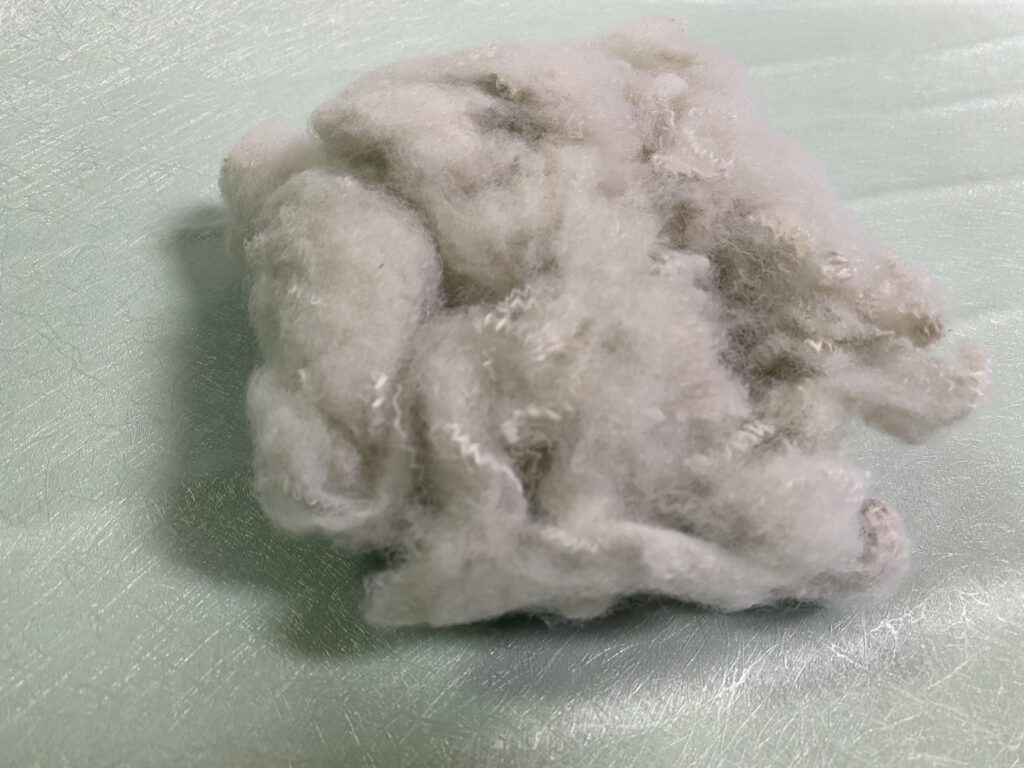
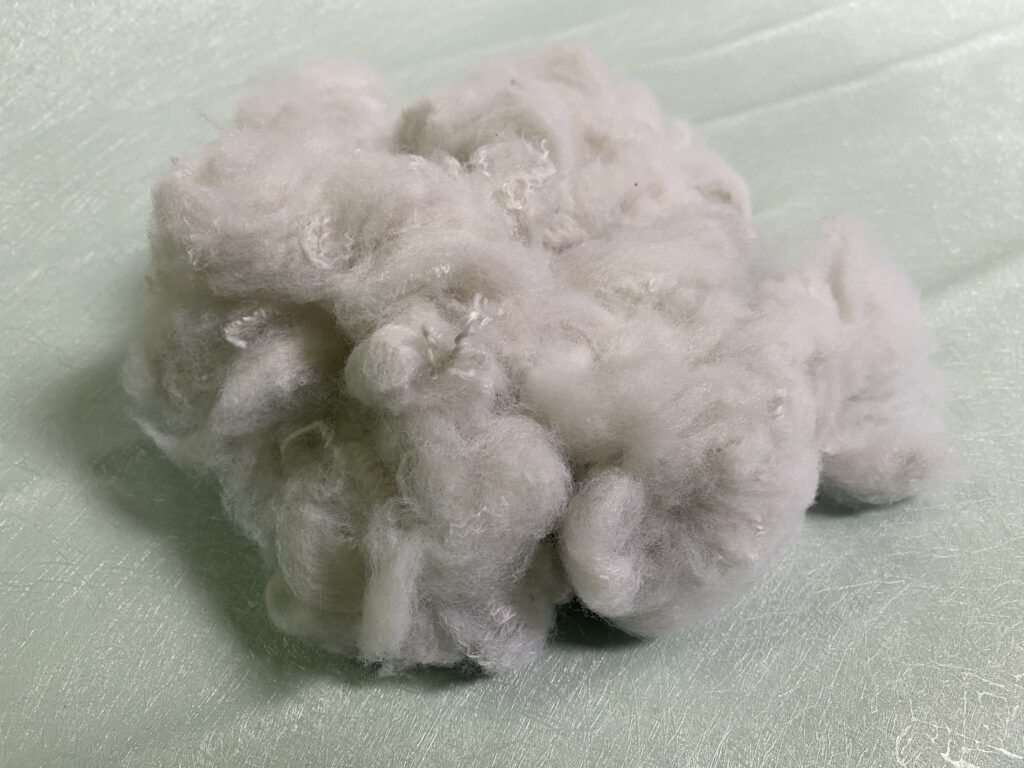
Cleanliness is an important consideration when evaluating recycled polyester fiber.
Depending on the raw material and manufacturing process, unwanted particles or foreign fibers may affect downstream processing or the appearance of finished products.
Potential issues include:
- Visible foreign particles
- Unwanted colored fibers
- Dust or loose debris
- Contamination from packaging or handling
- Irregular or fused fiber clusters
For white bedding materials, visible contamination may be especially noticeable.
In production, excessive contamination can also create additional sorting, cleaning, or rejection work.
Recommended inspection approach
Take representative samples from different parts of the delivery and inspect them under consistent lighting.
Record visible defects and compare them with an approved reference sample.
Where required, establish a documented method for counting or measuring impurities rather than relying only on subjective visual judgment.
Procurement tip: A clean-looking sample does not automatically demonstrate that every bale in a bulk shipment has the same cleanliness level.
4. Evaluate Color and Whiteness Consistency
Color consistency is particularly relevant for bedding manufacturers producing white or light-colored materials.
Even when fiber is enclosed within a mattress or quilted layer, differences in whiteness or color may affect visual inspection, material matching, or finished-product appearance.
Buyers should check:
- Color consistency within a production lot
- Differences between delivered lots
- Unexpected yellowish or grayish tones
- Visible colored fiber contamination
- Consistency against an approved reference
If whiteness is a critical requirement, the buyer and supplier should agree on an appropriate measurement method and acceptance criteria.
Descriptions such as “high white” or “normal white” are not sufficiently precise unless both parties understand and accept the reference standard.
5. Check Crimp and Fiber Opening Behavior
Crimp refers to the wave-like shape introduced into polyester staple fiber.
It can influence fiber cohesion, bulk, and behavior during carding or web formation.
For bedding applications, crimp characteristics may affect how fibers separate, distribute, and form a consistent layer.
However, more crimp is not automatically better.
The appropriate crimp level depends on the fiber type, machinery, and desired finished-product structure.
Practical production checks
During a controlled trial, observe whether the fiber:
- Opens and separates consistently
- Forms an even web or filling distribution
- Produces excessive clumps
- Creates unusual processing interruptions
- Performs consistently against the approved sample
For critical applications, crimp-related measurements can be included in the agreed technical specification.
6. Assess Loft, Bulk, and Compression Recovery
Loft and compression recovery are important in many bedding products, particularly those designed to provide cushioning or filling volume.
Loft describes the bulk or height of a fiber assembly under specified conditions.
Compression recovery describes how a material recovers after being compressed under a defined test procedure.
These properties should not be assumed from denier or fiber appearance alone.
A bedding manufacturer may need to evaluate:
- Initial loft after processing
- Thickness consistency
- Recovery after compression
- Changes after repeated loading
- Stability after packaging and handling
Importantly, these are often properties of the finished filling or padding assembly, not just individual loose fibers.
A meaningful comparison therefore requires consistent sample preparation, material weight, conditioning, test conditions, and measurement procedures.
Why application-specific testing matters
A pillow filling material and a mattress padding layer may require very different compression behavior.
Buyers should evaluate the material in a form that represents the actual finished product rather than using a single generic loft test for every application.
7. Review Fiber Strength and Elongation
Fiber tensile properties may influence handling and processing performance.
Depending on the production process, insufficient or inconsistent mechanical properties may contribute to fiber breakage, increased short-fiber content, or processing difficulties.
For certain bedding applications, buyers may request information about:
- Tensile strength
- Elongation
- Variation between samples
- Consistency between production lots
These measurements should be interpreted in the context of the intended process.
For example, a needle-punched padding material and a loose-fill pillow product may place different demands on fiber mechanical behavior.
Buyers should avoid selecting fiber solely because one strength value appears higher than another.
The relevant question is whether the material performs reliably in the intended manufacturing process.

8. Verify Moisture, Packaging, and Storage Condition
Even though polyester itself has relatively low moisture absorption, finished fiber can still be exposed to water, condensation, contamination, or unsuitable storage conditions.
For international shipments, buyers should inspect both the material and its packaging.
Important checks include:
- Bale wrapping condition
- Signs of water exposure
- Unusual odor
- Visible dirt or contamination
- Correct product and lot identification
- Packaging damage during transportation
Where moisture content is contractually important, buyers should use an agreed measurement method.
A shipment that arrives with damaged or wet packaging should be documented and assessed before the material enters production.
Why this matters for importers
Fiber may pass through warehouses, ports, containers, and multiple handling stages before reaching the factory.
Transport and storage conditions are therefore part of the overall quality management process.
9. Evaluate Carding and Nonwoven Processing Performance
For bedding manufacturers producing carded, needle-punched, or bonded padding layers, production trials provide information that laboratory data alone may not capture.
During a trial, monitor:
- Fiber opening efficiency
- Carding behavior
- Web uniformity
- Fiber accumulation or clumping
- Machine stoppages
- Material waste
- Finished layer consistency
If the process includes thermal bonding, verify compatibility with the actual bonding system and formulation.
Ordinary polyester staple fiber should not be assumed to have the same bonding behavior as a specifically designed low-melt or bicomponent fiber.
The test should use representative operating conditions and an approved comparison material wherever possible.
10. Check Batch-to-Batch Consistency
One of the most important concerns for international bedding buyers is whether the material delivered in future orders will perform similarly to the approved sample.
A supplier may provide an acceptable trial sample, but procurement teams also need confidence in routine deliveries.
Potential variations include:
- Denier or cut length differences
- Changes in crimp or surface finish
- Color variation
- Different impurity levels
- Changes in opening or carding behavior
- Variation in finished padding performance
How buyers can manage this risk
First, establish an approved reference.
Retain a sample from the successfully tested material and document the corresponding product specification.
Second, agree on acceptance criteria.
Identify which characteristics must be checked for each delivery and how results will be evaluated.
Third, maintain lot identification.
Ensure that delivery documentation and bale labels allow the material to be traced to the relevant production lot.
Fourth, monitor incoming material.
Inspect representative samples from bulk deliveries instead of assuming that all shipments will match the original trial.
Finally, record deviations.
Document quality concerns and discuss corrective actions with the supplier before repeating the same order.
A consistent supply relationship requires both product approval and ongoing verification.
11. Request Relevant Quality Documents
Before approving recycled polyester fiber for bedding production, procurement teams should request the technical and commercial documents relevant to their requirements.
These may include:
| Document | Why buyers request it |
|---|---|
| Technical Data Sheet (TDS) | Identifies the agreed fiber type and technical properties |
| Sample identification | Connects the approved trial material to its product grade or lot |
| Lot-specific test results, where available | Supports comparison of delivered material with agreed requirements |
| Packing list | Helps verify shipment quantity and packaging details |
| Lot or batch identification | Supports traceability and complaint investigation |
| Recycled-content documentation, if required | Supports applicable sourcing or product claims |
| Agreed inspection criteria | Defines how incoming quality will be accepted or rejected |
Documentation requirements vary by buyer, product, and destination market.
Buyers should not assume that a recycled polyester fiber is certified to a particular standard unless valid, applicable documentation has been supplied and verified.
Likewise, recycled content alone does not establish compliance with chemical safety, restricted substance, or finished bedding product requirements.
Those requirements should be evaluated separately according to the intended market and application.
12. Build a Practical Incoming Quality Inspection Checklist
A structured incoming inspection process can help bedding manufacturers identify potential problems before the material enters full-scale production.
The following checklist can be adapted to the buyer’s own quality management system.
| Inspection area | What to verify | Suggested approach |
|---|---|---|
| Product identity | Fiber type, structure, finish | Compare labels, PO, and approved specification |
| Denier | Fiber fineness | Review test data or conduct agreed measurement |
| Cut length | Staple length consistency | Measure representative samples |
| Color | Whiteness and shade consistency | Compare with approved reference |
| Cleanliness | Foreign particles and contamination | Visual or agreed quantitative inspection |
| Crimp | Fiber crimp characteristics | Review agreed measurements and processing behavior |
| Mechanical properties | Strength and elongation | Conduct relevant laboratory tests if required |
| Opening behavior | Fiber separation and clumping | Controlled production trial |
| Padding performance | Loft, thickness, recovery | Test representative finished assemblies |
| Packaging | Damage, moisture exposure, labeling | Inspect received bales |
| Traceability | Lot identification and records | Verify shipment documents |
Important: This is a general buyer checklist, not a universal acceptance standard. Sampling plans, test methods, tolerances, and pass/fail limits should be agreed upon before shipment.

13. Common Quality Problems and What They May Indicate
When recycled polyester fiber behaves differently from the approved material, buyers should investigate the underlying cause rather than immediately assuming that the fiber is defective.
| Observed problem | Possible factors to investigate |
|---|---|
| Uneven padding thickness | Fiber opening, feed uniformity, carding settings, fiber consistency |
| Excessive fiber clumps | Opening conditions, finish, crimp, compressed bale condition |
| Visible dark particles | Fiber contamination, handling or process contamination |
| Poor loft recovery | Fiber selection, assembly construction, bonding, test conditions |
| Different results between deliveries | Lot variation, processing settings, storage or conditioning |
| Higher-than-expected waste | Fiber characteristics, machine setup, process compatibility |
These are diagnostic possibilities, not definitive root-cause conclusions.
A proper investigation should consider raw material, machinery, production conditions, and the design of the finished bedding product.
14. Why the Lowest Fiber Price May Not Deliver the Lowest Production Cost
When comparing recycled polyester fiber suppliers, purchase price is only one component of total manufacturing cost.
A lower-priced fiber may not provide an economic advantage if it leads to:
- More material rejection
- Increased machine stoppages
- Additional inspection or cleaning
- Higher processing waste
- Inconsistent finished padding
- Rework or customer complaints
For a fair comparison, procurement teams should evaluate the total cost of using the material under comparable production conditions.
Useful indicators include material consumption per finished unit, production yield, downtime, quality rejection, and consistency across deliveries.
The objective is not necessarily to purchase the most expensive fiber.
It is to select a fiber that meets the required product performance while supporting reliable and economical manufacturing.
15. How to Qualify a New Recycled Polyester Fiber Supplier
A practical supplier qualification process can be divided into five stages.
Stage 1: Define the application
Tell the supplier whether the fiber will be used for mattress padding, quilted layers, pillow filling, comforters, or another bedding component.
Include the manufacturing process and the most important finished-product requirements.
Stage 2: Review the technical specification
Confirm the required fiber structure, denier, cut length, finish, color, and any additional performance criteria.
Stage 3: Request and evaluate samples
Compare the proposed material with an approved reference.
Use laboratory checks and production trials appropriate to the intended application.
Stage 4: Approve a controlled trial order
Evaluate incoming material, process stability, finished-product performance, and shipment documentation.
Keep records of the approved lot and any observed differences.
Stage 5: Monitor repeat orders
For ongoing supply, establish a practical inspection routine and a process for handling quality deviations.
Supplier approval should be treated as an ongoing process rather than a one-time decision.
16. Questions Bedding Buyers Should Ask Before Requesting a Quotation
Before requesting a bulk quotation, consider the following questions:
- What type of bedding product will the fiber be used to manufacture?
- Is solid, hollow, siliconized, or another fiber structure required?
- What denier and cut length are currently used?
- What machinery or production process will handle the fiber?
- Are whiteness or impurity levels critical?
- What finished-product performance must be achieved?
- Is there an existing approved fiber sample?
- What quality documents or recycled-content evidence are required?
- What is the expected trial quantity and ongoing consumption?
- What packaging, delivery terms, and destination are required?
Providing this information helps suppliers evaluate technical suitability before preparing a commercial offer.
Frequently Asked Questions
What is the most important quality check for recycled polyester fiber used in bedding?
There is no single test that determines suitability for every bedding product. Buyers should confirm fiber identity and specifications, inspect cleanliness and consistency, and evaluate performance in the intended manufacturing process.
Is solid recycled polyester fiber suitable for mattress padding?
Solid recycled polyester fiber can be considered for certain mattress padding and nonwoven applications. Suitability depends on fiber specifications, the production method, and the required finished-product performance.
How can buyers check fiber consistency between shipments?
Buyers can retain an approved reference sample, agree on inspection criteria, verify lot identification, and compare incoming shipments through representative sampling and appropriate testing.
Does recycled polyester fiber always provide the same loft as virgin polyester fiber?
Not necessarily. Loft depends on fiber structure, fineness, crimp, finish, processing conditions, and the construction of the finished material. Direct comparisons should use equivalent products and consistent test methods.
Should buyers test samples before ordering a full container?
Yes. Sample testing and controlled production trials are valuable ways to evaluate compatibility with existing equipment and finished-product requirements before committing to larger purchases.
What information should be included in a bedding fiber RFQ?
A useful RFQ includes the application, fiber structure, denier, cut length, color, finish, quality requirements, estimated quantity, destination, and requested documentation.
Source Recycled Polyester Fiber for Bedding Applications
Choosing recycled polyester fiber for bedding manufacturing requires a balance of technical suitability, consistent quality, production performance, and reliable supply.
At GDI Textile, we welcome inquiries from mattress manufacturers, bedding producers, nonwoven factories, importers, and industrial textile buyers evaluating recycled polyester staple fiber for their applications.
To help us understand your requirements, please share:
- Your finished bedding product
- Required fiber specifications
- Current material sample or reference, if available
- Manufacturing process
- Estimated purchase quantity
- Destination country or port
Contact us and our team can discuss your requirements and the availability of suitable fiber options for evaluation.
Contact: [email protected]
Website: https://ecomicrofiber.com
Conclusion
Quality control for recycled polyester fiber in bedding should extend beyond basic visual inspection or a nominal fiber specification.
International buyers should evaluate material identity, denier, cut length, cleanliness, color, crimp, mechanical properties, processing behavior, and consistency between deliveries.
For padding and filling applications, finished-material tests such as loft and compression recovery can provide additional information about suitability.
Most importantly, quality requirements should be linked to the intended bedding product and agreed upon before bulk purchasing.
A structured approach to sample approval, incoming inspection, and supplier communication can help bedding manufacturers reduce sourcing uncertainty and maintain more consistent production results.