Guide to Using Recycled Micro Fiber in Modern Manufacturing
Sustainability is no longer a trend in the textile industry—it is a core requirement across global supply chains. Brands, retailers, and industrial buyers are increasingly demanding materials that reduce environmental impact while maintaining consistent product performance.
Among the most effective solutions available today is recycled micro fiber.
From yarn spinning and nonwoven production to automotive interiors and cleaning textiles, recycled microfiber is helping manufacturers transition toward more sustainable, efficient, and future-ready production systems.
For B2B buyers and producers, understanding how recycled microfiber supports sustainable textile production is essential for staying competitive in today’s market.
What is Recycled Micro Fiber?
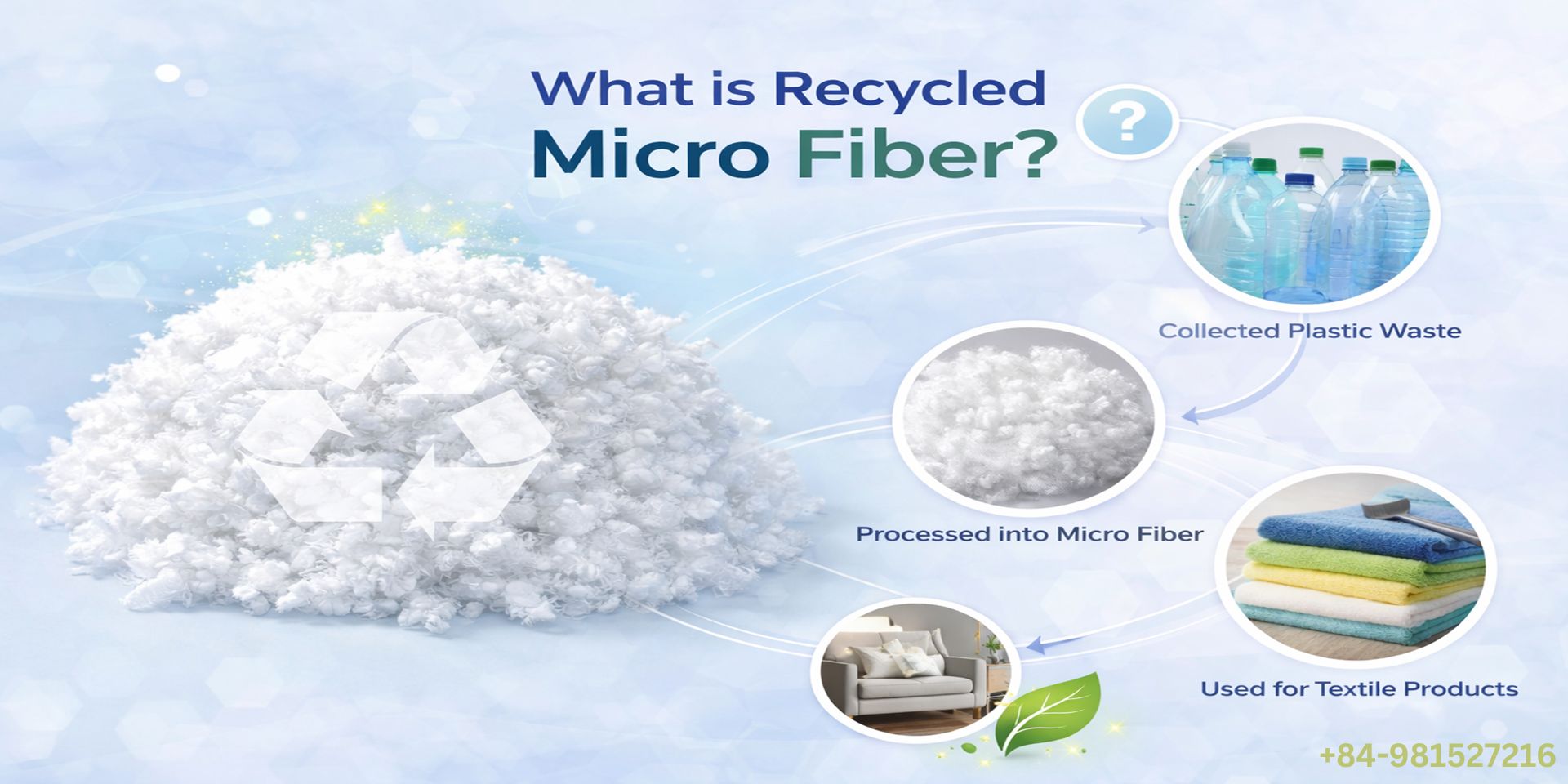
Recycled micro fiber is a fine polyester staple fiber produced from recycled PET-based materials such as:
- Post-consumer plastic bottles
- Industrial polyester waste
- Recycled textile materials
With its ultra-fine denier, microfiber provides enhanced performance characteristics compared to conventional polyester fibers, including:
- Higher surface area
- Better softness
- Improved absorption
- Strong durability
When produced with consistent quality, recycled microfiber offers comparable performance to virgin polyester, making it suitable for a wide range of industrial applications.
The Role of Sustainable Materials in Textile Production
Modern textile manufacturing is evolving toward a model that prioritizes:
- Resource efficiency
- Reduced environmental impact
- Circular material usage
- Compliance with global sustainability standards
Traditional production based on virgin polyester faces increasing challenges due to:
- High energy consumption
- Dependence on fossil resources
- Rising environmental regulations
- Pressure from brands and consumers
As a result, manufacturers are actively seeking alternative raw materials that can meet both performance and sustainability requirements.
This is where recycled micro fiber plays a key role.
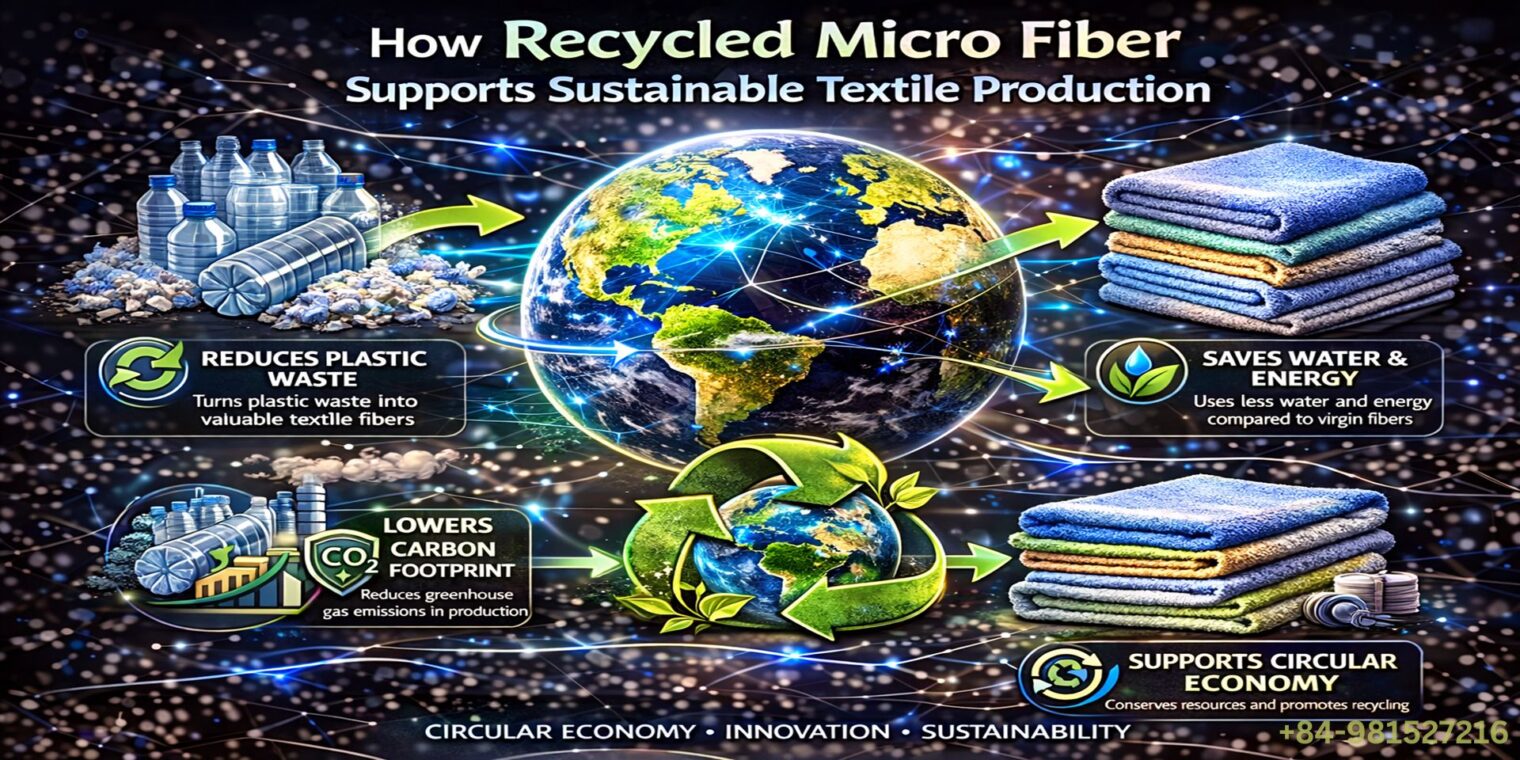
1. Reducing Environmental Impact at the Raw Material Level
One of the most important ways recycled microfiber supports sustainable textile production is by reducing environmental impact at the raw material stage.
Instead of using virgin petrochemical resources, recycled microfiber utilizes existing plastic and polyester waste.
This helps:
- Reduce plastic waste entering landfills and oceans
- Lower dependence on non-renewable raw materials
- Extend the lifecycle of existing resources
For manufacturers, this means the sustainability benefits start before production even begins.
Using recycled microfiber is a direct way to improve the environmental footprint of finished products.
2. Lower Energy Consumption in Production
Compared to virgin polyester production, recycled micro fiber requires less energy because it avoids the full petrochemical processing cycle.
This results in:
- Reduced energy consumption
- More efficient production processes
- Lower overall resource usage
For textile manufacturers, energy efficiency is not only an environmental benefit—it is also a cost and operational advantage.
As energy prices fluctuate globally, using recycled materials can help stabilize long-term production costs.
3. Supporting Carbon Reduction Goals
Carbon emissions have become a key performance indicator across the textile supply chain.
Many global brands now require suppliers to contribute to:
- Carbon reduction targets
- ESG (Environmental, Social, Governance) commitments
- Scope 3 emissions reduction
By incorporating recycled micro fiber into production, manufacturers can significantly reduce the carbon footprint of their products.
This is because recycled polyester generally produces lower greenhouse gas emissions compared to virgin polyester.
For B2B suppliers, this is an important advantage when working with international customers who prioritize sustainability.
4. Enabling Circular Textile Production
One of the most important aspects of sustainable manufacturing is the transition from a linear model to a circular economy.
Traditional model:
Raw materials → production → use → disposal
Circular model:
Recycled materials → production → use → reuse/recycle
Recycled microfiber supports this transition by converting waste into valuable raw material for new textile products.
This helps:
- Keep materials in use for longer
- Reduce waste generation
- Improve resource efficiency
- Support circular product design
For manufacturers, adopting recycled microfiber is a practical step toward building a more circular and sustainable production system.
5. Meeting Global Buyer Requirements
Today’s B2B buyers are not only focused on product quality and price—they are also evaluating suppliers based on sustainability performance.
Many international brands now require:
- Recycled content in materials
- Transparent sourcing practices
- Compliance with environmental standards
- Reduced environmental impact across the supply chain
Using recycled micro fiber allows manufacturers to meet these requirements and remain competitive in global markets.
This is especially important for suppliers exporting to:
- Europe
- North America
- Japan
- Middle East
Where sustainability expectations are increasingly strict.
6. Supporting High-Performance Applications
A key advantage of recycled microfiber is that it does not compromise on performance.
When produced with stable quality, recycled microfiber is suitable for demanding applications such as:
Yarn Spinning
- Microfiber yarn for towels
- Blended yarn with cotton or viscose
- Fine yarn for knit fabrics
Nonwoven Manufacturing
- Cleaning wipes
- Industrial wipes
- Filtration materials
Automotive Interior
- Car carpets
- Felt materials
- Headliners
- Acoustic insulation
Cleaning and Home Textiles
- Microfiber for cleaning cloth
- Floor mops
- Kitchen towels
- Industrial wiping fabrics
This means manufacturers can achieve both technical performance and sustainability goals at the same time.
7. Improving Brand Value and Market Positioning
Using sustainable materials such as recycled microfiber also enhances a company’s market positioning.
Manufacturers that adopt recycled materials can:
- Differentiate from competitors
- Strengthen brand credibility
- Support customer sustainability claims
- Improve acceptance in international markets
For B2B companies, this is particularly important when working with brands that prioritize:
- eco-friendly products
- responsible sourcing
- long-term sustainability commitments
In many cases, using recycled microfiber can directly support sales and business growth.
8. Reducing Supply Chain Risk
As sustainability becomes more important, reliance on virgin materials may create long-term supply risks.
These include:
- volatility in petrochemical prices
- regulatory restrictions
- environmental compliance costs
By integrating recycled micro fiber into sourcing strategies, manufacturers can diversify their material base and reduce dependence on traditional raw materials.
This contributes to a more resilient and adaptable supply chain.
9. Aligning with Future Industry Trends
The textile industry is clearly moving toward:
- sustainable materials
- circular production systems
- responsible sourcing practices
Recycled microfiber is aligned with all of these trends.
As regulations tighten and market expectations increase, recycled fiber will become even more important.
Manufacturers that adopt recycled microfiber early are better positioned to:
- meet future compliance requirements
- adapt to changing market demands
- maintain long-term competitiveness
Conclusion
Recycled micro fiber plays a critical role in supporting sustainable textile production.
It helps manufacturers:
- reduce environmental impact
- lower energy consumption
- cut carbon emissions
- support circular economy models
- meet global buyer requirements
- maintain high product performance
For B2B buyers and manufacturers, adopting recycled microfiber is not just a sustainability decision—it is a strategic business move.
As the textile industry continues to evolve, recycled microfiber will become an essential material for companies that want to remain competitive in the global market.
If you are looking for a reliable recycled polyester microfiber supplier, Eco Micro Fiber is ready to support your business.
Contact us today to request specifications, samples, or technical consultation.
Eco Micro Fiber – Supporting Sustainable Textile Production
At Eco Micro Fiber, we supply high-quality recycled micro fiber designed for modern textile manufacturing.
Our microfiber is suitable for:
- yarn spinning
- nonwoven production
- automotive interior applications
- microfiber for cleaning cloth
- home textile manufacturing
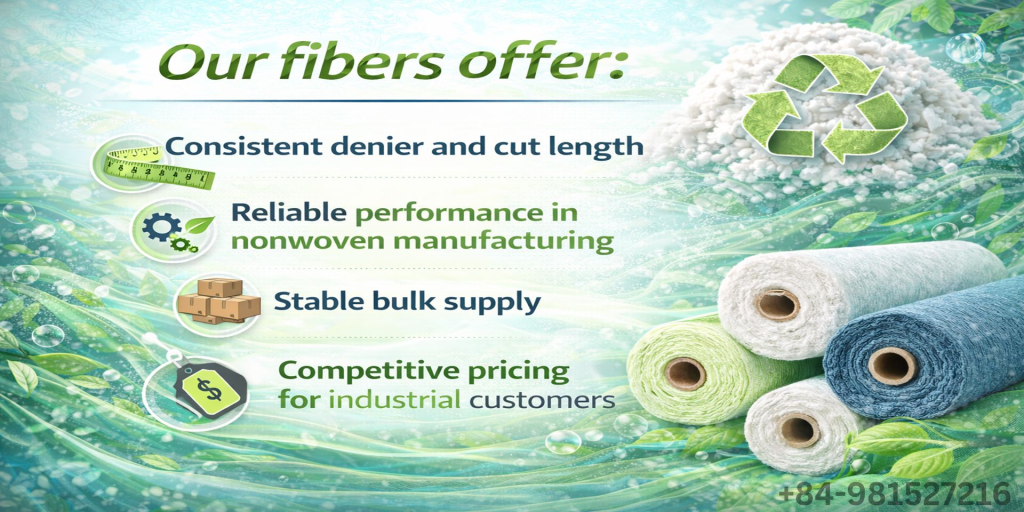
We focus on delivering:
- consistent denier and cut length
- stable fiber quality
- reliable bulk supply
- competitive B2B pricing
- technical support for application matching
We understand that sustainability is not only about materials—it is about reliability, performance, and long-term partnership
If you are looking for a trusted recycled micro fiber supplier, our team is ready to support your production needs.
Contact Us:
Email: [email protected]
Tel/WhatsApp: +84981527216
Contact us today to request technical specifications or product samples.