A Practical Fiber Selection Guide for Mattress Manufacturers and International B2B Buyers
Choosing the right polyester fiber is an important part of mattress manufacturing. The raw material can influence padding thickness, softness, bulk, compression recovery, processing efficiency, and finished-product consistency.
Two commonly discussed options are solid polyester fiber and hollow polyester fiber. Both can be used in suitable bedding and industrial textile applications, but they have different cross-sectional structures and may behave differently during manufacturing.
For mattress manufacturers, the decision should not be based on fiber structure alone. Denier, cut length, crimp, surface finish, production method, and target product performance also need to be considered.
This guide compares solid vs hollow polyester fiber, explains their potential uses in mattress manufacturing, and outlines the technical and commercial questions international buyers should ask before selecting a supplier.
1. What Is Solid Polyester Fiber?
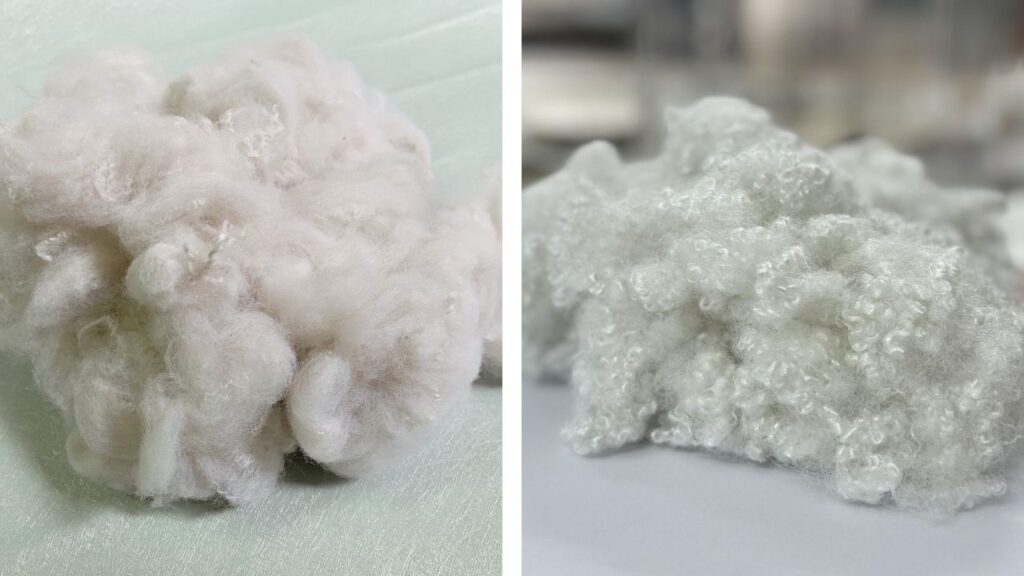
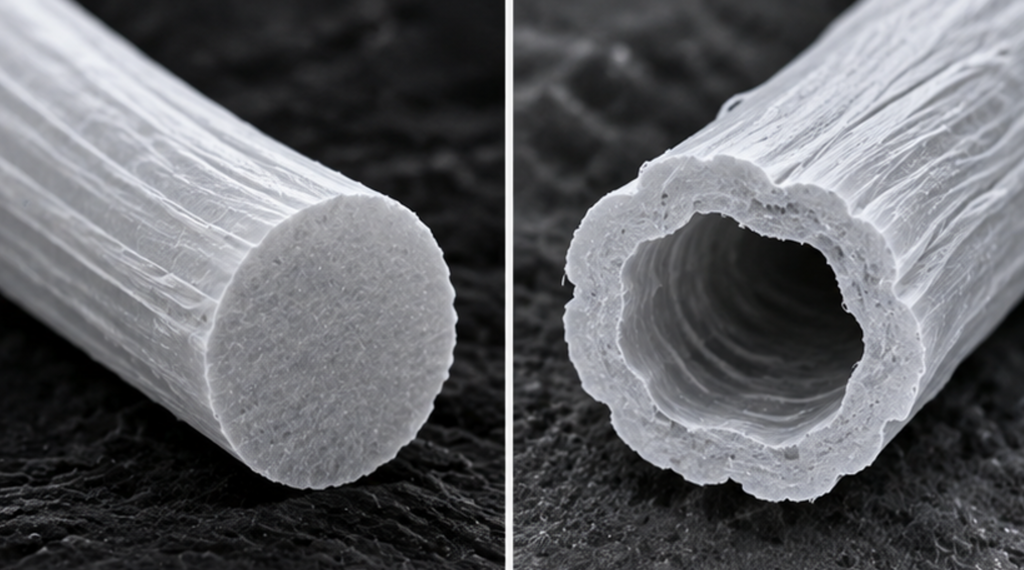
Solid polyester fiber is a type of polyester staple fiber with a non-hollow cross-sectional structure.
It is available in different specifications depending on the manufacturer and intended application.
Important characteristics may include:
- Denier
- Cut length
- Fiber color
- Crimp
- Tensile strength and elongation
- Surface finish
- Cleanliness
- Lot-to-lot consistency
Solid polyester staple fiber can be evaluated for mattress padding, wadding, needle-punched nonwovens, furniture padding, and other industrial textile applications.
For manufacturers looking to incorporate recycled materials, solid recycled polyester fiber may be an option when its technical characteristics match the production process and finished-product requirements.
However, solid fiber should not automatically be described as firm, highly resilient, or suitable for every mattress construction.
Its performance depends on the complete specification and the way it is processed.
2. What Is Hollow Polyester Fiber?
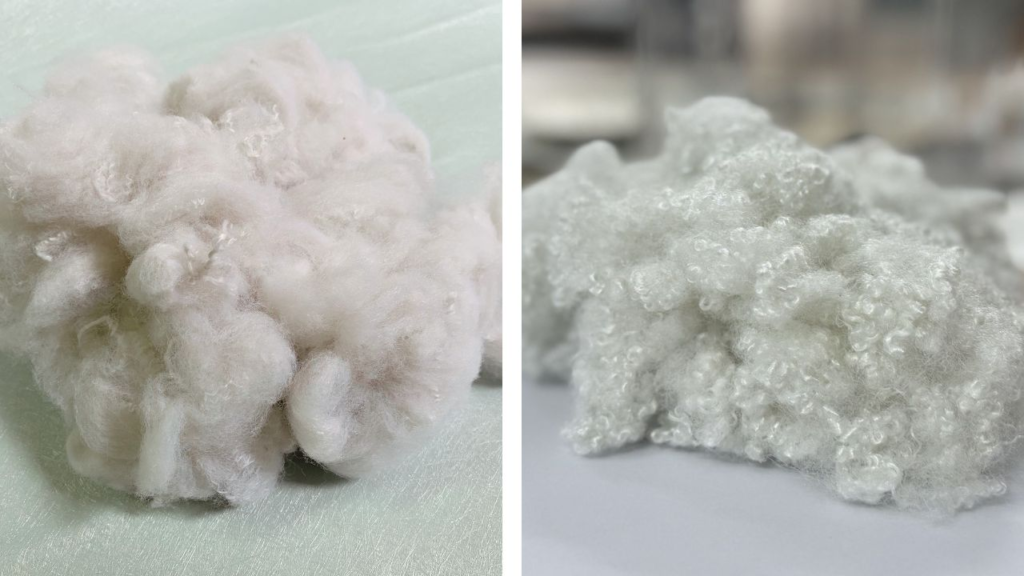
Hollow polyester fiber contains one or more internal voids within its cross-section.
This distinguishes it from solid polyester fiber, which does not have the same internal hollow structure.
Hollow polyester staple fiber is often considered for applications where bulk, loft, and filling volume are important.
Potential applications include:
- Mattress comfort-layer filling
- Pillow filling
- Quilted bedding
- Cushion filling
- Loose-fill products
- Selected insulation and padding materials
The hollow structure can contribute to the behavior of a bulky fiber assembly, but it does not guarantee a particular softness or compression recovery level.
Hollow Fiber vs. Siliconized Fiber
These terms describe different characteristics.
Hollow fiber refers to the internal cross-sectional structure.
Siliconized fiber refers to a fiber that has received a particular type of surface treatment.
A hollow polyester fiber may be siliconized or non-siliconized.
When requesting a quotation, buyers should confirm both the cross-sectional structure and the required surface finish.
3. Solid vs. Hollow Polyester Fiber: Main Differences
The table below summarizes the main technical considerations for mattress manufacturers.
| Comparison Factor | Solid Polyester Fiber | Hollow Polyester Fiber |
|---|---|---|
| Cross-section | Non-hollow | Contains one or more internal voids |
| Typical evaluation focus | Processing behavior, layer structure, mechanical characteristics | Bulk, loft, filling behavior, recovery |
| Softness | Depends on fiber grade and product construction | Depends on fiber grade and product construction |
| Compression recovery | Must be evaluated through testing | Must be evaluated through testing |
| Needle-punching compatibility | Selected grades may be suitable | Selected grades may be suitable |
| Loose filling | Possible with suitable grades | Commonly considered for loft-oriented filling |
| Surface finish | Different finishes may be available | Different finishes may be available |
| Recycled options | Depends on supplier availability | Depends on supplier availability |
| Cost | Specification-dependent | Specification-dependent |
Key takeaway: Neither solid nor hollow polyester fiber is universally better.
The appropriate choice depends on the required performance of the mattress component and the manufacturing technology.
4. How Fiber Structure Affects Mattress Performance
Mattress manufacturers usually evaluate polyester fiber according to how it performs in a specific layer or filling application.
4.1 Bulk and Loft
Bulk describes the volume occupied by a fiber assembly.
Loft generally refers to the thickness or fullness of the fiber structure.
Hollow polyester fiber is frequently considered for products where a bulky, low-density filling is desirable.
However, the actual loft depends on several factors:
- Fiber denier
- Cut length
- Crimp configuration
- Surface finish
- Fiber opening
- Filling density
- Compression history
- Manufacturing process
A hollow fiber does not automatically provide higher loft than every solid fiber.
Buyers should compare candidate materials under equivalent test conditions.
4.2 Compression Recovery
Mattress materials experience repeated compression during normal use.
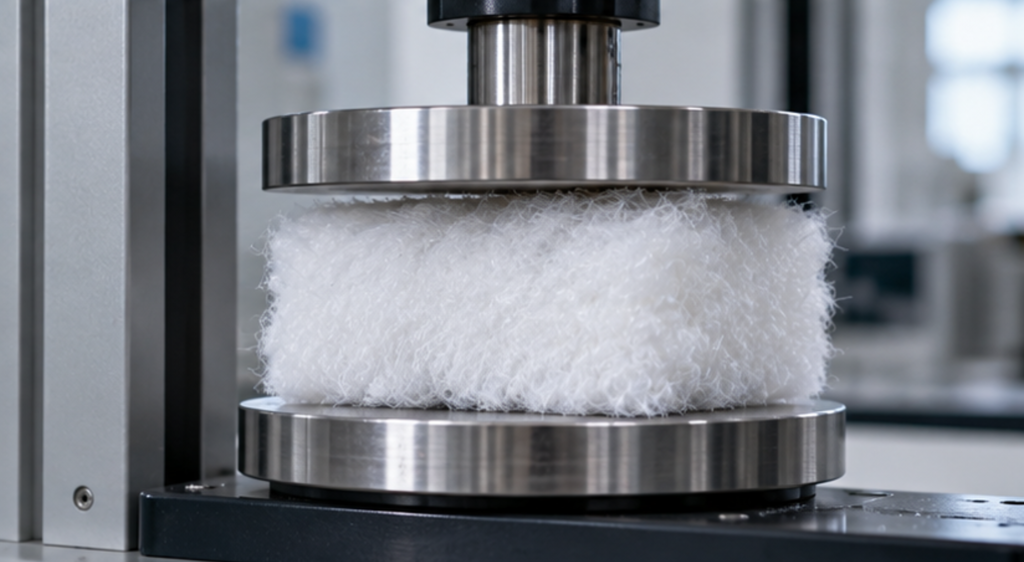
Compression recovery describes how a material returns toward its previous thickness or shape after a load is removed.
Both solid and hollow fibers may be engineered for particular recovery characteristics.
Performance depends on the fiber properties, crimp, filling density, bonding method, and finished-layer structure.
A suitable test should reflect the intended application.
4.3 Firmness and Support
Firmness and support are not identical.
Firmness relates to how a mattress component responds to pressure, while support involves the behavior of the complete mattress construction.
Neither property can be determined reliably from the words “solid” or “hollow” alone.
The thickness, density, bonding, and interaction with other mattress layers are also important.
4.4 Thermal Comfort
Fiber assemblies can contain air spaces that influence thermal insulation.
Hollow fiber may be considered in applications designed to maintain a bulky structure.
However, the thermal performance of a mattress also depends on the cover, foam, ventilation, moisture management, and overall construction.
A hollow cross-section alone does not establish whether a mattress will feel cooler or warmer.
5. Which Polyester Fiber Is Better for Mattress Padding?
The best choice depends on the type of mattress component being manufactured.
Needle-Punched Mattress Padding
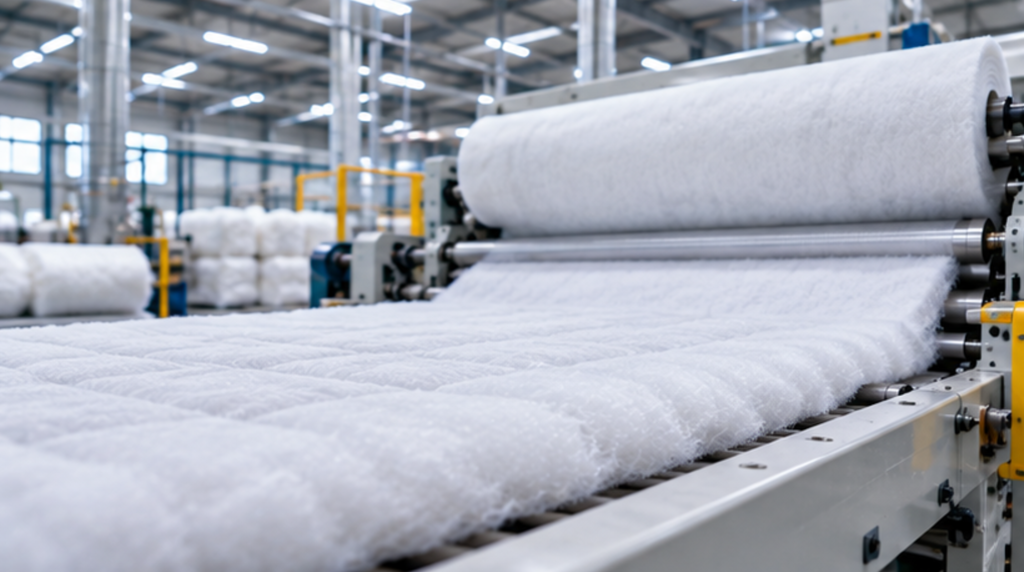
Manufacturers producing needle-punched padding may evaluate solid polyester staple fiber for its compatibility with web formation and mechanical entanglement.
Selected hollow fiber grades may also be evaluated if they are compatible with the process.
The important factors include fiber length, fineness, crimp, web uniformity, needling behavior, and finished-layer properties.
For manufacturers considering recycled raw materials, understanding recycled polyester fiber for mattress padding can help establish the appropriate sourcing and production requirements.
Quilted Mattress Wadding
Quilted mattress layers may require specific softness, bulk, thickness, and stability.
Both solid and hollow polyester fiber may be used in suitable constructions.
Hollow fiber is often considered when loft is a major requirement, while solid fiber may be evaluated for particular wadding structures.
The final choice should be based on the finished quilted material.
Loose Fiber Filling
Loose filling applications often prioritize bulk, softness, and recovery.
Hollow polyester fiber, including certain siliconized grades, is commonly considered for these applications.
However, fiber structure, finish, and processing characteristics should be evaluated together.
Thermally Bonded Mattress Padding
Some padding materials are produced using thermal bonding.
In these applications, manufacturers must evaluate the bonding system, thermal processing conditions, and fiber compatibility.
Standard solid or hollow polyester staple fiber should not automatically be assumed to function as a low-melt bonding fiber.
If a separate bonding fiber is required, its specification should be confirmed.
6. Important Polyester Fiber Specifications for Mattress Manufacturing
Selecting between solid and hollow fiber is only one part of the purchasing decision.
Manufacturers should also review the complete polyester staple fiber specifications required for their production process.
Denier
Denier measures fiber linear density.
It can influence fiber count per unit mass, bulk, handling, and processing behavior.
A finer fiber is not automatically better for every mattress component.
Cut Length
Cut length affects fiber handling, opening, web formation, and processing compatibility.
The appropriate length depends on the equipment and intended product.
Crimp
Crimp influences fiber cohesion, bulk, and the behavior of the fiber assembly.
Different crimp characteristics may produce different processing and recovery results.
Surface Finish
Fiber finish can influence friction, static behavior, and filling performance.
Buyers should specify whether a siliconized or non-siliconized material is required when relevant.
Tensile Strength and Elongation
Mechanical properties can influence fiber behavior during manufacturing.
The importance of these parameters varies between loose filling and consolidated nonwoven structures.
Color and Cleanliness
White fiber may be preferred in some bedding constructions, while other applications may accept different colors.
Contamination requirements should be clearly defined.
Lot Consistency
Differences between production lots can influence manufacturing performance and finished-product uniformity.
For recurring orders, buyers should establish agreed specifications and suitable inspection procedures.
7. Solid vs. Hollow Fiber for Different Mattress Components
The following table provides a practical starting point for material evaluation.
| Mattress Component | Fiber Options to Evaluate | Main Requirements |
|---|---|---|
| Needle-punched padding | Suitable solid or hollow grades | Web formation, thickness, mechanical properties |
| Quilted wadding | Suitable solid or hollow grades | Loft, softness, stability |
| Loose filling | Often hollow or specialty filling grades | Bulk, recovery, surface finish |
| Bonded padding | Suitable fibers with an appropriate bonding system | Bonding compatibility, thickness, compression |
| Auxiliary padding layers | Application-dependent | Structure, processing, consistency |
| Protective textile layers | Application-dependent | Mechanical properties, dimensional stability |
These options should be treated as possible evaluation routes, not universal recommendations.
8. Is Solid Polyester Fiber Cheaper Than Hollow Polyester Fiber?
Price is an important consideration for mattress manufacturers purchasing fiber in commercial quantities.
However, solid polyester fiber is not necessarily cheaper than hollow polyester fiber in every market or specification.
Pricing may depend on:
- Raw material and feedstock
- Denier and cut length
- Fiber structure
- Crimp and surface finish
- Color and quality requirements
- Manufacturing process
- Order quantity
- Packaging
- Delivery terms
Why Price per Kilogram Is Not Enough
Two different fibers may require different material quantities or processing conditions to achieve the same finished-product performance.
A useful comparison considers:
Total evaluated cost = Raw material cost + Processing cost + Waste cost + Quality-related cost + Relevant logistics cost
For example, a lower-priced fiber may not provide the lowest cost per finished padding layer if it creates additional waste or requires more material.
The correct comparison should consider both commercial pricing and actual production performance.
9. Can Recycled Polyester Fiber Be Used for Mattress Manufacturing?
Yes. Selected recycled polyester staple fiber grades may be evaluated for suitable mattress padding, wadding, and filling applications.
However, recycled content alone does not determine fiber quality or product performance.
Manufacturers should review:
- Fiber structure
- Denier and cut length
- Crimp
- Surface finish
- Tensile properties, where relevant
- Cleanliness
- Processing compatibility
- Lot consistency
- Finished-product requirements
Buyers exploring recycled polyester staple fiber should request the technical information needed for their particular manufacturing process.
Recycled Content and Certification
Recycled polyester may support sourcing objectives involving recovered materials.
However, recycled fiber is not automatically certified under the Global Recycled Standard (GRS) or another certification scheme.
Any certification, recycled-content, or traceability claim should be supported by applicable documentation.
Similarly, raw fiber specifications do not automatically establish the safety, durability, or regulatory compliance of a finished mattress.
These requirements must be evaluated separately.
10. How to Test Solid and Hollow Polyester Fiber
Production trials help manufacturers compare fiber options under realistic conditions.
Step 1: Define the Application
Identify the mattress component and manufacturing method.
Step 2: Establish the Reference Material
Use an existing approved material or documented performance requirements.
Step 3: Compare Candidate Fibers
Evaluate the proposed solid and hollow grades under suitable controlled conditions.
Step 4: Review Processing Performance
Depending on the process, check:
- Fiber opening
- Feeding stability
- Web formation
- Bonding or needling behavior
- Waste generation
- Production interruptions
Step 5: Test the Finished Material
Relevant measurements may include:
- Mass per unit area
- Thickness
- Bulk density
- Compression response
- Recovery after compression
- Mechanical properties
- Dimensional stability
The applicable methods and acceptance limits depend on the finished product.
Step 6: Compare Commercial Performance
Review material consumption, processing efficiency, waste, and finished-product quality.
Step 7: Approve the Specification
Document the selected fiber grade and agreed purchasing requirements before moving to regular orders.
11. Common Mistakes When Choosing Mattress Polyester Fiber
Selecting Fiber Based Only on Structure
A buyer may assume that hollow fiber is always softer or that solid fiber is always firmer.
Better approach: Evaluate the actual fiber specification and finished-product performance.
Ignoring Crimp and Surface Finish
Two fibers with the same nominal denier and cut length may behave differently because of crimp or finish.
Better approach: Review the complete technical characteristics.
Comparing Only the Purchase Price
A cheaper fiber may lead to different processing costs or material consumption.
Better approach: Evaluate total manufacturing cost.
Skipping Production Trials
A hand sample may appear suitable but behave differently during commercial production.
Better approach: Conduct a representative trial before approving a new grade.
Assuming Recycled Fiber Has Uniform Quality
Recycled polyester fibers may differ in feedstock consistency, manufacturing control, and technical properties.
Better approach: Review samples, agreed specifications, and relevant quality documentation.
12. How to Evaluate a Polyester Fiber Supplier for Mattress Manufacturing
International buyers should evaluate suppliers according to both technical suitability and commercial reliability.
Product Availability
Confirm whether the supplier offers the required solid or hollow fiber structure.
Technical Information
Request available information on denier, cut length, crimp, finish, color, and other important parameters.
Sample Evaluation
Ask whether a sample is available for preliminary assessment and production testing.
Quality Consistency
Discuss lot identification, agreed tolerances, and inspection procedures.
Commercial Terms
Confirm:
- Minimum order quantity
- Trial order availability
- Estimated monthly consumption
- Packaging
- Lead time
- Incoterm and named delivery location
- Destination country and port
- Required documentation
Buyers can also explore recycled polyester fiber products to review available product categories before submitting a detailed inquiry.
13. RFQ Checklist for Solid or Hollow Polyester Fiber
A clear Request for Quotation helps suppliers evaluate the actual manufacturing requirements.
Application Information
- Mattress component
- Manufacturing process
- Existing fiber specification
- Required finished-product performance
Fiber Requirements
- Solid or hollow structure
- Denier
- Cut length
- Crimp requirements
- Surface finish
- Color
- Cleanliness requirements
- Relevant technical tolerances
Commercial Information
- Trial quantity
- Commercial order quantity
- Estimated monthly consumption
- Packaging requirements
- Destination country and port
- Requested Incoterm
- Required documentation
Example RFQ Email
Subject: RFQ – Polyester Staple Fiber for Mattress Manufacturing
Dear Sales Team,
We are sourcing polyester staple fiber for our mattress manufacturing operation.
Please review our requirements below:
Application: [Mattress padding / Wadding / Quilting / Filling]
Manufacturing process: [Needle punching / Thermal bonding / Filling / Other]
Fiber structure: [Solid / Hollow / To be evaluated]
Denier: [Required specification]
Cut length: [Required specification]
Finish: [Siliconized / Non-siliconized / To be confirmed]
Color: [Required color]
Current material: [Existing specification or reference sample]
Trial quantity: [Quantity]
Monthly consumption: [Estimated volume]
Destination: [Country and port]
Please advise your available fiber options, technical information, sample availability, packaging, lead time, and quotation terms.
We would appreciate your feedback regarding the suitability of your available fiber grades for our manufacturing process.
Best regards,
[Name]
[Company]
[Country]
14. Sourcing Solid Recycled Polyester Fiber From Vietnam
Vietnam is one of the sourcing locations international mattress and bedding manufacturers may consider when purchasing recycled polyester staple fiber.
At Eco Micro Fiber / GDI Textile, we welcome inquiries from mattress manufacturers, nonwoven producers, furniture padding manufacturers, and industrial textile buyers.
For buyers evaluating solid polyester staple fiber, our team can discuss:
- Required denier and cut length
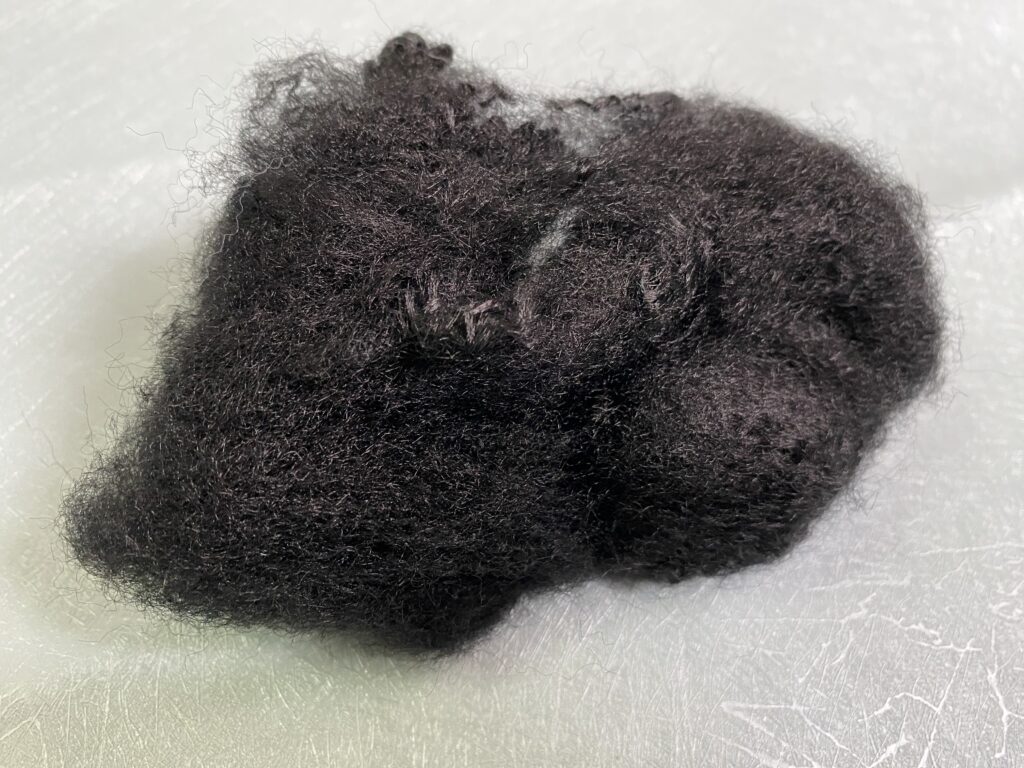
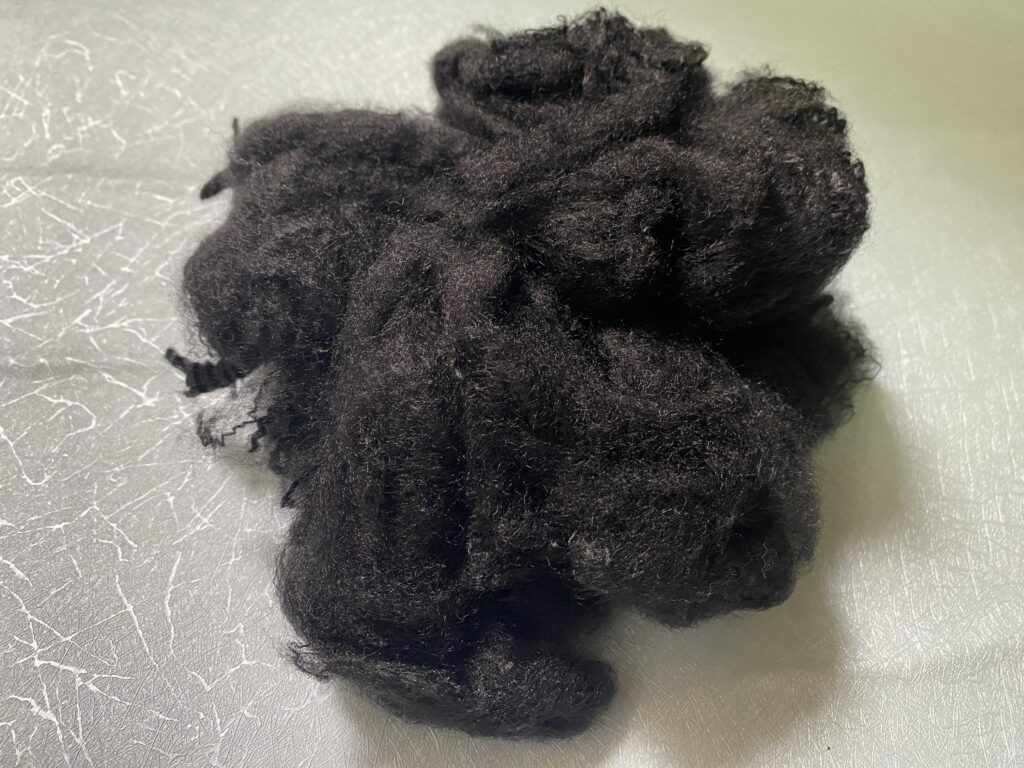
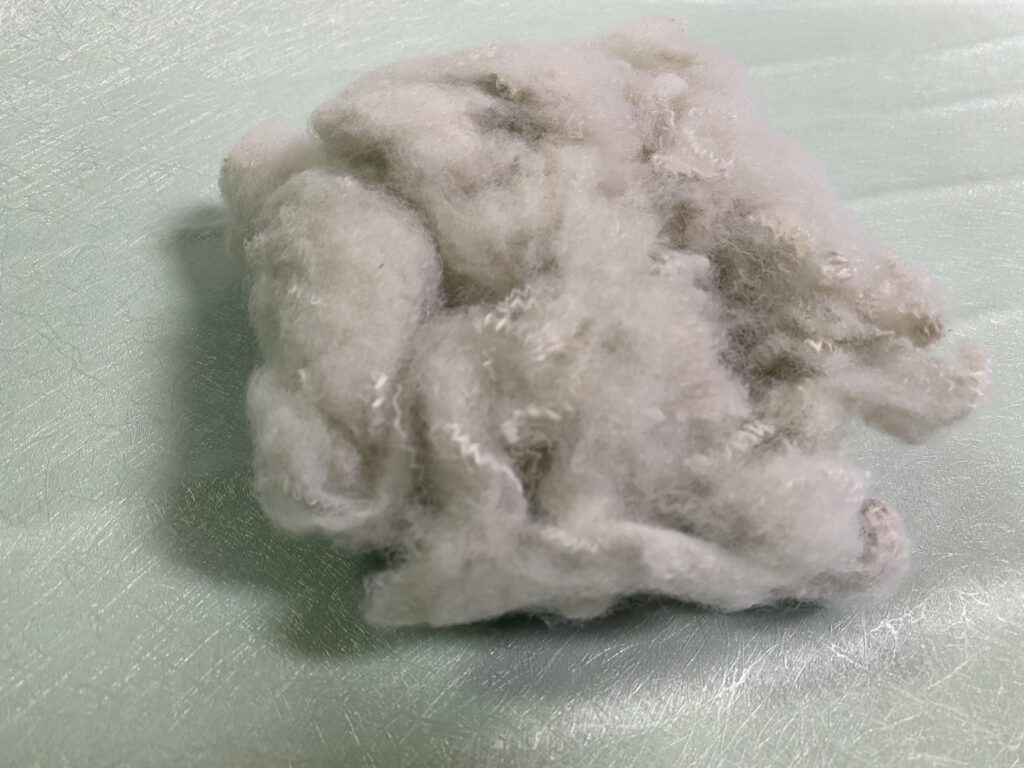
- White or black fiber requirements
- Intended mattress component
- Manufacturing process
- Existing fiber specifications
- Trial and commercial order quantities
- Destination country and port
- Relevant quality and documentation requirements
Specific product availability, technical performance, and commercial conditions should confirm for each inquiry.
Please note: The availability of hollow polyester fiber grades should confirme separately. This article does not imply that GDI Textile supplies every hollow fiber type discussed.
For technical inquiries, product information, or pricing, you can request a fiber quotation by contacting our team.
GDI Textile – Vietnam
Email: [email protected]
Website: https://ecomicrofiber.com/
Frequently Asked Questions
What is the difference between solid and hollow polyester fiber?
Solid polyester fiber has a non-hollow cross-section, while hollow polyester fiber contains one or more internal voids. This structural difference may influence bulk and filling behavior, but performance depends on the complete fiber specification.
Is hollow polyester fiber better for mattress filling?
Hollow polyester fiber often use for loft-oriented filling applications. However, suitability depends on the required bulk, softness, recovery, finish, and finished-product construction.
Can solid polyester fiber be used for mattress padding?
Yes. Suitable solid polyester staple fiber grades use in selected mattress padding, wadding, and nonwoven applications, subject to technical evaluation.
Which polyester fiber has better compression recovery?
Neither solid nor hollow polyester fiber is universally superior. Recovery depends on fiber properties, crimp, filling density, processing, and finished-product design.
Is hollow polyester fiber always siliconized?
No. Hollow describes fiber structure, while siliconized describes a surface treatment. Buyers should specify both characteristics separately.
Is solid polyester fiber cheaper than hollow polyester fiber?
Not necessarily. Pricing varies by fiber specification, production process, finish, quality requirements, order quantity, and delivery terms.
Can recycled solid polyester fiber replace virgin fiber in mattress manufacturing?
It may be possible in selected applications, provided the proposed material meets the manufacturing and finished-product requirements. Production trials and quality verification has recommended.
What specifications should mattress manufacturers request from polyester fiber suppliers?
Buyers should confirm fiber structure, denier, cut length, crimp, finish, color, relevant quality requirements, sample availability, packaging, and delivery conditions.
Conclusion
The comparison of solid vs hollow polyester fiber should focus on the specific needs of mattress manufacturing rather than assuming that one fiber structure is always better.
Solid polyester fiber may be suitable for selected padding, wadding, and nonwoven constructions. Hollow polyester fiber may be considered for filling applications where bulk and loft are important.
The best material depends on fiber specifications, manufacturing technology, finished-product performance, and overall production cost.
For international B2B buyers, a structured sourcing process should include technical specification review, representative samples, controlled production trials, and clear supplier communication.
Looking for solid recycled polyester staple fiber for mattress manufacturing?
Contact GDI Textile at [email protected] with your required specification, application, order quantity, and destination to discuss available sourcing options.